
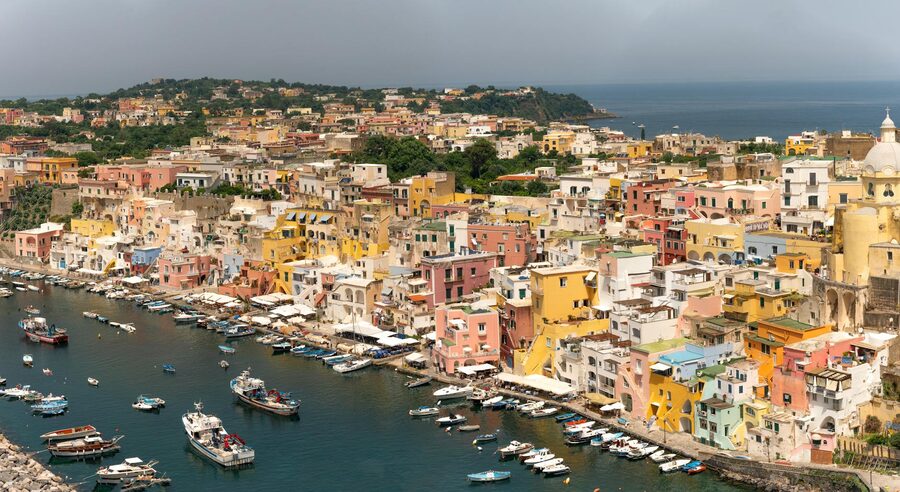
Skip Capri. Skip Positano. The week you were planning to fight a thousand cruise-ship passengers around the Faraglioni or pay €18 for a margherita on the Amalfi cliff terrace, spend on Procida instead. It is the smallest of the three islands in the Bay of Naples, forty minutes by hydrofoil from Molo Beverello, four square kilometres of pastel houses falling toward a fishing harbour, and almost nobody outside Italy has heard of it. The island became Italian Capital of Culture in 2022 and somehow still goes overlooked: the same Americans who book Capri eighteen months out fly past Procida on the Ischia ferry without looking up.
I picked up The Talented Mr Ripley in 2019 because I’d watched the film for the third time and finally wanted Highsmith’s actual sentences. The novel calls the resort town “Mongibello” and locates it somewhere on the Bay of Naples coast: nothing real, a composite. When Anthony Minghella’s 1999 film team had to find Mongibello, they used the only place that still looked like 1958: Procida. Most of the close-up street scenes, the Vespa shots, the lemon stalls and the courtyards are filmed in Corricella and on Salita Castello. Ischia plays Mongibello in the wider shots. Procida plays Mongibello when the camera comes in close. The walk from the ferry port to Marina Corricella is the walk Tom Ripley fakes his way through, and it is exactly the same walk twenty-six years later. This guide is what to do once you’ve made it.
In This Article
- Marina Corricella: where Mongibello actually was
- Via San Rocco: the actual Ripley street
- Terra Murata and the abbey on top
- The beaches: black sand and what to expect
- Spiaggia Chiaia
- Chiaiolella and Ciraccio
- Pozzo Vecchio (Il Postino beach)
- Spiaggia della Lingua
- Where to stay (no big hotels exist)
- Eating: it’s mostly fish and lemons
- Restaurants worth booking
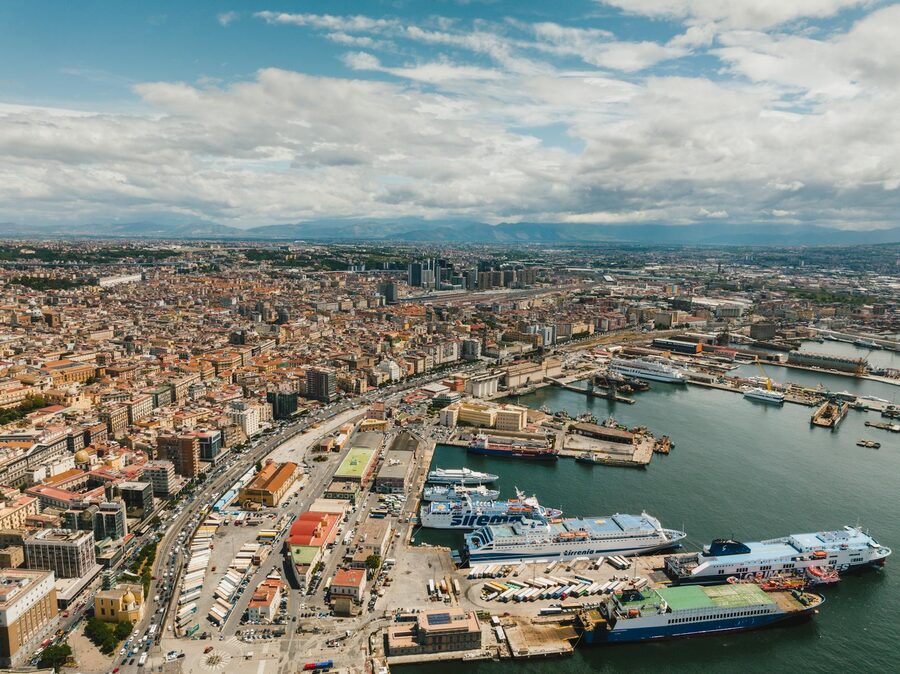
- Getting there: the ferry from Naples
- Capri vs Procida: the contrarian case
- Reading and watching list before you go
- If you’ve read this far
Marina Corricella: where Mongibello actually was
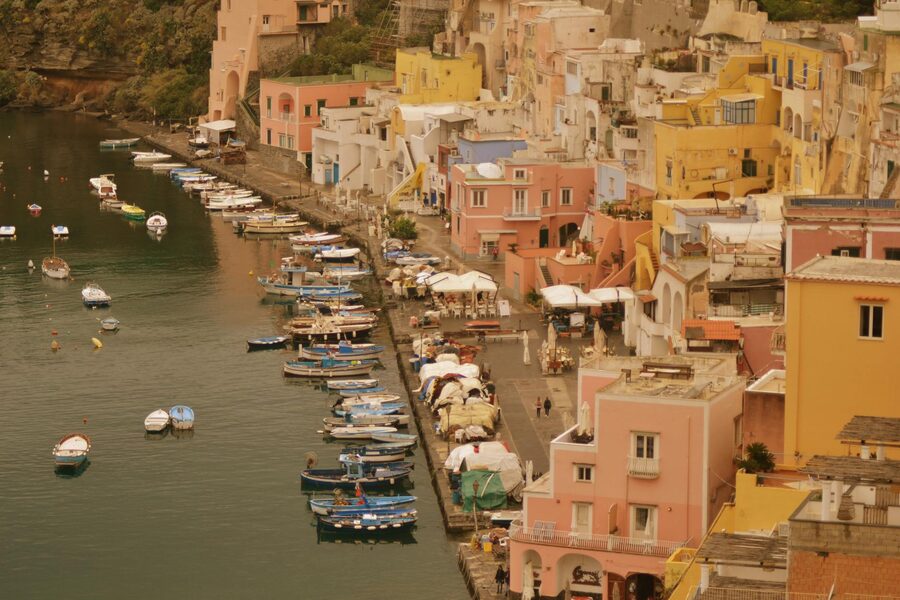
Corricella is a 17th-century fishing harbour on the south side of Procida, fifteen minutes’ walk from the ferry pier and reached only by foot. The houses are painted what Procidans call “fishermen’s pink” and “fishermen’s yellow”, a folk tradition that lets boats spot their own house from the water on a foggy morning. There are no cars. There is no waterfront road. It is the most painted view in the Bay of Naples, and if you have ever seen a photograph of pastel Italy, this is probably what it was.
The film set up most of the Mongibello street scenes here. Tom watches Dickie ride past on his Vespa and chat up Silvana on Via San Rocco, the cobbled street that runs above the marina. Marge buys fruit from a stall on the same street while Tom walks beside her. The bus that drops Tom off in “Mongibello” was actually filmed driving down Salita Castello, the steep cobbled climb that connects Marina Grande (the ferry port) to Terra Murata at the top. Walk that route once and the geography of the film clicks: the production was only ever five minutes apart in any direction.
Practical:
- Get to Corricella from the ferry on foot in fifteen minutes. Walk uphill out of Marina Grande along Via Roma, hang left at Piazza dei Martiri, and follow Via San Rocco down. There are signs, and you can also follow anyone who looks like they have a camera.
- Lunch on the harbour costs €30 to €50 a head. The four restaurants directly on the water (Caracalè, Gorgonia, La Lampara, Pizzeria Fuego) all have stunning views and middling food. You’re paying for the table, not the kitchen.
- For the same view at half the price, go up to La Piazzetta in Piazza dei Martiri above the marina. Pizza, gnocchi alla sorrentina, around €15 a head, and you still see the boats.
- Reservations matter on summer weekends. Locals from Naples come over for long Saturday lunches; the harbour-edge tables go by Friday afternoon.
Via San Rocco: the actual Ripley street
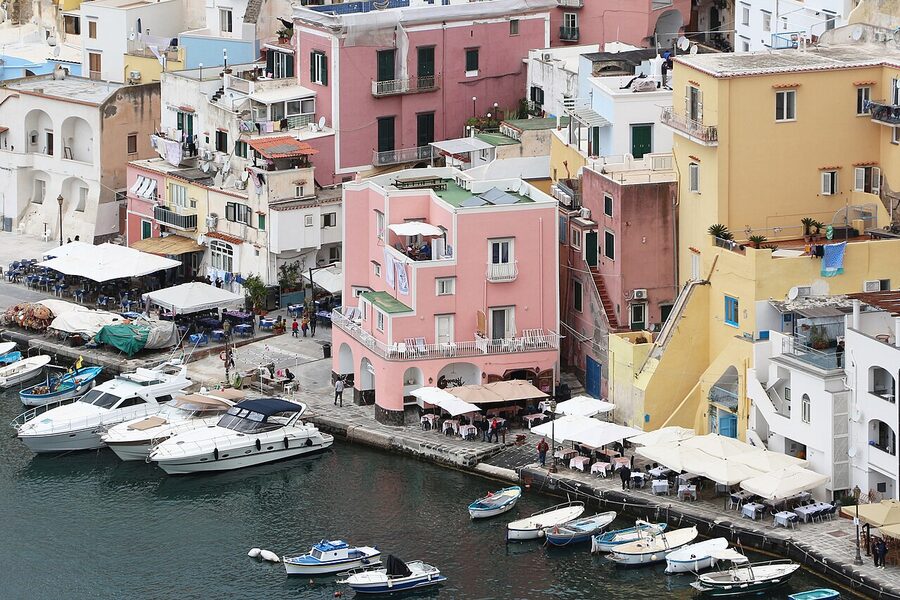
Via San Rocco runs above Marina Corricella and around the side of the church Santuario Santa Maria delle Grazie Incoronata. This is the street where Dickie and Silvana have their secret conversations in the film, where Tom and Marge later walk and Marge buys oranges, and where the courtyard scenes were filmed. The same street appears in Il Postino (1994), in the Netflix series Generazione 56K, and in roughly a dozen Italian commercials a year. If you watch the film on the flight over, you will recognise it the second you turn the corner.
Five minutes’ walk further along, Salita Castello climbs the rock toward Terra Murata. The neighbourhood supermarket on this street stood in for the post office in Il Postino. Both films use Salita Castello in completely different scenes, and the production team in 1999 walked the same flight of cobbles the postman cycles up in 1994. The Bay of Naples islands have been double-booked for movies since the 1950s, and Procida has done more film work per square kilometre than anywhere else in Italy.
Terra Murata and the abbey on top
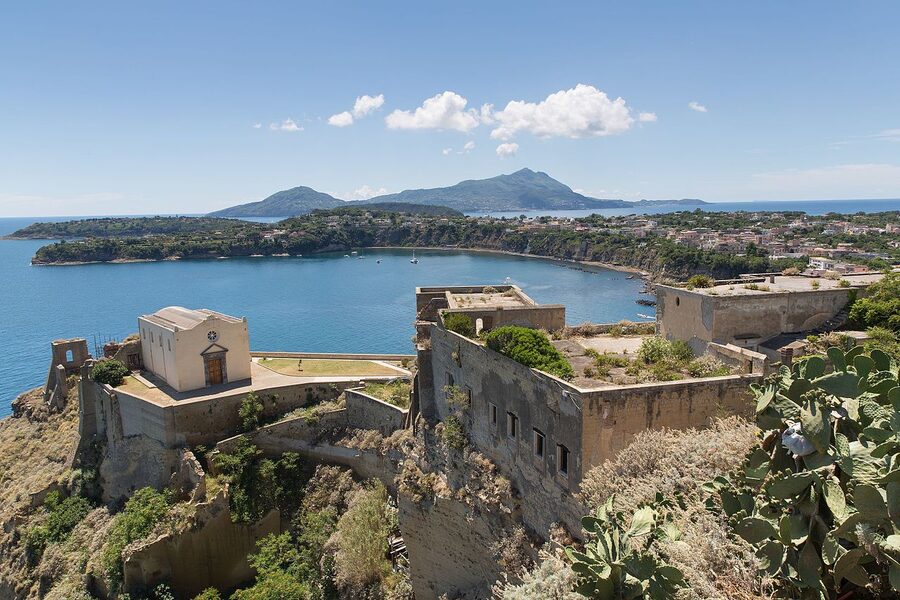
Terra Murata is the highest point on Procida, the medieval fortified village that sits 91 metres above the sea on a basalt rock. The d’Avalos family built the walls in the 16th century after one too many raids by the Saracens, and the fortress they put inside the walls served, in turn, as a noble palace, a royal residence, and from 1830 to 1988 as a Bourbon-era prison. It closed for inmates the year U2 released Rattle and Hum, and it has mostly been left to weather since.
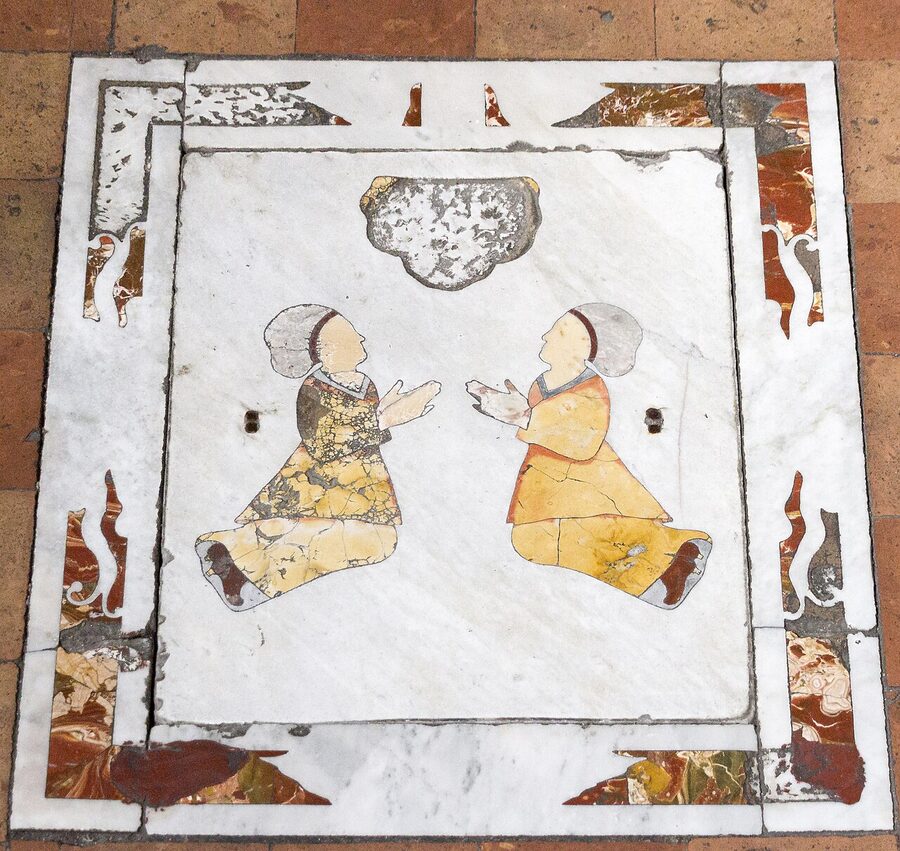
You climb up here for two reasons: the view down over Corricella, which is the photograph that made you want to visit Procida in the first place; and the Abbazia di San Michele Arcangelo, the 11th-century Benedictine abbey at the top of the rock. The abbey was sacked by pirates in 1544, rebuilt as a parish church in 1597, and is now run by a small lay foundation that gives donation-based tours including the catacombs underneath the church. The shell-decorated nativity scene in the lower chapel is a Procida tradition and is genuinely odd in person; bring a phone torch because the lighting is poor.
Practical:
- Walk up from Marina Corricella in twenty minutes. Take the steep stone staircase off Via San Rocco, signed for “Belvedere”. It is the only steep climb on the island and you will earn the view.
- Abbey hours: roughly 10am to 1pm and 3pm to 6pm, closed for siesta and on Sundays in the morning. Donation entry, €1 to €3 is fine, €5 if you want a guided tour.
- Palazzo d’Avalos prison opens 9.30am to 1pm and 3pm to 5pm in summer (closed Mondays). The €5 self-guided ticket isn’t worth it. The €10 guided tour is, if your Italian holds up; the guides talk a lot about the political prisoners held here in the 1850s.
- The Belvedere viewpoint sits a hundred metres before the abbey, on the cliff edge with the cannon. This is the photograph everyone takes home. It’s busy from 11am to sunset and empty before 9am.
The beaches: black sand and what to expect
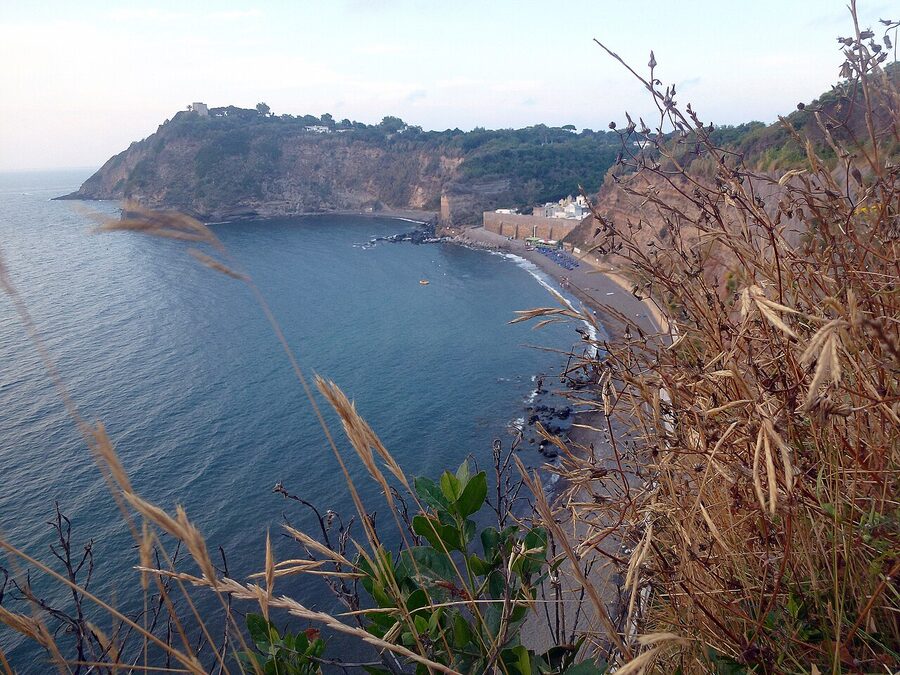
Procida’s beaches are volcanic black sand. The water is calmer and a darker blue than you get on the Tyrrhenian-facing islands, and the beaches are a fair bit smaller. Lidos exist (rented sunbeds, an attached café, around €15 to €25 for the day), but unlike most of southern Italy there’s still a generous amount of free beach. Bring your own towel, a wide hat, and accept that the sand is going to colour your soles for a week.
Spiaggia Chiaia
The closest beach to Marina Corricella and reachable by 186 stone steps from Belvedere Elsa Morante. Sun all morning, full shade by 4pm, and a friendly beach bar called Da Conchiglia at the back that does a respectable spritz and basic pasta. Best on the island in the morning, sub-par as a sunset spot. The view from the steps down is the cliffside shot of Corricella from the side that ends up on every guidebook cover; turn around at the halfway landing.
Chiaiolella and Ciraccio
Joined by a sandbar at low tide, these are the two longest beaches on the island and the family option. South-west facing, so the sun stays late and the sunsets are properly orange. Several beach clubs (Lido Vivara is the best of them, with a rooftop and proper drinks) and ample free space. About 25 minutes’ walk from Marina Grande, or take the C1 bus from outside the ferry terminal for €1.20.
Pozzo Vecchio (Il Postino beach)
Smaller than the others, with the Procida cemetery on the cliff above, and famous for being the beach where the funeral scene in Il Postino (1994) was filmed. The story Massimo Troisi played has a real-world echo here: Troisi died of heart failure twelve hours after wrapping the film, age 41, and the cemetery on the cliff is a coincidence the islanders have stopped joking about. The beach is fine for a swim, the lido is fancy and overpriced, and the bus from Marina Grande takes ten minutes.
Spiaggia della Lingua
Pebble, not sand. Smaller, busier, and right next to the ferry port. Skip it unless you have a delayed ferry and a swimsuit in your bag. The water is fine and you can keep an eye on the boat, but you can do better with twenty more minutes of walking.
Where to stay (no big hotels exist)
There is exactly one resort on the island and it has fewer than twenty rooms. Everything else is a B&B, a converted farmhouse, or a holiday rental in someone’s family palazzo. This is by design. Procida zoning rules prohibit large hotel construction, and the island maxed out its overnight bed count somewhere around 2018. If your Italy expectations include a 5-star spa with a sea-view infinity pool and three restaurants, book Capri instead. If “small B&B run by a couple where breakfast is served on the terrace” sounds like the holiday, you are in the right place.
Practical bits on where to base yourself:
- Marina Grande (around the port): the most convenient if you only have one night. Easy ferry access, a working town feel, decent restaurants, but not the postcard.
- Centro / Casaleone (the middle of the island): walking distance to either Corricella or Chiaiolella, quietest at night, lemon groves out of the bedroom window. Best for stays of three nights or more.
- Marina Corricella: the most photogenic spot but also the loudest at lunchtime when the day-tripper restaurants fill up. Best for two-night romantic stays where you don’t mind the noise.
- Chiaiolella (south-west tip): beach holiday vibe, proper sunsets, smaller selection of places to stay. Best if you’re here mainly for the beach.
Three places I’d actually book:
- San Michele Boutique Hotel sits up in Corricella with a handful of rooms looking down at the marina. Bohemian-style design, the on-site restaurant Il Pescatore does the best breakfast on the island, and the location means rolling out of bed onto Via San Rocco at 7am before the day-trippers arrive.
- Casa Giovanni da Procida is the friendly mid-budget option. It’s in the centre, twenty minutes’ walk from either marina or Chiaiolella, with simple coloured-wall rooms and breakfast in a quiet garden. The traditional Procida pastry filled with lemon cream is on the breakfast table every morning.
- Maresia Procida sits at the end of Chiaiolella beach, with the pool and gardens facing west into the sunset. Direct beach access. Worth the splurge if you want the holiday-resort version of Procida; you won’t be in the centre much.
Holiday-rental tip: Airbnb has dozens of small apartments across the island for €80-€150 a night, often in family palazzi with shared courtyards. If you’re staying four nights or more this is the best value option, especially if you want to cook with the lemons.
Eating: it’s mostly fish and lemons
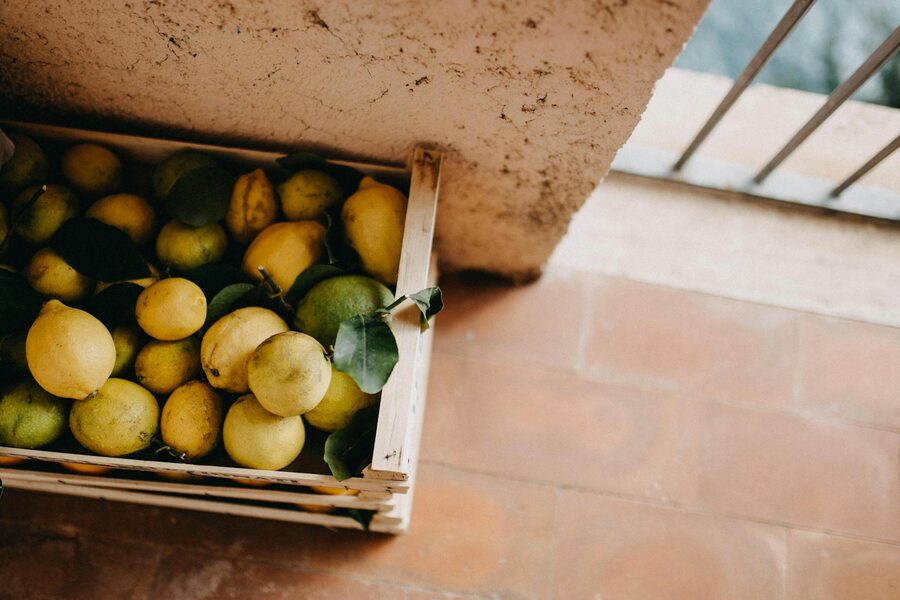
Procida grows its own variety of lemon, the limone di Procida, which is bigger and rounder than the Amalfi sfusato and has noticeably less sour pith. Locals stuff them with garlic and olive oil and serve them in slices as insalata di limone. They make liquor from the leaves (Foglioli) and from the peel (Scorza), which is the better of the two, and they bake a flaky pastry called lingua di Procida filled with lemon-cream custard that is the breakfast you should eat every single morning of your visit. Almost everywhere on the island serves the lingua, but the best version comes from Bar Roma Pasticceria on Via Roma.
Fish is the rest. Procida has been a fishing town since the Middle Ages and the morning catch goes straight to most of the harbour-side restaurants. If you don’t eat seafood, the menus get short fast: ask for vegetarian options and they will usually adapt, but you will end up eating a lot of pizza.
Restaurants worth booking
La Pergola (Via Salette, in the centre of the island) sits in a private lemon grove with candle-lit tables underneath the lemon trees. The seafood pasta is excellent and the rabbit ragù is a local thing worth trying once. Pricier than average (€40-€55 per head with wine), worth it for the setting. Reservations essential in summer.
Il Pescatore at the San Michele hotel in Corricella does the best fish on the harbour. Bohemian design, simple plating, and the breakfast is the best on the island even if you’re not staying there. Around €40 per head for dinner.
Pizzeria Fuego on Via Marina di Corricella is the harbour-front option that does a tortellini stuffed with pistachio and burrata, served with prawns, that I have thought about at least six times since eating it. No pizza at lunch, despite the name.
La Piazzetta in Piazza dei Martiri is the budget pick: pizzas, gnocchi alla sorrentina, salads, all under €15, with a balcony view of Corricella below. The locals eat here. The day-trippers don’t realise it’s there.
Sejà (centre of island, near La Pergola) opened in 2024 and is a serious tasting-menu restaurant from two brothers who came home to set it up. Seven courses, regional ingredients, around €70 per head before wine. This is the special-occasion meal of the trip.
Bar Dal Cavaliere on Via Roma near the port does the best espresso and lingua di Procida on the island. Coffee €1.20, pastry €1.80. Last breakfast before the ferry back to Naples.
Getting there: the ferry from Naples
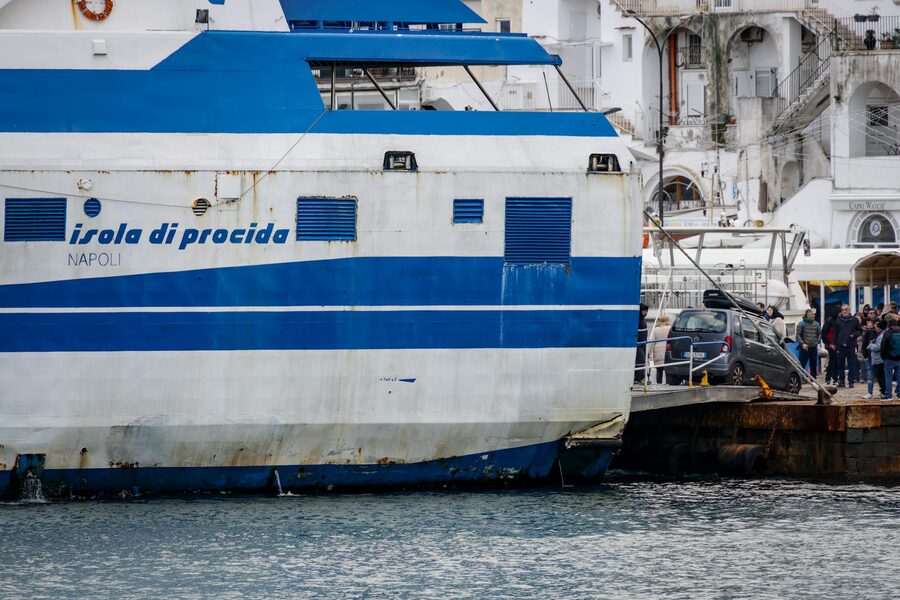
Procida is forty minutes from Naples by hydrofoil and an hour by car ferry. Two ports in Naples handle the route:
- Molo Beverello (foot passengers only, hydrofoils): SNAV runs roughly hourly to Procida. Tickets are €23-€25 each way. Travel time: 40 minutes. This is the option for day-trippers and anyone arriving at Naples Centrale by train.
- Calata Porta di Massa (cars and foot passengers, slower ferries): Caremar runs about every 90 minutes. Tickets are around €15 each way for foot, more for vehicles. Travel time: one hour.
From Ischia, hydrofoils run every 20-40 minutes and take 15 minutes (€8-€12). The slow ferry takes 30 minutes for €5-€8. From Sorrento, Alilauro runs three weekly direct services in summer; otherwise change in Naples or Ischia. From Capri, you have to change in Ischia or Naples. There is no direct service.
Cars are not allowed on Procida from April to October for non-residents. This is enforced. Don’t try to bring your rental car. You don’t need it: the island is four square kilometres, the buses are €1.20, and you can walk from one end to the other in 40 minutes. If you want a vehicle, rent an electric bike at General Rental near the ferry pier for around €15 a day.
Practical: the ferry timetable on Direct Ferries is the easiest place to compare schedules, and you can also book directly with SNAV or Caremar. Naples airport (NAP) is 40 minutes by Alibus to Molo Beverello (€5), so it is genuinely possible to land at lunchtime and have aperitivo on Corricella by sundown.
Capri vs Procida: the contrarian case
The case for Capri: the Faraglioni are extraordinary, Anacapri is genuinely beautiful, and the Blue Grotto is the kind of natural wonder you only get a few of in a lifetime. The case against: in July and August the day-tripper population from Naples and Sorrento can hit 25,000 on top of an island with a permanent population of 14,000. A pizza on the via Camerelle costs €22. The Faraglioni boat tours are €25 a head. The Funicolare queue from Marina Grande to Capri Town can run 90 minutes in August. You will have a perfectly nice time and you will leave with the impression that someone has been gently mugging you for three days.
Procida has none of this. There are roughly 10,000 residents and the day-tripper count rarely passes 3,000. A pizza in Piazza dei Martiri costs €8. There is no funicular because the island is small enough that nobody needs one. The Capital of Culture year in 2022 brought more press attention than tourists, and the local mayor was famously worried it would change the island; it didn’t. The day-trippers who arrive on the morning ferry from Naples mostly walk the Corricella loop, eat lunch on the harbour, and leave on the 4pm boat. After that, the island is yours.
If your trip already includes Naples and you have three or four extra nights to assign, the contrarian play is: skip the Amalfi Coast entirely, base yourself in Procida, and use it as a slow-living base for day-trips to Pompeii (€15 by metro and Circumvesuviana from Naples, 2 hours), Ischia (15 minutes by hydrofoil, longer thermal baths if you want them) and Naples (the Capodimonte museum is the underrated one). This is a better Italian week than five hot days in Capri. I have done both.
Reading and watching list before you go
The book first: The Talented Mr Ripley by Patricia Highsmith (1955) is the original. Mongibello is a composite resort town somewhere on the Bay of Naples; Highsmith never names a real island, so the production was free to pick. The book is colder and stranger than the film, with a Ripley who is more obviously broken from the first chapter. Read it on the plane.
The films and series, in chronological order:
- Plein soleil (René Clément, 1960) is the original adaptation, with Alain Delon as Ripley. Filmed largely in Ischia, with some Procida exteriors, and worth seeing for Delon alone.
- The Talented Mr Ripley (Anthony Minghella, 1999) is the Matt Damon version, with Jude Law as Dickie and Gwyneth Paltrow as Marge. This is the film whose Procida and Ischia locations you will recognise as you walk around the island.
- Ripley (Steven Zaillian, 2024) is the Netflix series, in black and white, with Andrew Scott as Ripley. Shot in Naples, Capri, the Amalfi Coast, Rome and Venice; it skipped Procida entirely, which is mostly why this article isn’t called the Ripley filming location guide. The black-and-white photography is exceptional regardless.
- Il Postino (Michael Radford, 1994) is the other Procida film and arguably the better one. It picked up an Oscar for Best Music and used the same Corricella streets the Mongibello scenes use five years later. The funeral scene at Pozzo Vecchio is in this film; Massimo Troisi, the lead, died twelve hours after filming wrapped.
- Generazione 56K (Netflix, 2021) is a recent eight-episode Italian series that uses Procida as itself rather than as a stand-in. Gentle, very Italian, useful background reading on the island’s actual life.
One more book worth packing: L’Isola di Arturo by Elsa Morante (1957). Won the Strega Prize the year it came out and is set on Procida; the local author Elena Ferrante has called Morante her greatest influence, and the pen name “Ferrante” is widely thought to be a homage. There’s an English translation under the title Arturo’s Island. The viewpoint at the top of Salita Castello has Morante’s quotes posted on a wooden tourist board; you can follow the trail of “sui passi di Elsa” plaques around the island.
If you’ve read this far
The argument for Procida is simple: it is the smallest of the three islands in the Bay of Naples, it has no resort hotels and no funicular, the lemon harvest is its own variety, the cobbled street where Tom Ripley spies on Dickie Greenleaf is exactly what it was twenty-six years ago, and almost nobody has heard of it. Three nights is the right minimum. Five is better. Pack The Talented Mr Ripley, L’Isola di Arturo, and a wide hat. Eat a lingua di Procida every morning. Skip Capri.
If you’re working through other readerly destinations, the rest of the Read and Travel Challenge series goes well with this one: Under the Tuscan Sun’s Cortona is the same kind of slow-Italy week 400km north, Dan Brown’s Paris if you want a bigger city as the next stop, Crazy Rich Asians’ Singapore for the food-island change of pace, Outlander’s Inverness for the other “skip the obvious choice” pick in the series, and the Read and Travel Challenge Reading & Travel Challenge hub if you want the full reading list.