
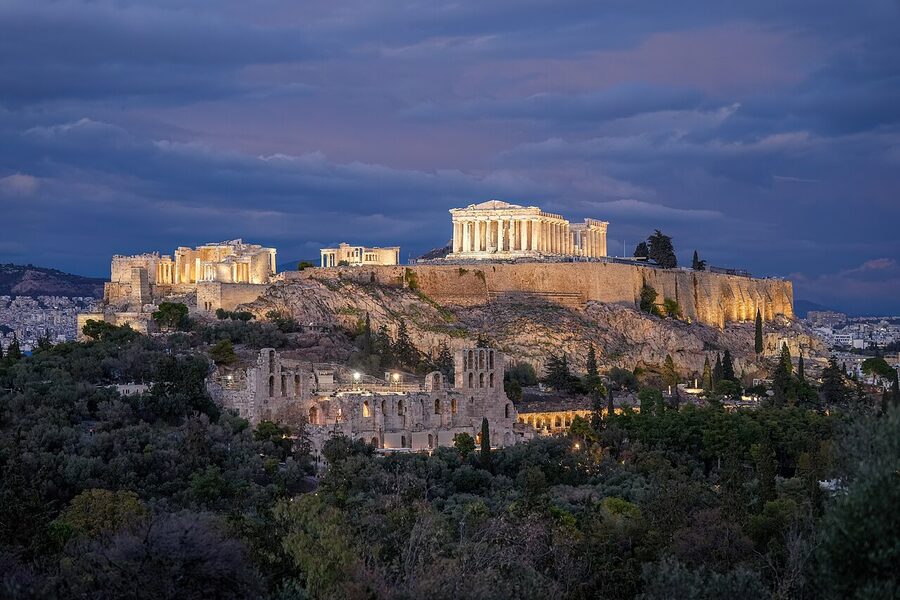
In 447 BC the Athenian statesman Pericles handed the architects Iktinos and Kallikrates a budget the city couldn’t really afford and told them to rebuild the temple the Persians had burned thirty-three years earlier. The result is the Parthenon. Two and a half thousand years and one Venetian gunpowder explosion later, most of it is still standing on top of the Acropolis, and your nine-year-old can climb the same marble path the Athenians climbed in the Panathenaic Procession. That’s the trip. Everything else in this guide is bonus.
I read The Lightning Thief the year my niece was eight, and we ended up in Athens together when she was eleven, halfway through The Last Olympians. This guide is what I wish I’d had on the plane. It’s a standalone Athens family guide first, with the book wink for the kid (or grown-up demigod) who wants to know which actual rock Annabeth’s mother fought Poseidon on. Prices, opening hours, and a kid-readiness rating per stop. The Riordan reading order is at the bottom for anyone packing a suitcase.
In This Article
- Plaka: where to actually base yourself
- Anafiotika: the Cycladic village hiding on the Acropolis slope
- The Acropolis: Olympus stand-in
- The Erechtheion: where Athena beat Poseidon for the city
- The Theatre of Dionysus: Mr D’s home turf
- The Cave of Pan and the south slope
- The Acropolis Museum: the rest of the rock, indoors
- Olympieion: where Zeus had the biggest temple in Greece
- Areopagus: the trial of Ares
- Day trip 1: Cape Sounion and the Temple of Poseidon
- Day trip 2: Delphi and the Oracle
- What to skip: the “Percy Jackson tour” commercial product
- Reading order: what to pack on the plane
- Practical Athens stuff that isn’t in the books
- If you have more days
Plaka: where to actually base yourself
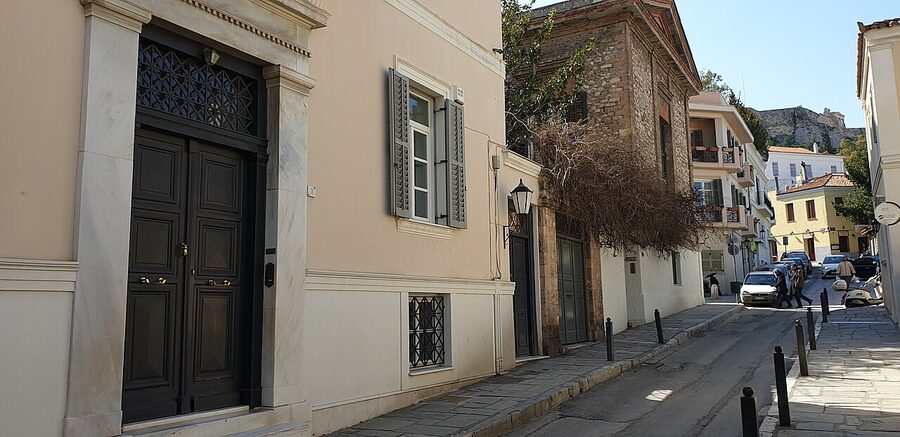
Plaka sits directly under the north and east slopes of the Acropolis. The streets are mostly pedestrianised, the cafés have outdoor tables, and three of the four Percy-Jackson-relevant Athens sites (Acropolis, Olympieion, Theatre of Dionysus) are within walking distance with no metro change required. For families with kids in the 9-13 range this matters a lot. After a morning trudging up marble in 30 degrees, being able to walk five minutes back to a hotel pool is the difference between a good day and a meltdown.
Three Plaka hotels worth knowing about, all verified and current:
- Athens Plaka Family Suites is named for what it is. Larger units with kitchenettes, useful for cereal-and-fruit breakfasts so you can get to the Acropolis at opening before the kids melt down.
- Plaka Hotel is the simplest entry point. Rooftop bar with a Parthenon view that you’ll send a photo home from on night one.
- Authentic Plaka Home for the apartment-style stay if you want a bit more space and a washing machine for the inevitable gelato accident.
Skip the chains around Syntagma Square unless your priority is the airport metro line. Syntagma is a fifteen-minute walk from the Acropolis with a hill in between, and that fifteen minutes will feel like an hour to anyone under twelve at the end of a 30,000-step day.
Anafiotika: the Cycladic village hiding on the Acropolis slope
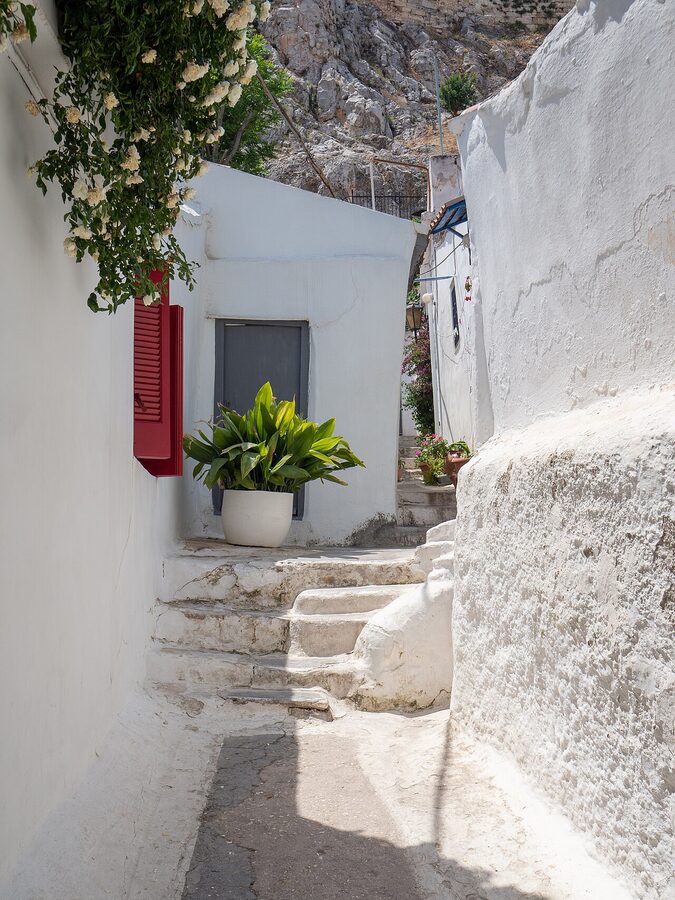
Most guides treat Anafiotika as a bonus photograph. It’s actually the best route up the back of the Acropolis if you’ve already done the main entrance and want a different walk on the way down. King Otto, Greece’s first king after independence, brought stonemasons from the Cycladic island of Anafi to build his new palace in the 1840s, and they built themselves houses in the only architectural style they knew. The result is two narrow alleys of whitewashed cubes with blue doors, draped in bougainvillea, on the eastern slope of the Acropolis. It’s tiny. Twenty minutes covers it. The kids will think they’ve teleported to Santorini.
The Acropolis: Olympus stand-in
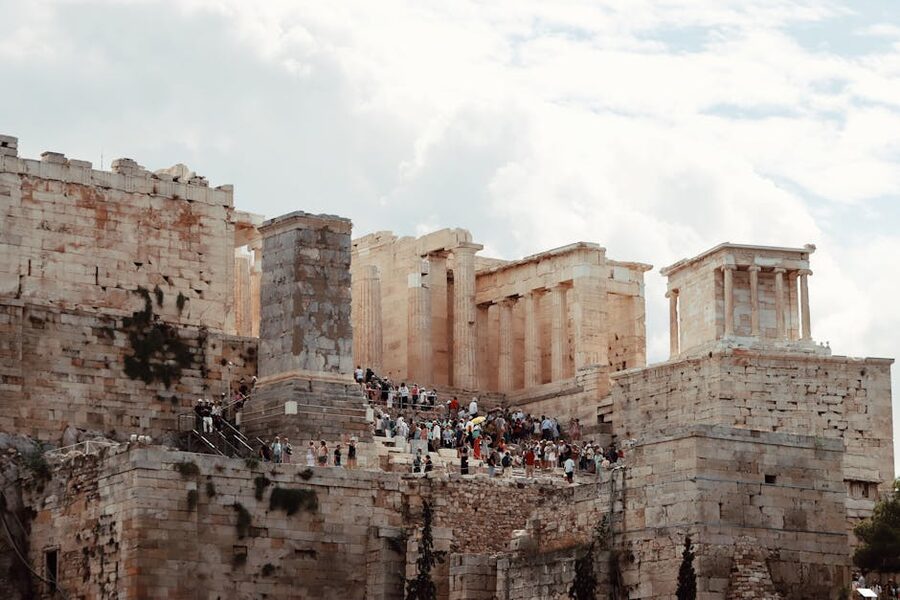
The Acropolis is the rock the Parthenon sits on, and in Riordan’s universe it’s a stand-in for Olympus. In the climactic scene of The Last Olympians Percy and the gods defend the Empire State Building, but the visual model for the gods’ actual home is the temple complex you’re climbing. The Blood of Olympus brings the seven demigods back here to fight the Giant Army among the columns. If your kid has read either, the moment they crest the Propylaea and see the Parthenon for real is worth the entire airfare.
Practical bits, current for 2026:
- Adult ticket: €30 year-round. Reduced ticket €15 for EU students and visitors over 65. EU citizens under 25 are free. Non-EU under-5s are free.
- Time-slot booking is mandatory. You cannot just turn up. Book through hhticket.gr, the official Greek e-ticket portal, or one of the licensed resellers. Slots release in batches and the early-morning ones go first.
- The combination ticket has been discontinued as of 1 April 2025. The old €30 combo used to bundle six other archaeological sites including the Olympieion and the Ancient Agora. Now each of those sells separately, €5 to €20 each. If you plan to do three or more, the old maths still works in your favour, just paid in pieces.
- Free admission days: 6 March, 18 April, 18 May, last weekend of September, 28 October, and the first and third Sundays of each month from 1 November to 31 March. Avoid these if you actually want space to walk. They’re peak crowd days.
- Kid-readiness: two hours minimum, mostly outdoors and uphill on slick marble. Bring water, a hat, and shoes with grip. Kids 9 and up handle it fine. Under 7 is a stroller-and-snack situation; baby carriers are easier than strollers on the marble.
Go at 8am opening or for the last 90 minutes before close. Midday between 11am and 2pm is the worst window: cruise crowds, no shade, and marble that radiates heat. The southeast entrance near the Theatre of Dionysus used to be the secret-bypass option, but enough people know about it now that the lines are similar to the main Propylaea entrance.
The Erechtheion: where Athena beat Poseidon for the city
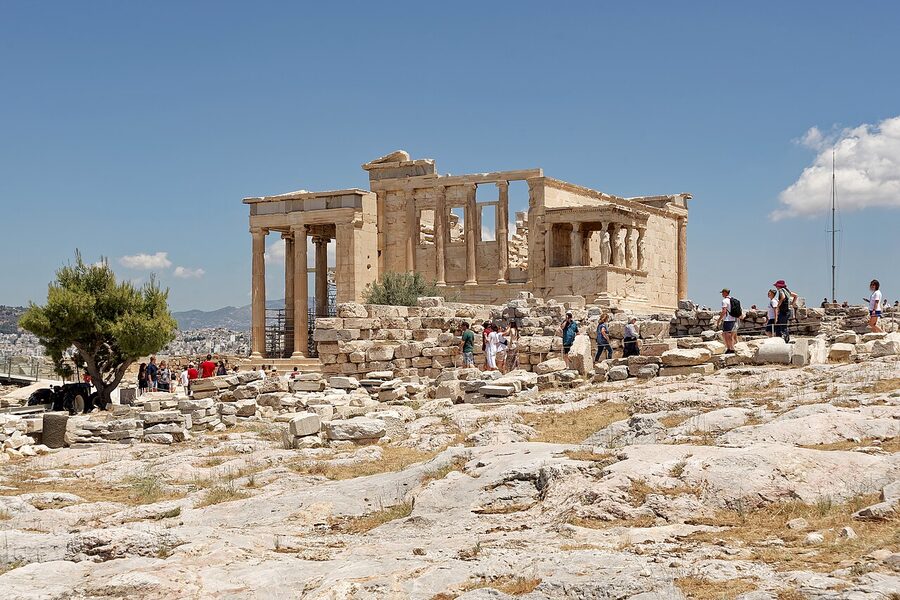
The Erechtheion is the smaller temple on the north side of the Acropolis and the one your demigod will probably care most about. It was built around 421-406 BC on the spot where, in the founding myth, Athena and Poseidon held their contest for patronage of the city. Poseidon’s trident strike is supposedly the mark in the rock floor inside the chamber. You can’t get into the chamber, but the rocks below the temple’s north porch are the spot pointed at by every Greek mythology guide and worth two minutes of looking. Tell the kid which mark they’re hunting for and let them find it themselves; it lands better.
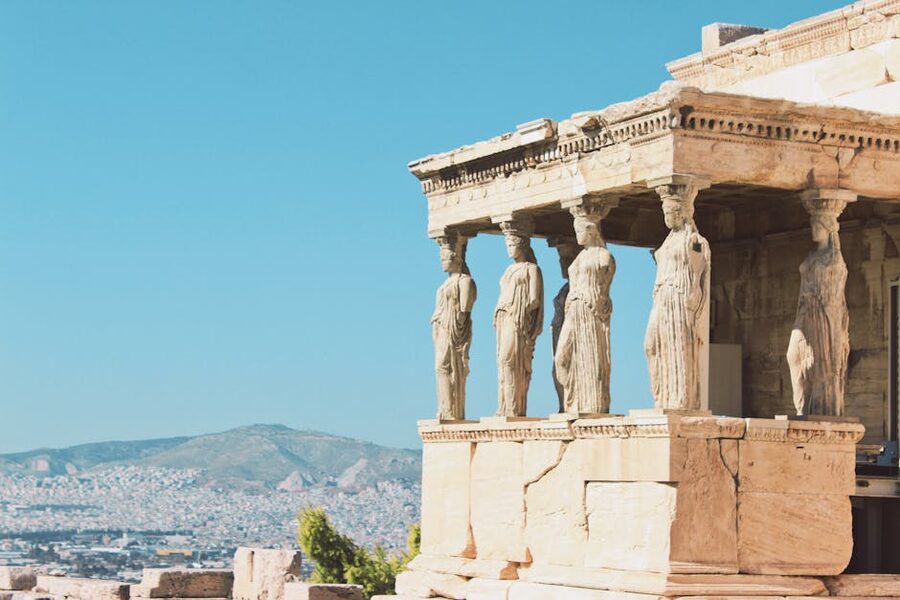
The famous Caryatids holding up the south porch are not the originals. The five on the temple are exact copies; the originals were moved to the Acropolis Museum in 2007 to protect them from acid rain. The sixth original is in the British Museum, and you’ll get a small pointed speech about that in any guided tour. Worth knowing before you go up.
The Theatre of Dionysus: Mr D’s home turf
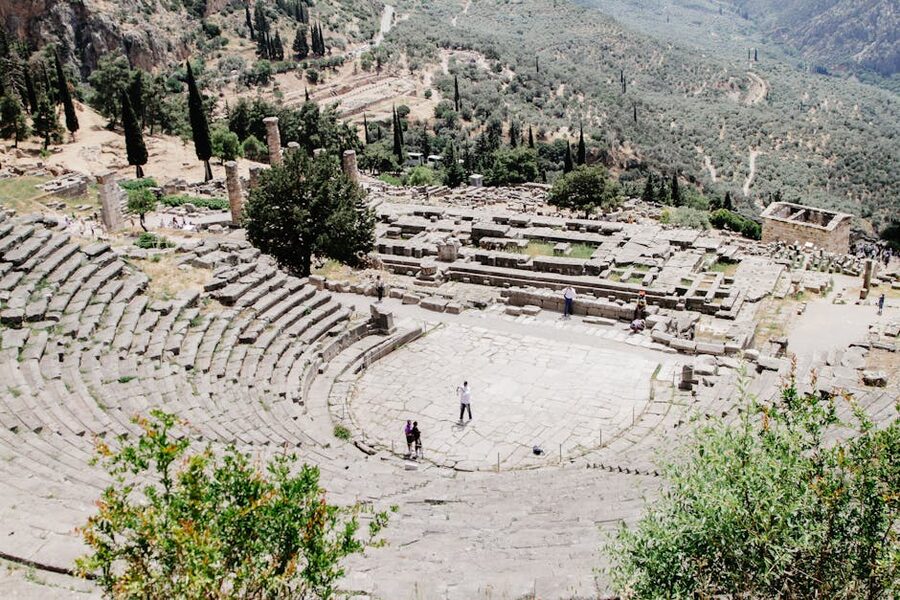
At the southeast foot of the rock is the Theatre of Dionysus, where the great tragedies of Aeschylus, Sophocles and Euripides were first performed in the fifth century BC. It is, by some distance, the oldest theatre in the Western tradition. For Camp Half-Blood readers it’s also Mr D’s stomping ground; Riordan keeps a recurring joke about Dionysus stuck in detention as camp director, and standing in his actual theatre is a small payoff. The site is included in the Acropolis ticket, so the move is to enter the rock at the main Propylaea, do the Parthenon and Erechtheion, exit down the south slope and pass through the theatre on your way out. Don’t double back uphill.
The Cave of Pan and the south slope
Tucked into the cliff face below the Acropolis on the north slope is a small natural cavern that was a shrine to Pan from at least the fifth century BC. Pan is Grover’s father in the Riordan books, and his cave is one of the few demigod-coded spots in Athens that almost no tour guide mentions. You can’t enter it, but you can stand below and read the small Greek archaeological-service sign. Two minutes of detour, and a satisfying I-knew-about-this-and-the-tour-didn’t moment for the right kid.
The Acropolis Museum: the rest of the rock, indoors
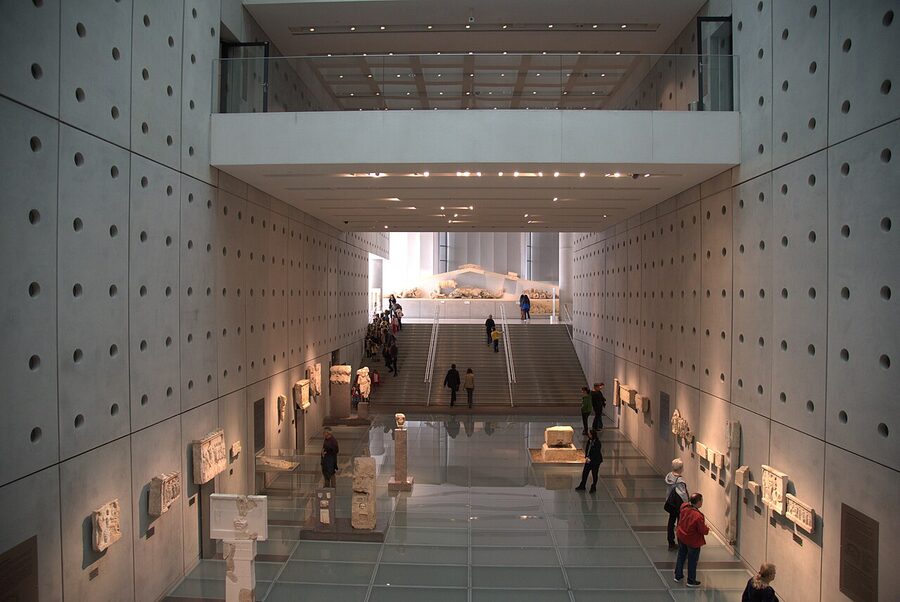
The Acropolis Museum opened in 2009 as the answer to two problems: where to put the original sculptures that had been weathering on the rock for 2,400 years, and where to put the Parthenon Marbles when (not if) the British Museum returns them. The top floor is built to the exact dimensions of the Parthenon’s frieze, with the surviving panels arranged in their original positions, and the empty white plaster casts marking what’s still in London. Walking that floor and reading the labels is one of the more political museum experiences in Europe, and kids 10 and up follow the argument easily.
Practical:
- Adult ticket: €15 in summer (April-October), €10 in winter (November-March). Under 18 free. Children with parents skip ticket queues.
- Hours: long in summer, often 9am to 8pm with extended Friday hours; check theacropolismuseum.gr the week of your visit because hours shift seasonally.
- The cafe on the second floor has a Parthenon view and reasonable prices for what it is. A €4 Greek coffee with that view is the value play of central Athens.
- Pair it with the Acropolis the same day. Rock first thing in the morning, lunch in Plaka, museum in the afternoon when the heat is at its worst. Air conditioning at exactly the right hour.
Olympieion: where Zeus had the biggest temple in Greece
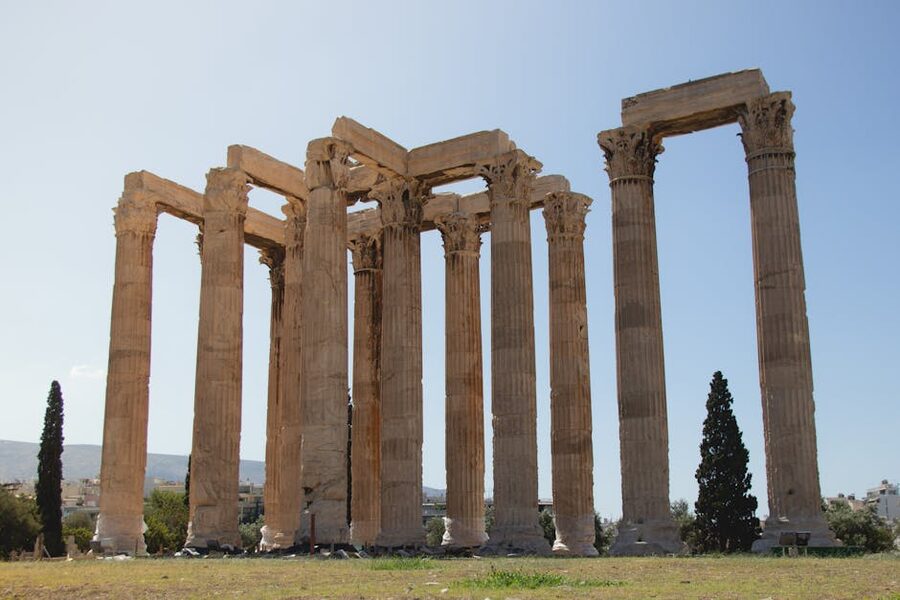
Ten minutes’ walk east of the Acropolis sits the Olympieion, the Temple of Olympian Zeus. When it was finally finished in AD 131 by the Roman emperor Hadrian, it was the largest temple in Greece. Construction had started in the sixth century BC under the tyrant Peisistratos, ran out of money, restarted under various rulers, and took 638 years total. Fifteen of its 104 columns are still standing; one toppled in 1852 and the Greek archaeological service decided to leave it lying on the ground exactly where it fell. That column is a great photo and a useful sense-of-scale for kids.
For Percy Jackson readers the temple matters because Zeus is the king of Olympus and the named villain of The Lightning Thief. Standing beneath columns originally built to honour him, in the city where Riordan stages most of his pantheon’s politics, lands. A short visit, half an hour, ticket €10. Hadrian’s Arch sits ten metres outside the gate and you can photograph it for free without buying a ticket; everyone does.
Areopagus: the trial of Ares
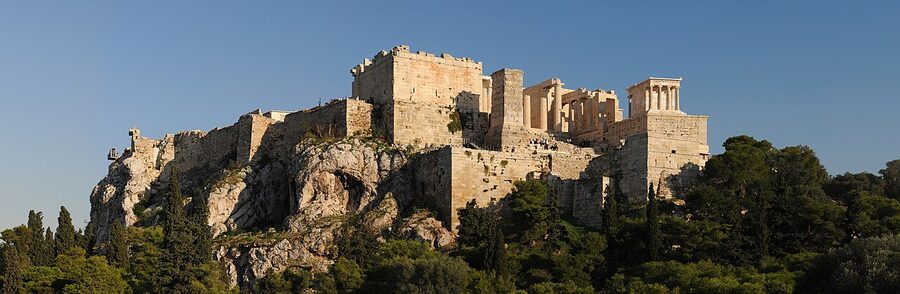
Just below the Acropolis main entrance is a bare rocky knoll called Areopagus, the Hill of Ares. According to the founding myth, Ares was put on trial here by the other Olympians for killing Poseidon’s son Halirrhothius, the first murder trial in Greek history. The Athenians later used the spot for their actual murder court. Percy has more than one tense exchange with Ares in The Lightning Thief; standing on the war god’s literal trial rock is the right kind of book wink.
Areopagus is free and unfenced. The marble has been polished by 2,500 years of feet and rain and is genuinely slick. Use the carved staircase on the western side; the worn rock face is treacherous in shoes with no grip. Sunset crowd starts gathering around 7pm in summer and is one of the better free things to do in Athens.
Day trip 1: Cape Sounion and the Temple of Poseidon
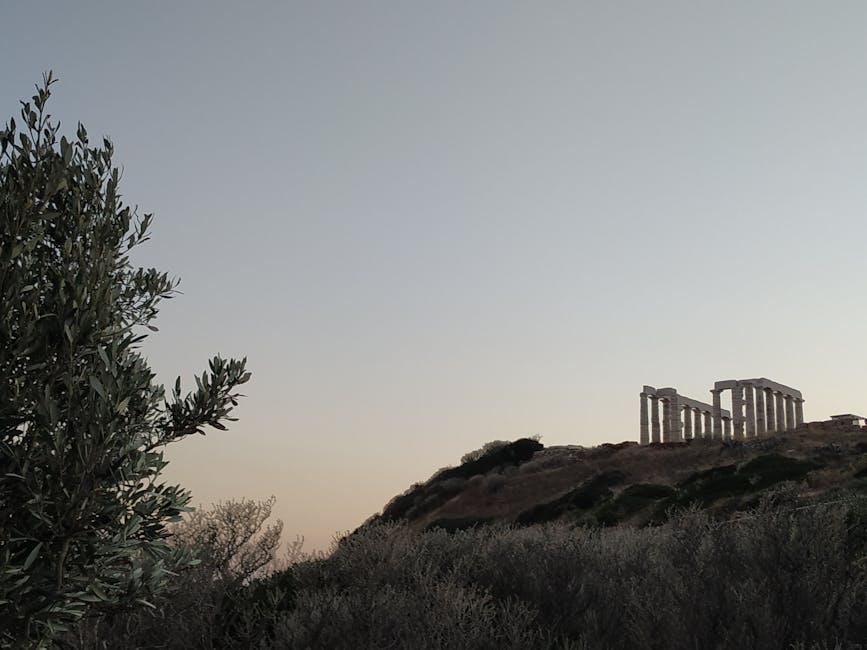
If your demigod is going to remember one thing from the trip, make it this. Cape Sounion is the southern tip of Attica, an hour and a half east of central Athens by road. The Temple of Poseidon sits on a 60-metre cliff over the Aegean, built around 444 BC under the same Periclean building programme that gave us the Parthenon. Sixteen of its original 38 Doric columns are still up. There’s a small museum on site, a beach below for a paddle, and the entire reason most people come is the sunset.
For Lightning Thief readers the connection writes itself. Percy is the son of Poseidon. The temple is to Poseidon. The location is on the sea Poseidon rules. There is a moment, watching the orange light on the marble columns and the dark blue water below, where even adults find the book wink unironic. Lord Byron carved his name into one of the columns in 1810; you can still see the graffiti, badly. Don’t add to it.
Three ways to get there:
- KTEL public bus from Mavromateon Street (near Pedion tou Areos park, north of the centre). Two routes, the coastal road via Glyfada or the inland road; the coastal is more scenic and takes about two hours. Bus runs roughly hourly during the day, single ticket about €7. Cheapest option, slowest, gets you in among the locals.
- Organised half-day sunset tour from Athens. Worth it for families because someone else handles timing the bus return for the post-sunset coach back. GetYourGuide has a few with mostly 4.7-plus reviews; pick one that includes museum entry and pickup from your hotel.
- Rental car or taxi. A return taxi for a couple of hours costs about €120-160 negotiated; a small rental car for the day is €40-60 and gives you the freedom to leave when the kids are tired. Parking at the temple is free.
Time the visit so you arrive 90 minutes before sunset and have time to walk the temple in good light, eat something at the on-site cafe, then get back to the cliff edge for the actual sunset. Site closes shortly after sunset year-round. €10 entry, half-price reduced.
Day trip 2: Delphi and the Oracle
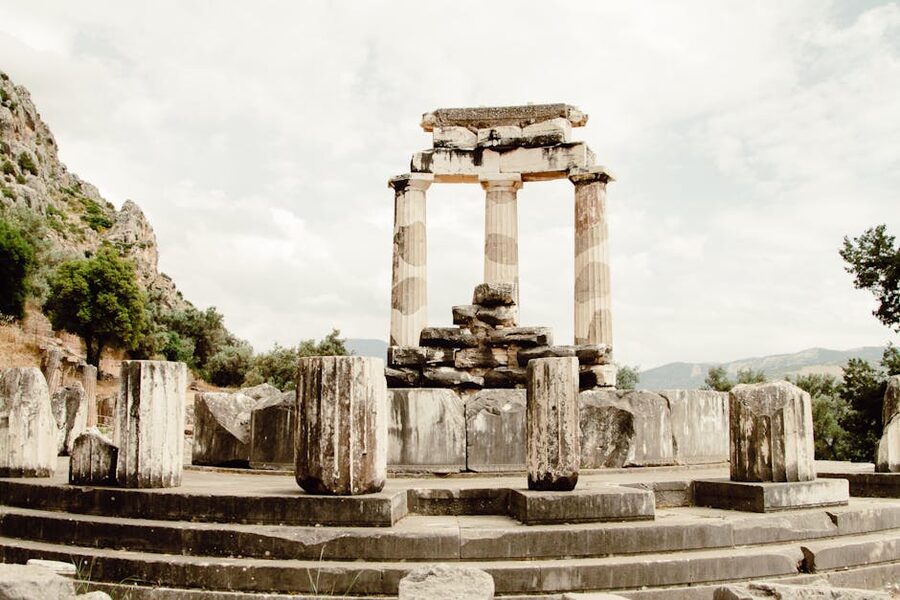
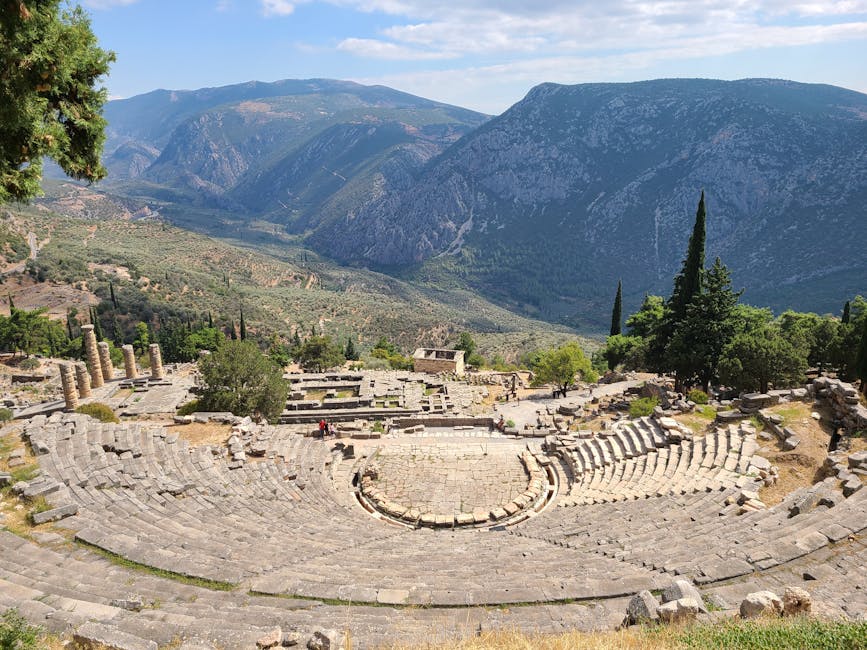
Delphi is a full-day trip, two and a half hours from Athens by road. In the ancient world it was the centre of the world, marked literally by a stone called the omphalos that the Pythia, the priestess of Apollo, sat near while delivering prophecies. Visitors travelled from across the Mediterranean to ask her questions, got answers in opaque verse, and went home and made expensive decisions based on what she said.
For Percy Jackson readers the Oracle of Delphi runs through almost every book in the original series. Percy gets his first prophecy in chapter ten of The Lightning Thief from the spirit of the Oracle housed in Camp Half-Blood’s attic; the Oracle’s spirit eventually moves into Rachel Elizabeth Dare. Standing at the actual cliff where the original Pythia worked, with the same view down the valley to the Gulf of Corinth, is the strongest mythology-comes-alive moment after Sounion.
Practical:
- Adult ticket: €12 combined (archaeological site plus museum). Reduced €6.
- Two ways to do it: rent a car for the day and drive (more flexible, about three hours each way with stops); or join an organised Delphi day-trip from Athens. The organised tour is the right call for families because the drive is mountain switchbacks and you’ll get more out of the day not driving them.
- Site is steep. The path climbs about 200 metres of elevation from the entrance to the stadium at the top. Treat the museum as a flat-ground reward at the end and tell the kids that in advance.
- Eat in Arachova on the way back. The mountain village ten minutes east of Delphi is a tourist town now, but the gyros are still excellent and significantly cheaper than the ones near the archaeological site itself.
What to skip: the “Percy Jackson tour” commercial product
A small honest note. There are several Athens tour operators selling “Percy Jackson scavenger hunts” or “Percy Jackson treasure hunts” in the Plaka area. Most are €60-90 a person, two to three hours, and they walk you between sites you can walk between yourself for free. Some are excellent (the Greeking.me Acropolis tour gets consistently strong reviews); most are the same self-guided walking app dressed up with a kid-bait hook. If your child wants the structure, book one. If you’ve already read this guide and have a half-day in Plaka, you don’t need one. Walk the same route, save the €240 for the Sounion sunset, and let the kid spot the trident mark themselves.
Reading order: what to pack on the plane
If your kid has read all five Percy Jackson books and the Heroes of Olympus follow-up, they’re ready for Athens with no homework. If they’re new to the world, here is the order I’d put on the plane:
- The Lightning Thief: book one, the original, sets up Percy and the modern-Olympians premise. Maps cleanly to the trip; the Oracle scene at Camp Half-Blood, the conflict with Ares, and the climactic confrontation with Zeus are all referenced in this guide’s stops.
- The Sea of Monsters: book two, looser fit to Athens but a fast read.
- The Last Olympians: book five, the climax of the original Olympian series. Reads like a thriller and gives the Acropolis visit the big-payoff feeling.
- The Heroes of Olympus: The Lost Hero: the follow-up series book one, which expands the cast and brings the Greco-Roman crossover that The Blood of Olympus later resolves on the Acropolis itself.
One book on the flight out, one for the trip, one for the flight home. That’s the rhythm. The Riordan style is fast and chapter-short, and most kids in the 9-13 range will read a book a day on holiday given a decent pool.
Practical Athens stuff that isn’t in the books
- Airport to centre: the Athens Metro Line 3 (blue) runs from the airport directly to Syntagma in 40 minutes. €9 single, €16 return; family discount applies. The taxi is a flat-rate €40 day / €55 night to central Athens, useful with luggage and tired kids.
- Tap water is fine. Buy a refill bottle the first morning and you’ll save €25 on bottled water across a week.
- Best month: May or late September. April can be wet, June through August is brutally hot at the Acropolis. October is gorgeous and the cruise crowd is winding down.
- Money: contactless works almost everywhere including the smallest tavernas; the only place we couldn’t pay with card was a souvlaki stand in Monastiraki. Carry €40 cash for the rare cash-only spot.
- Reading at night: the bookshops on Adrianou Street in Plaka have English-language sections including (yes) Percy Jackson in the original. Buying the next book in Athens is its own small souvenir.
If you have more days
This guide assumes three to four full days in Athens itself. If you’ve got a week or more, the Peloponnese is the big upgrade. Mycenae, Epidaurus, ancient Olympia and ancient Corinth are all within a long day’s drive from Athens or a comfortable two-night base in Nafplio. The Riordan world touches Olympia (the chariot-race scene in The Blood of Olympus) and Corinth (the witch Medea’s home), but honestly the Peloponnese earns the trip on its own merits, the Percy Jackson hook is just the vehicle. If you’re already on the site, our Outlander guide to Inverness covers the same do-the-book-then-go-to-the-place rhythm for an older audience and might give you ideas for next year.
For the rest of the launch reading list, the Lisbeth Salander guide to Stockholm and the Fault in Our Stars guide to Amsterdam are the European siblings to this Athens piece, and the Read and Travel Challenge Reading & Travel Challenge hub has the full lineup as it grows.
Pericles, Iktinos and Kallikrates would not have predicted that twenty-five hundred years later a kid from Ohio would climb their hill because a New York English teacher wrote a fantasy novel about it. They might have approved. Athens has been a city for tourists since at least Hadrian, and the trip across the city centre is shorter and cheaper than they ever imagined. Bring a hat, drink the tap water, and let the eleven-year-old find the trident mark themselves.