The myth I keep hearing from first-time Larsson pilgrims is that you have to take the official two-hour Stieg Larsson Millennium Tour through the Stockholm City Museum or you’ll miss the proper experience. You won’t. The official tour is good, the guides are knowledgeable, and the City Museum has been running it since the trilogy first hit. But the City Museum also sells a self-guided Millennium Map in its gift shop for around 40 SEK, and that map plus an unhurried day on Södermalm gets you the same locations at a pace the tour doesn’t allow. If you only have an afternoon and don’t read the books closely, take the tour. If you came to Stockholm because of the books, do this instead.
I read The Girl with the Dragon Tattoo on a long-haul flight, finished it on the connection, then went to Stockholm a year later and walked Söder for two days with the second book in my pocket. This is the version of that walk I’d give a friend. Where the addresses actually are, which ones pay you back, which ones are filler, what to eat between them, and the practical bits Larsson never tells you, like the fact that you’ll do most of it uphill.
In This Article
- Söder is the whole map
- Bellmansgatan 1: where Mikael Blomkvist lives
- Monteliusvägen: the unnamed best walk in the book
- Lundagatan: Lisbeth’s first flat and a Pippi Longstocking joke
- Fiskargatan 9: Lisbeth’s penthouse, 21 rooms, three of them used
- Mellqvist Kaffebar: where Larsson actually wrote
- Mariatorget: a green square with one strange Larsson photograph
- Götgatan: the Millennium offices and the world’s most-photographed 7-Eleven
- Kvarnen: where Lisbeth meets Evil Fingers
- Tabbouli, formerly Samir’s Cauldron
- Mosebacke: the square Lisbeth made famous twice
- Slussen and the herring burger from Nystekt Strömming
- Where to stay: Söder, not Norrmalm
- When to come
- Half a day for Gamla Stan
- Day trip: into the archipelago
- If you only have an afternoon
- How this guide is shaped, and what to read next
- One last note
Söder is the whole map
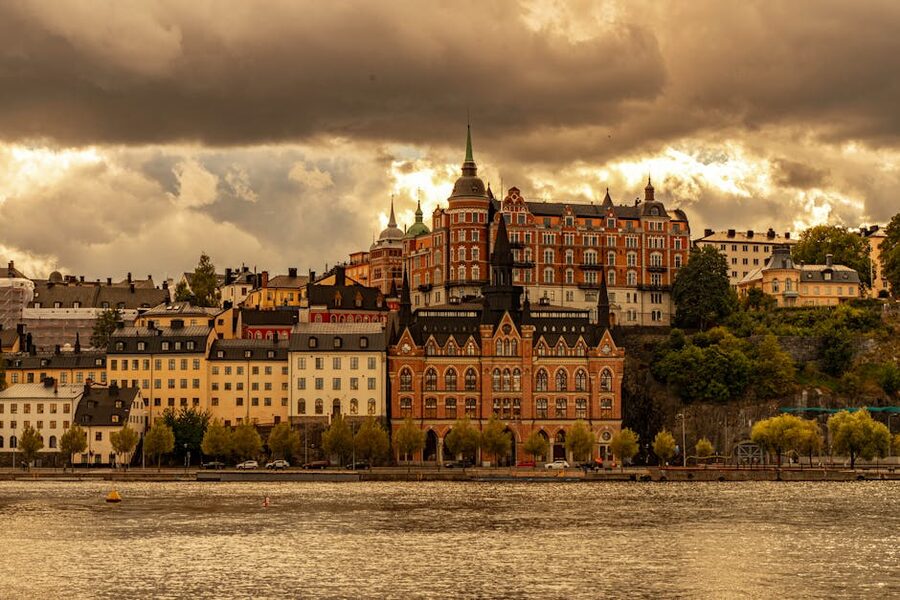
Larsson lived on Södermalm and gave most of his characters the same postcode. Mikael Blomkvist’s flat, Lisbeth Salander’s two flats, the Millennium magazine offices, Kvarnen, Mellqvist Kaffebar, and the 7-Eleven Salander uses for her Billy’s Pan Pizza supply are all here, scattered across the western and central parts of the island. Söder used to be the working-class side of Stockholm, full of factories and timber cottages; it gentrified hard from the 1990s on, and what you walk through now is small bookshops, vintage clothes, third-wave coffee, and bars where the playlist tells you the staff are in bands.
The shape of the island matters for planning. Söder sits on a ridge that climbs sharply from the water, and most Larsson addresses cluster on the north and west of that ridge. You can see the entire route on foot in about three to four hours at a strolling pace, six if you stop for a proper lunch and a coffee. I’d give it a full day if you flew here for it. You’ll want time to wander.
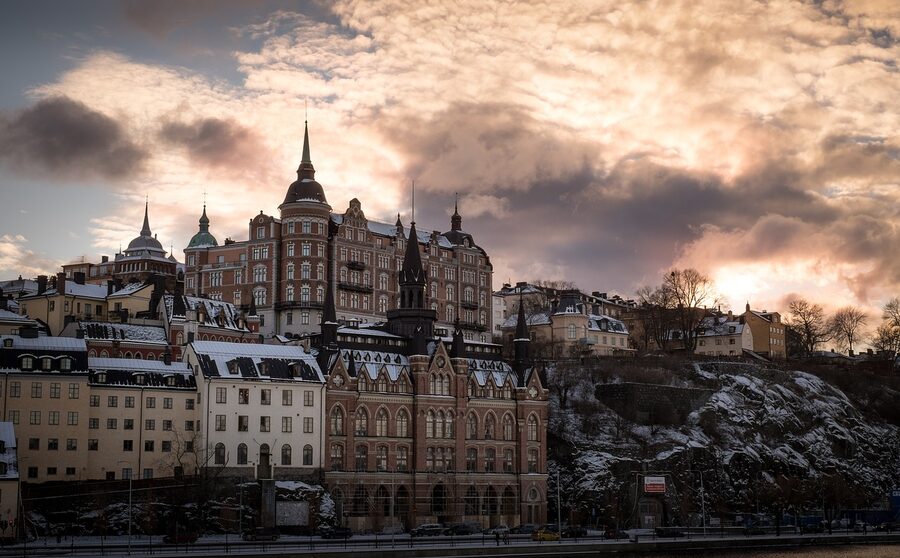
Practical orientation: get to Slussen on the metro. Slussen is the gateway between Gamla Stan, Stockholm’s medieval old town, and Söder, and it’s the natural starting point for any Larsson walk. From there, you climb. Comfortable shoes; the cobbles will eat any heel.
Bellmansgatan 1: where Mikael Blomkvist lives
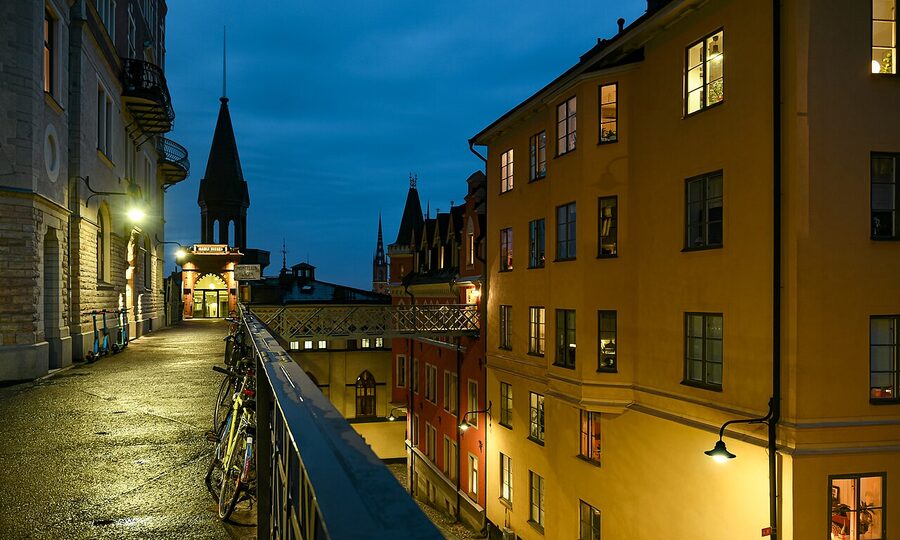
Bellmansgatan 1 is the address Larsson invented for Blomkvist. The building is real: red-brown brick, gothic and neo-gothic spires, a pointed tower, planter boxes in the windows, and an elevated mid-air walkway running along the upper storey. In the books Blomkvist buys the 70-square-metre attic flat cheaply because the previous owner had to leave the country in a hurry, which the book frames as a stroke of luck in Stockholm’s brutal housing market. There is a real family called Blomkvist living somewhere in the building, but according to The Local they were not known to Larsson.
Why this address? The most-quoted theory is that the street was named after Carl Michael Bellman, the eighteenth-century Swedish poet whose initials and first names match Carl Mikael Blomkvist’s. Larsson hid that kind of small joke in plain sight throughout the trilogy. He died in 2004, before publication, so a lot of his thinking about choices like this died with him.
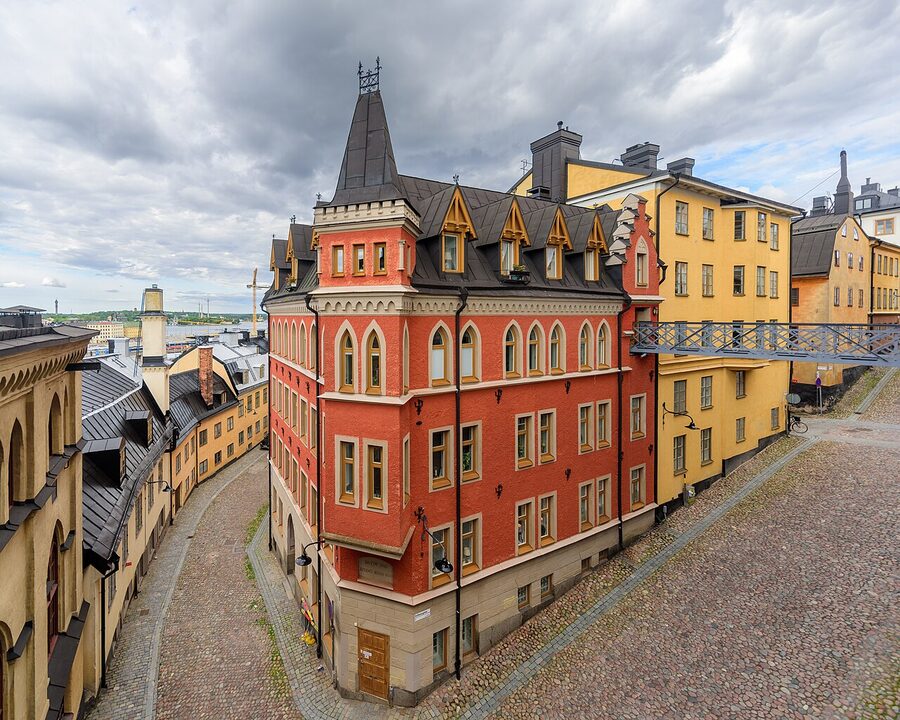
Honest take: it’s a beautiful building and a 90-second visit. People stand on the walkway with their phones, take a photo, and leave. The good news is that the views from the walkway, looking out over the Riddarfjärden bay toward Gamla Stan, are some of the best free views on the island. Linger there even if the building does nothing for you.
How to get there: from Slussen station, walk west along Hornsgatan for about eight minutes, then drop down the side streets toward the water. The walkway approach drops you onto the building from above, which is the photogenic angle. The street-level approach from below is less dramatic but gets you to the front door if you want the literal front-of-the-house shot.
Monteliusvägen: the unnamed best walk in the book
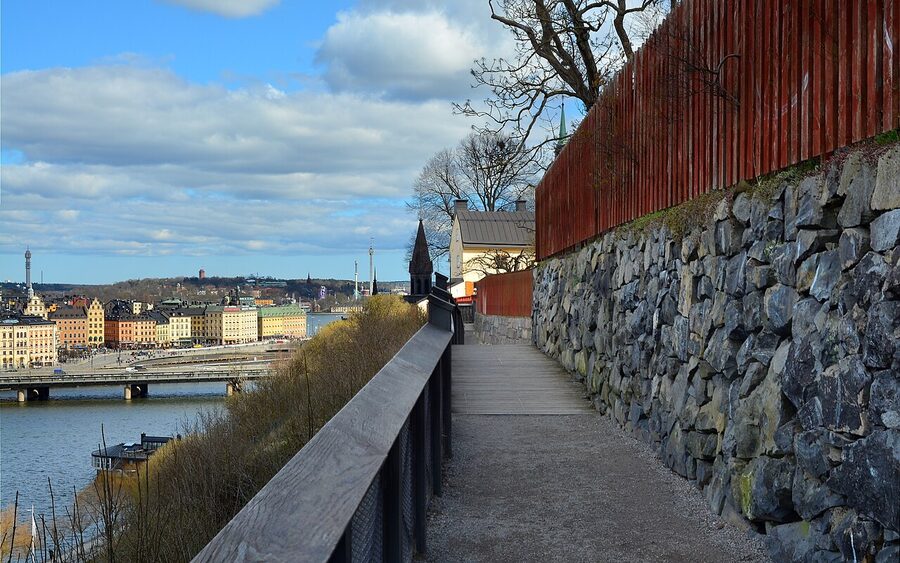
Bellmansgatan and Lundagatan, where Lisbeth’s first apartment sits, are connected by a small bridge called Lundabron and, by foot, by a quarter-mile cliffside promenade called Monteliusvägen. This is the single best walk on Söder, full stop. According to schwingeninswitzerland’s tour write-up it runs along the cliff edge above Lake Mälaren and looks across the water at the courthouse where Blomkvist stands after being convicted of libel. From the promenade you can also see the City Hall, the big brown-brick block on the far shore where the Nobel Prize banquet is held each year, which the Aerohaveno guide flagged on her tour. There are five or six benches along the path. Sit on one.
It’s not strictly a Larsson location. He never names it. But it’s the route his characters would have taken between flats, and it’s the half-hour in the day when the city stops feeling like a Scandi-noir crime scene and starts feeling like the postcard it actually is. Pair this with the morning at Bellmansgatan and you’ve got the most photogenic two hours of the entire trip.
Lundagatan: Lisbeth’s first flat and a Pippi Longstocking joke
Lundagatan is the street where Salander lives at the start of the trilogy, in a small flat she pays roughly 2,000 SEK a month for. That rent is implausible for Stockholm and Larsson knew it; in the books, her guardian Holger Palmgren helped her buy the flat for her mother years earlier. Some readers have placed her at number 38, but the books never specify. The street itself is a row of national-romantic buildings up a slight hill, mostly residential, very quiet. Walk it once. There isn’t a stop to make.
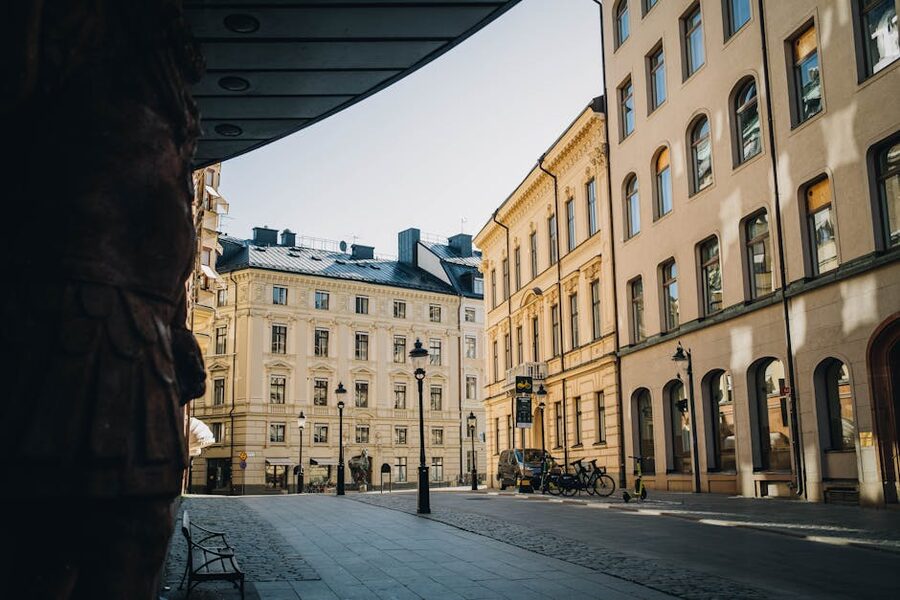
What you do want to know: Lisbeth is, by Larsson’s own admission, a grown-up version of Pippi Longstocking. He was a fan of Astrid Lindgren, the children’s-book author, and based his asocial-but-resourceful protagonist on what Pippi might look like at twenty-five. The buzzer outside Lisbeth’s later flat reads “V. Kulla”, a nod to Pippi’s house Villa Villekulla. Mikael, in turn, is the adult version of another Lindgren character, Kalle Blomkvist, the boy detective. Once you know that, the whole trilogy reads slightly differently. The closest tube stop to Lundagatan is Zinkensdamm on the green line, two stops west of Slussen.
Fiskargatan 9: Lisbeth’s penthouse, 21 rooms, three of them used
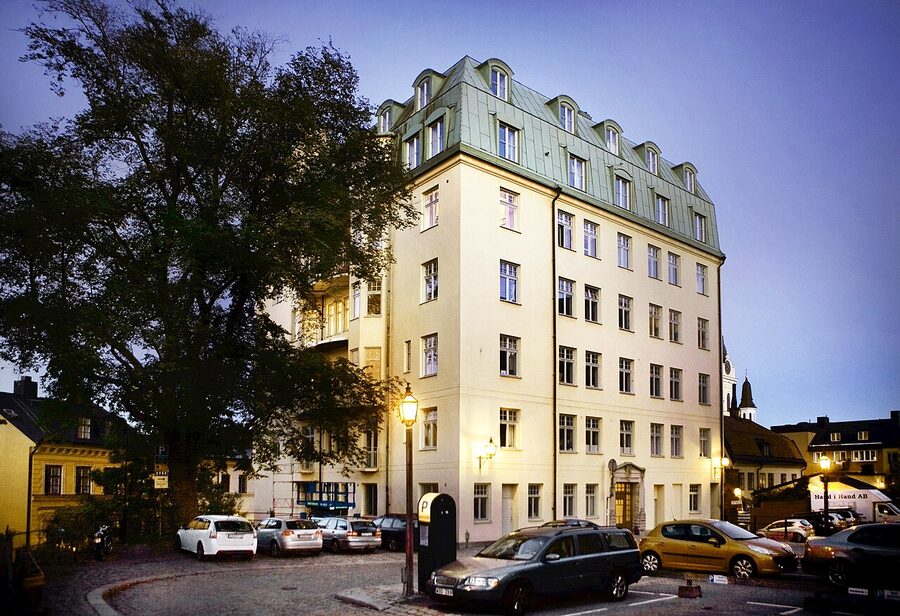
By the second book, The Girl Who Played with Fire, Salander has stolen herself rich and bought a 21-room top-floor flat at Fiskargatan 9 for around 25 million kronor. Larsson tells you she furnished only three of the rooms from IKEA and ignored the rest. From the top floor she has a clear view over Gamla Stan, the island of Djurgården, and the Saltsjön bay. The buzzer outside her door reads “V. Kulla”, which, again, is the Pippi Villa Villekulla joke. Of all the literary in-jokes in the trilogy this one is my favourite: the most security-paranoid woman in modern fiction labels her apartment for a fictional children’s character.
The building itself was nicknamed “the Scandal House” when it was built in 1907, because the new construction blocked the view of the church at the end of the block. It is grand, yellow, with a green-copper roof, and it sits in a quietly expensive corner of upper Söder. Standing at the bottom looking up at the penthouse is a fine pilgrimage. Doing it once is enough. There is genuinely nothing else to see and the residents have heard every joke.
Walk to it from Bellmansgatan in about ten minutes via Götgatan. Or come up from Slussen on foot, which is steep and atmospheric and gives you a view back over the harbour halfway up.
Mellqvist Kaffebar: where Larsson actually wrote
This is the one I’d argue you cannot skip. Mellqvist Kaffebar at Hornsgatan 78 is the café Larsson used as Blomkvist’s regular hangout in the books, and where Larsson himself wrote large sections of the trilogy. The office of his anti-racist magazine Expo, which he co-founded, was upstairs at the time, and he’d come down for fika and stay for hours typing. Staff who worked there during his life still remember it. He’d order a coffee, sit at a window table, and write.
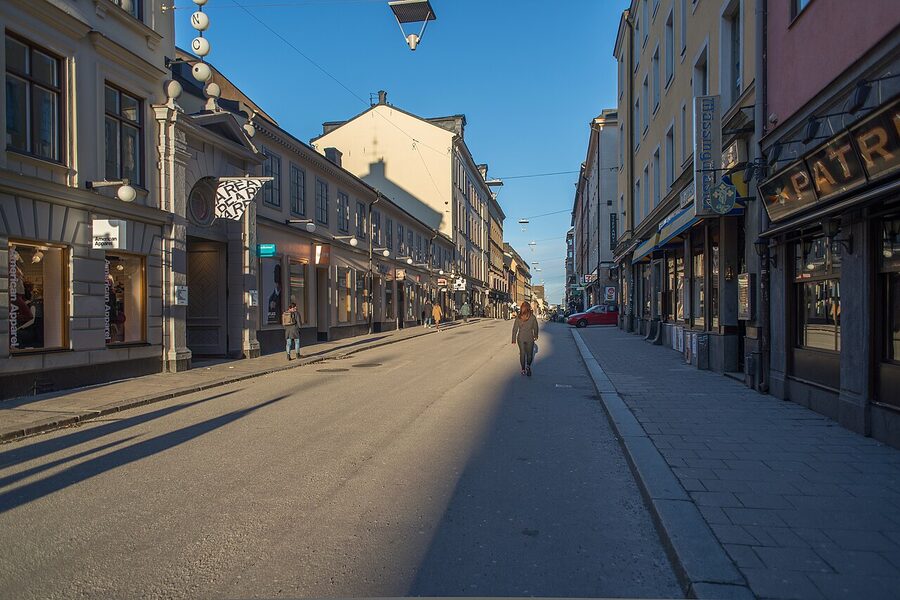
What you should know about Mellqvist before you walk in: it is small, it is friendly, it is a working neighbourhood café full of locals on laptops and parents with prams. The staff are fine with you taking a quiet photo of the window seat. They do not love it when people loiter for two hours over a single coffee waiting for the energy of the room to settle on them. Order, eat, soak it in, leave the table for the next person. That’s the unspoken Mellqvist contract and it predates the trilogy.
The café crowd skews thirty-something locals. Order what Blomkvist orders in the books, which is essentially the Swedish coffee-and-pastry break the trilogy keeps calling fika. If you want lunch, the toasts with Swedish fillings are the move here, and according to The Week‘s Larsson roundup the typical local order is something like Västerbotten cheese or a Falukorv sausage on dark bread. The closest metro stop is Mariatorget on the red line, three minutes’ walk.
Mariatorget: a green square with one strange Larsson photograph
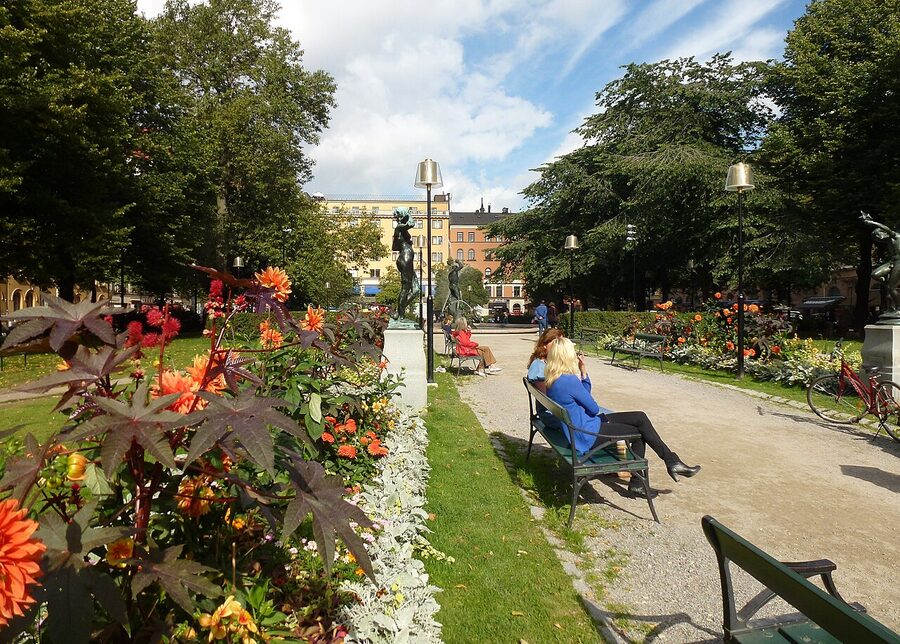
Mariatorget is a small leafy square in the middle of upper Söder, with a fountain, benches, kiosks, and on a sunny weekday a healthy number of locals reading paperbacks. In the books, Salander hangs out here in her younger years and the square turns up briefly in the Swedish film. The Larsson connection that actually matters, though, is real-life. The only public photo of Larsson, other than his book-jacket headshot, is one taken on a bench at Mariatorget on 6 June 2004, sitting between two skinheads. Larsson had spent his journalist career exposing Swedish far-right movements through his magazine Expo, and he was the target of repeated death threats; bullets were sent to him in the mail. The photograph of him calmly talking to two of the people who hated him is the most Larsson image possible.
He died of a heart attack at the age of fifty later that same year, before The Girl with the Dragon Tattoo was published. The bench is still there. Find it on the western side of the square, sit on it for a minute, then go get an ice cream from one of the kiosks because that’s what the square is actually for.
While you’re in this corner of Söder: walk one minute east to St. Paulsgatan 13 and you’ll pass Adat Jisrael Synagogue, which Frommers’ Larsson list flags as the synagogue Inspector Bublanski attends in the books. It’s an active congregation, so don’t try the door, but the facade is worth a 30-second look.
Götgatan: the Millennium offices and the world’s most-photographed 7-Eleven
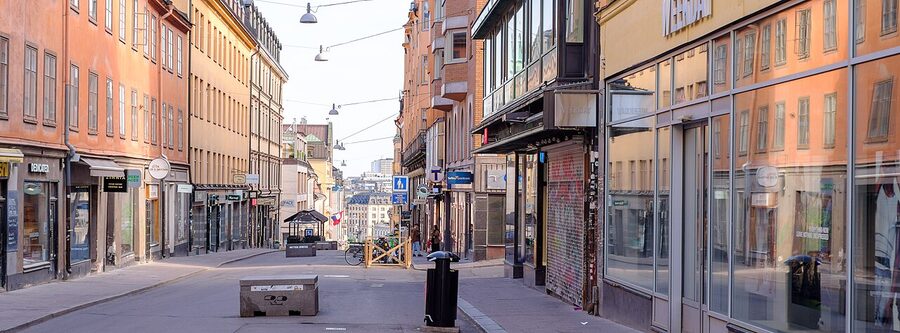
Götgatan is one of Söder’s two main shopping streets, busy and pedestrianised at the lower end, lined with a mix of high-street brands and small Swedish design shops. In the trilogy it’s where the fictional Millennium magazine has its offices: third floor, on the corner of Götgatan and Hökens gata, above what was the Stockholm Greenpeace office at the time Larsson was writing. According to The Local, Greenpeace has since moved out and a Monki shop occupies the ground floor today. The interior of Erika Berger’s office is described in the books as having “spartan décor, with almost exclusively IKEA furniture”, which is a good Larsson joke about Swedish creative-class taste.
A two-minute walk down Götgatan from the Millennium corner is the 7-Eleven at Götgatan 25, the convenience store where Salander stocks up on Billy’s Pan Pizza, instant coffee, and other groceries the books make a point of describing as cheap. The Week notes that even after Salander moves into her 21-room penthouse with a $10,000 espresso machine and a French chef’s stove, she’s still ducking into this 7-Eleven for armfuls of microwave pizza. It is, no exaggeration, one of the most-photographed convenience stores in literary tourism. There is nothing for you to do here except go in, see that it is a 7-Eleven, possibly buy a Billy’s Pan Pizza yourself for the bit, and leave.
If you want a coffee on Götgatan after the 7-Eleven photo, the street is full of options; pick the one with the queue out of locals, not tourists.
Kvarnen: where Lisbeth meets Evil Fingers
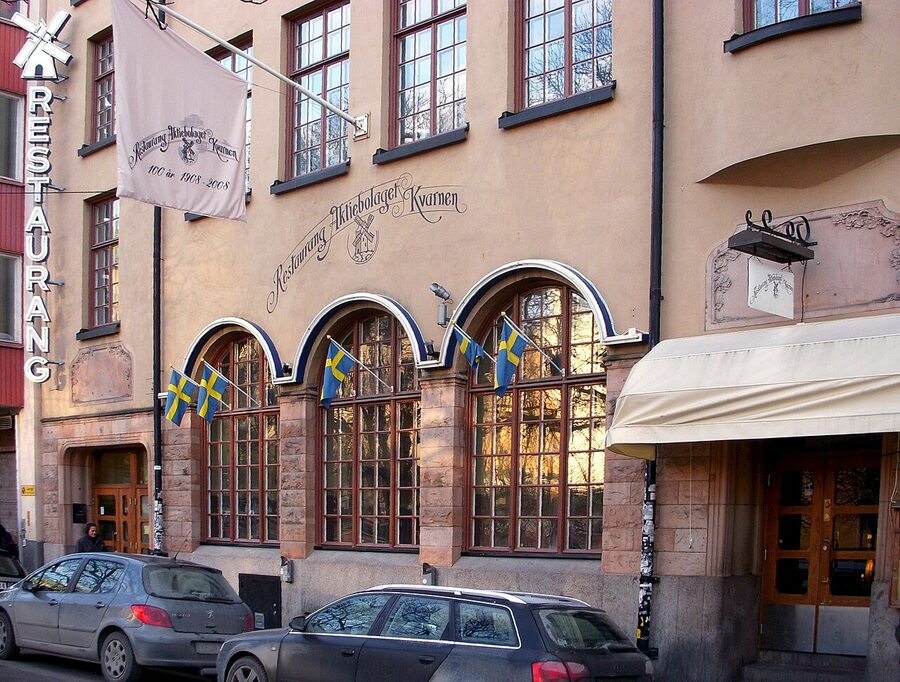
Kvarnen, on Tjärhovsgatan 4, is the best night out in this guide and the only Larsson location that is also a real place you can fully enter and use. It’s a traditional Swedish beer hall and restaurant that has been operating since 1908, and according to Visit Sweden it has been serving traditional Swedish food on this corner of Söder ever since. In the trilogy, Lisbeth Salander meets her band Evil Fingers here on Tuesday nights to discuss feminism, music, men, and politics. In real life, the beer hall is one of the better places in Stockholm to eat a plate of Swedish meatballs in a room that hasn’t been tarted up for the Instagram crowd.
The room itself: tall ceilings, dark wood, wrought-iron lamps, a long bar in the front room and a quieter dining area in the back. Mains run roughly 200 to 290 SEK; a beer is in the 75 to 95 SEK range. The website is at kvarnen.com and the phone, per Frommers, is +46 (0)8-643 03 80. Book ahead for Friday and Saturday dinner; Tuesday is the famously quiet night, which is exactly the night Larsson sent his characters here.
One detail that is going to read like a joke and isn’t: The Week‘s round-up notes that the women’s bathrooms here have toilets with double seats so that pairs of women can talk while they go. I have not personally tested this. The Week stands by it.
Tabbouli, formerly Samir’s Cauldron
The fictional Samir’s Cauldron in The Girl Who Played with Fire, a Bosnian restaurant where one of the books’ big shoot-outs takes place, is based on a real Lebanese restaurant called Tabbouli on Tavastgatan in Söder. According to the personal-tour write-up at Aerohaveno and Frommers’ Larsson list, this is the actual venue Larsson tweaked into Samir’s. The website is tabbouli.eu and the phone, per Frommers, is +46 (0)8-429 82 55. It’s a casual Lebanese place, mezze-focused, and a sensible lunch stop if you’re walking the route between Bellmansgatan and Mariatorget.
Honest take: don’t come here expecting a literary shrine. It’s a working neighbourhood Lebanese restaurant. The link to Larsson is real, but the staff don’t trade on it the way Mellqvist does. Have the mezze, drink a beer, walk on.
Mosebacke: the square Lisbeth made famous twice
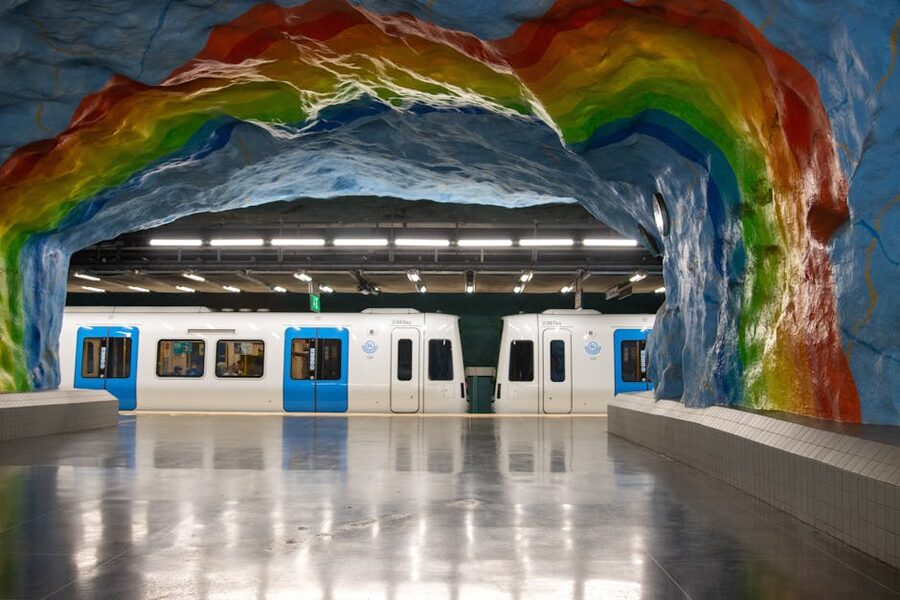
Mosebacke, just east of Slussen, is a small upper-Söder square that gets a recurring mention in the trilogy. According to Frommers’ Larsson roundup, the square was already locally famous for the Mosebacke theatre, but it took Larsson and Salander to bring the Nils Sjögren statue of The Sisters at Mosebacke Tor 1 to wider tourist notice. It’s a quiet stop, two minutes from Slussen, and works well as the last stop before you drop back down to the metro.
The view here, looking north, is one of the postcard angles of Stockholm: the harbour in the foreground, Gamla Stan across the water, the open archipelago beyond. Pair it with another fifteen minutes wandering the small streets that drop back down toward Slussen; the whole stretch is free and unspoiled.
Slussen and the herring burger from Nystekt Strömming
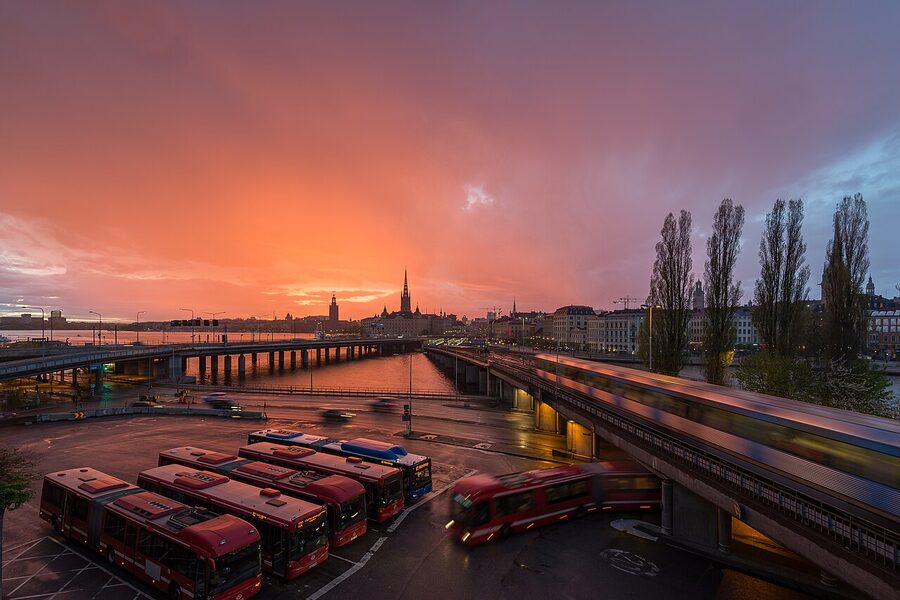
Slussen sits at the bottom of Söder and is where the books locate Salander’s employer, Milton Security. Larsson never names the exact building. The Local notes that he simply describes one of the glass buildings around Slussen as Milton Security’s office, and that’s enough; there are not that many glass buildings to choose from. The more practical use of Slussen for you is that almost every Larsson walk starts and ends here. Three metro lines (red, green, and blue) converge.
The food tip I’m most happy to pass on, and which I picked up directly from the Aerohaveno blogger’s recap of his guided Millennium tour: the food van called Nystekt Strömming, which sits in front of Slussen station, is the place to eat the city’s best fried-herring burger. It’s not in any Larsson book. It’s on the corner of his world, in the most literal sense. Order it with mashed potato and lingonberry, eat it at one of the plastic tables outside, and you will have just done lunch the way the locals do for around 100 SEK. Closing time is 7pm most days, earlier on Sundays; check before you go.
Where to stay: Söder, not Norrmalm
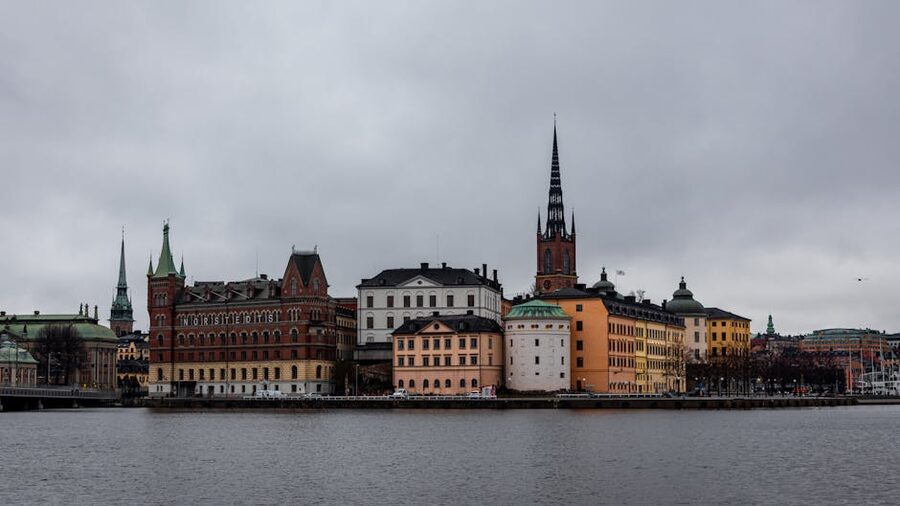
Most first-time Stockholm visitors stay in Norrmalm, the modern shopping district north of the water, because that’s where the chain hotels are. For a Larsson trip, that’s the wrong island. Stay on Söder and you can walk to every location in this guide before breakfast. A few options I’ve seen recommended consistently across the Larsson tour write-ups, and which I cross-checked on Booking.com:
- Hilton Stockholm Slussen: the most obvious choice if you want a full-service hotel right at the literal gateway to Söder. The Slussen position puts you 30 seconds from the metro and a 10-minute walk from Bellmansgatan. Doubles in shoulder season run roughly 1,800 to 2,500 SEK a night.
- Scandic Malmen: Swedish chain hotel, smack on Götgatan halfway between Slussen and Medborgarplatsen. You can step out the front door onto the same street the Millennium offices sit on. Mid-range, doubles around 1,500 to 2,000 SEK.
- STF Hotel Zinkensdamm: the budget Söder pick, near Zinkensdamm metro, the same station Larsson mentions Salander using to get to Lundagatan. Family rooms and bunk-style rooms, doubles from around 900 SEK.
If those don’t suit, the wider Booking.com results for hotels in Södermalm include Hellstens Glashus, Hellstens Malmgård and Hotel Hornsgatan, all on the right island. Anything in this list will put you within walking distance of every stop in this guide.
When to come
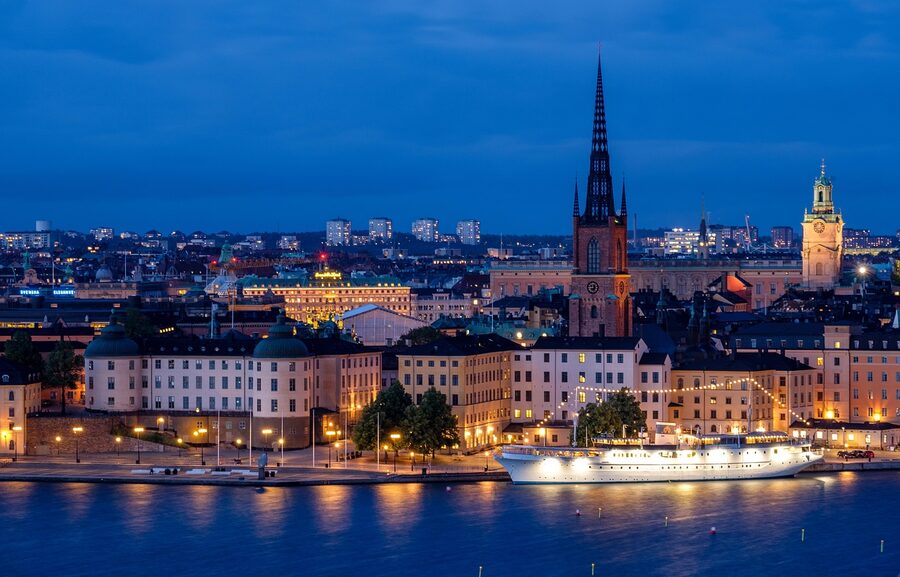
The honest answer is that any Larsson book is set in the cold half of the year, and if you want to read what you’re walking, January or February is the trip. The light is short, the canals freeze in patches, and the streets between Bellmansgatan and Fiskargatan look exactly as gloomy as the books describe. You’ll need a proper coat, not a coat-coat. Daytime highs sit around freezing; the dark comes in at three in the afternoon.
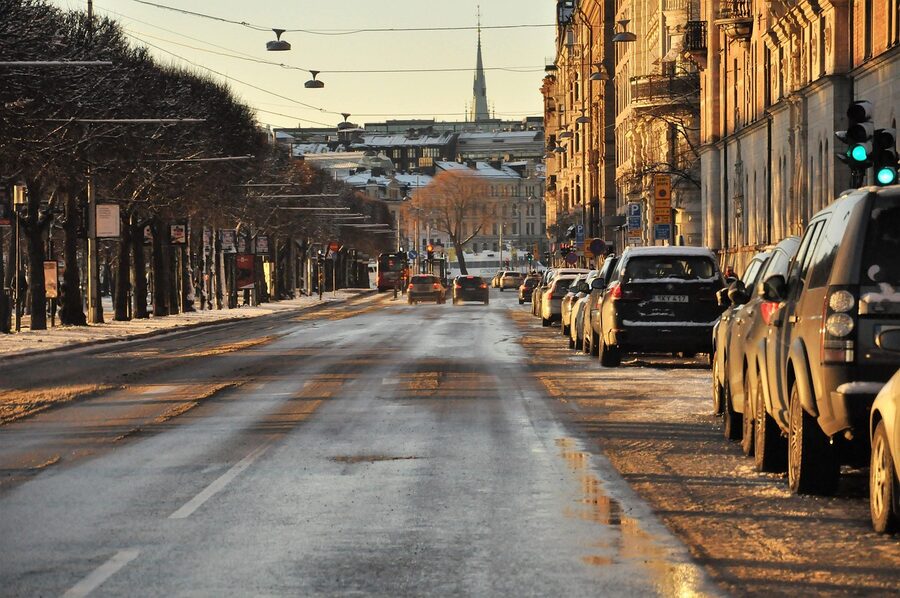
The practical answer is May through August. You get long evenings (sunset around 10pm at midsummer), Mariatorget is in full leaf, Monteliusvägen is at its best, and outdoor café seating is on. June and August are the sweet spot; July is when the locals leave town for the archipelago, which means cheaper hotels and a slightly less alive feel to the bars.
Half a day for Gamla Stan
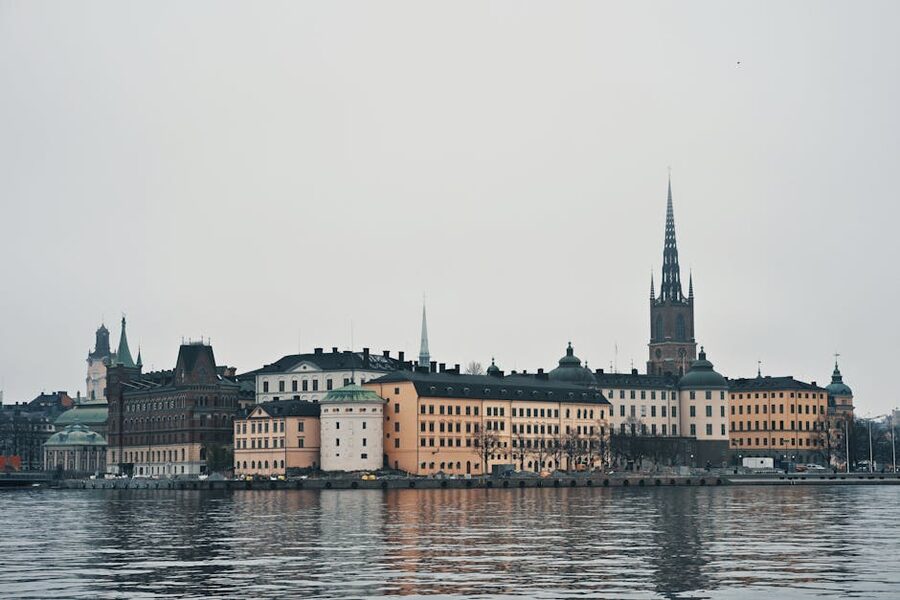
The trilogy keeps almost all of its action south of Gamla Stan, but Stockholm’s medieval old town is the obvious second-day move if you’ve come a long way. From Slussen, you walk straight north across the bridge and you’re in the oldest part of the city: narrow cobblestoned lanes, ochre and red ironwork facades, an island you can walk end-to-end in five minutes. There is no Larsson reason to come here. You will absolutely come here, so plan for it.
Half a day is enough. Walk the two parallel main lanes, drop into the central square for a coffee at one of the cafés around the edge, then walk back across to Söder before dinner. The whole island is a five-minute walk end-to-end and you can see most of it from the Slussen-side bridge if you don’t even cross.
Day trip: into the archipelago
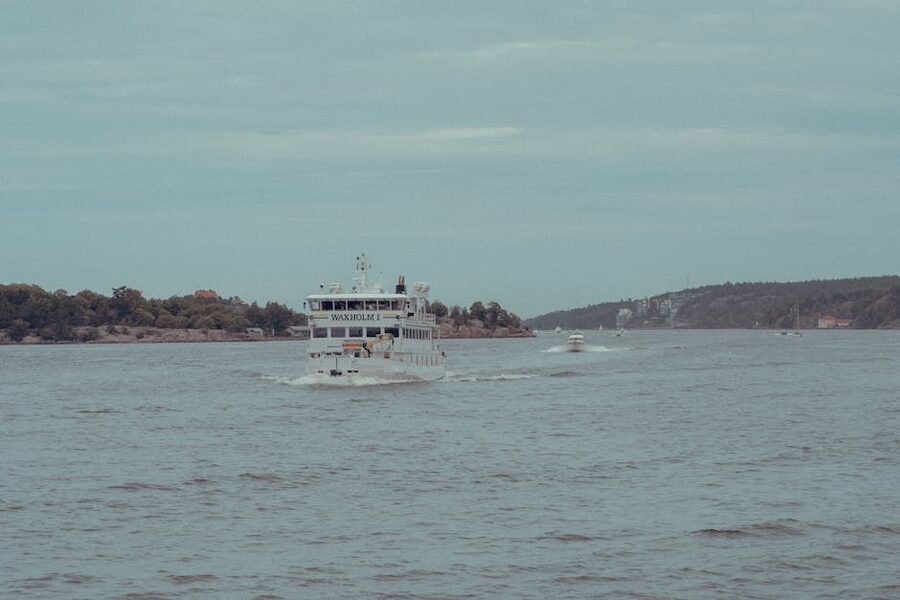
If you have a third day and the weather is at all reasonable, take a ferry into the archipelago. Stockholm sits at the inner edge of a network of more than 30,000 islands, and the inner ring is maybe an hour out by boat. The Larsson connection is light, but real: Salander has a summer cottage on the small island of Sandhamn in the books, which is one of the popular outer-archipelago day-trip targets per Frommers’ Larsson list.
Boats leave from the central waterfront in summer; a return ticket to the inner archipelago runs around 200 SEK. Bring a paperback of book two, point at Sandhamn on the map, and call it a day.
If you only have an afternoon
The compressed version, if your Stockholm trip is fully a stopover: from Slussen, walk west to Bellmansgatan 1, pause on the walkway above for the bay view, drop down to Monteliusvägen for the cliffside walk, climb up to Hornsgatan for a fika at Mellqvist Kaffebar, walk east along Hornsgatan to Mariatorget for the bench, finish on Götgatan with the 7-Eleven photo and a beer at Kvarnen. That’s about three hours of walking, two coffees, one beer, and you’ve done the only stops that matter.
Skip the Fiskargatan 9 detour if you’re tight; from the outside, it’s a yellow building, you’ll see plenty of yellow buildings on Söder. Skip Lundagatan, which has nothing to look at, unless you specifically want the Pippi Longstocking metro detour. Skip the official two-hour tour, which I keep coming back to as the unnecessary one; what it gives you that you can’t get from this article and the City Museum’s 40-SEK self-guided map is a guide named Kirsti or Elisabeth, and they are excellent, but you can do without them.
How this guide is shaped, and what to read next
This is part of an ongoing series following novels to the cities they’re set in. If The Girl with the Dragon Tattoo is your kind of book, you may also like the Fault in Our Stars travel guide to Amsterdam, which does the same thing for John Green’s Anne Frank House chapter, and the Percy Jackson travel guide to Athens, for the half of YA bookshelf that runs on Greek myth rather than Swedish noir. The complete adult-and-YA Harry Potter travel guide to London is the longest of the lot and has the most location density.
If you want a structured way to do all of these in order, the Read and Travel Challenge sets a year’s reading list with a paired city for each book. Stockholm in February is the slot for the Larsson volume.
One last note
You don’t need the official tour. You don’t need three days. You don’t even need to have finished the trilogy; the first book is enough. What you need is a comfortable pair of shoes, a copy of The Girl with the Dragon Tattoo, an OV-style 24-hour SL travel pass for the metro, and the willingness to do most of Söder uphill. The rest is the city working on you, which it will, especially in January light. Start at Slussen. Walk west. Trust the rest.