In 1937, Parks Canada took a working farmhouse outside Cavendish, Prince Edward Island that had belonged to the Macneill family for almost a century, evicted the descendants, and rebuilt the inside to match a novel. The novel was Anne of Green Gables. The author, Lucy Maud Montgomery, had used that farmhouse as the visual blueprint for her fictional Avonlea while sitting in a different farmhouse just down the road. The interior you walk through today is not the way the Macneills lived; it is the way Anne Shirley imagined she lived. Once you know that, the whole pilgrimage tilts a few degrees and gets more interesting.

This guide is for anyone planning the trip, whether you read the books at eleven and never recovered, are bringing a daughter who just discovered them through Netflix’s Anne with an E, or are tagging along with someone who falls into either of those camps. Cavendish is the heart of it, but the full pilgrimage runs across the north shore from New London to Park Corner, with Charlottetown as the practical base. I’ll tell you which sites are worth the queue, where the kitsch tips into too much, and how to do it without losing four hours to a single Anne-themed gift shop.
In This Article
- Why Cavendish (and not the rest of the island)
- Green Gables Heritage Place: the one site you cannot skip
- Lover’s Lane and the Haunted Wood
- The Site of Lucy Maud Montgomery’s Cavendish Home
- Cavendish Cemetery: Montgomery’s grave
- The Anne of Green Gables Museum at Silver Bush, Park Corner
- The real Lake of Shining Waters
- Avonlea Village: kitsch, but worth an hour
- Cows ice cream is not optional
- Lucy Maud Montgomery’s Birthplace, New London
- Charlottetown: the practical base
- Where to stay
- Prince Edward Island National Park
- Eating: lobster suppers, chowder, and Cows
- When to go: lupines, shoulder season, and the August crush
- Getting there
- A two-day itinerary that actually works
- How this trip fits into the wider reading challenge
- One last thing
Why Cavendish (and not the rest of the island)
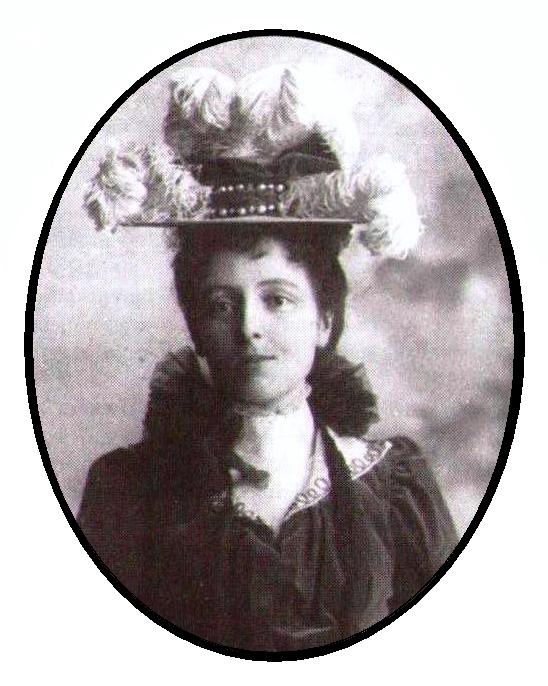
Montgomery was born in Clifton (now New London) in 1874, moved to Cavendish at twenty-one months old after her mother died of tuberculosis, and was raised by her maternal grandparents in the village. She lived in Cavendish until 1911, the year she married and moved to Ontario. Almost everything that became the geography of Avonlea sits inside a five-mile radius of her grandparents’ kitchen. The official Anne of Green Gables Itinerary from Tourism PEI spreads the experience across six villages, but if you only have one full day, Cavendish gets you 80 percent of what you came for.
The five-mile radius matters because it is what makes PEI a real pilgrimage destination rather than a film tour. Compare this to Hobbiton in New Zealand, which is a constructed set, or the District 12 sites near Asheville, which are real buildings that stood in for a fictional place. Cavendish is the actual stretch of red dirt road Montgomery walked every day for thirty-five years. The trees are not the originals (most of the spruce grove she called the Haunted Wood was replanted after a 1956 fire), but the lanes, fields, ponds, and shoreline are exactly where she put them in the books.
Green Gables Heritage Place: the one site you cannot skip
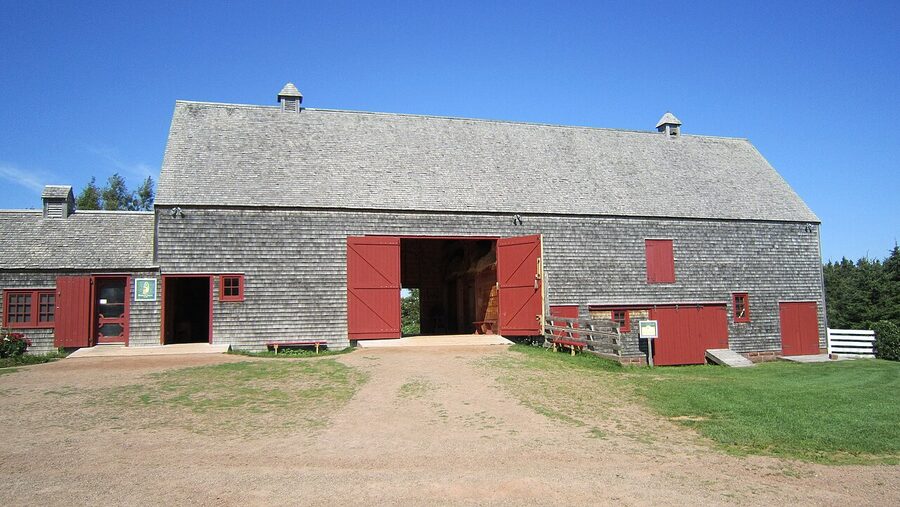
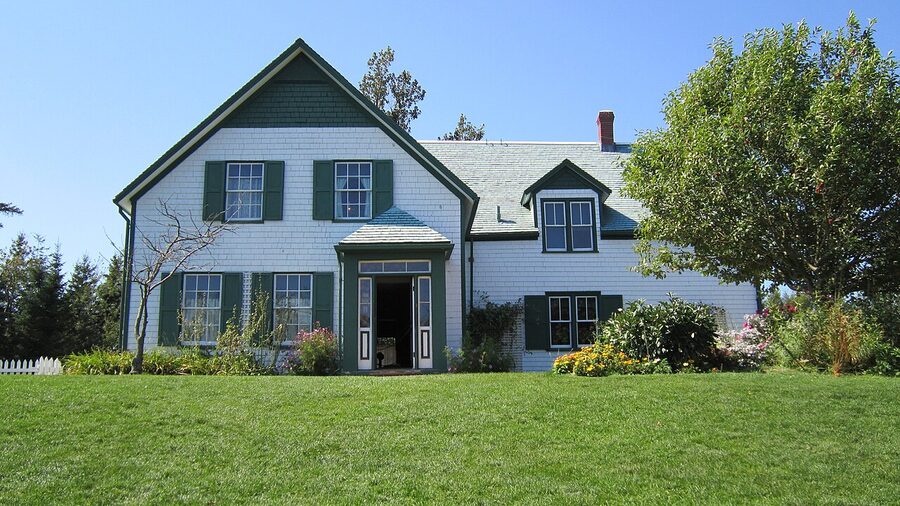
The farmhouse at Green Gables Heritage Place belonged to David and Margaret Macneill, cousins of Montgomery’s grandfather. Montgomery never lived in the house; she lived a fifteen-minute walk away with her grandparents and visited the Macneills constantly. The address is 8619 Route 6, Cavendish PE C0A 1M0. The site is open daily 9am to 5pm from May to October, and run by Parks Canada under the same admission system as the rest of the federal park network.
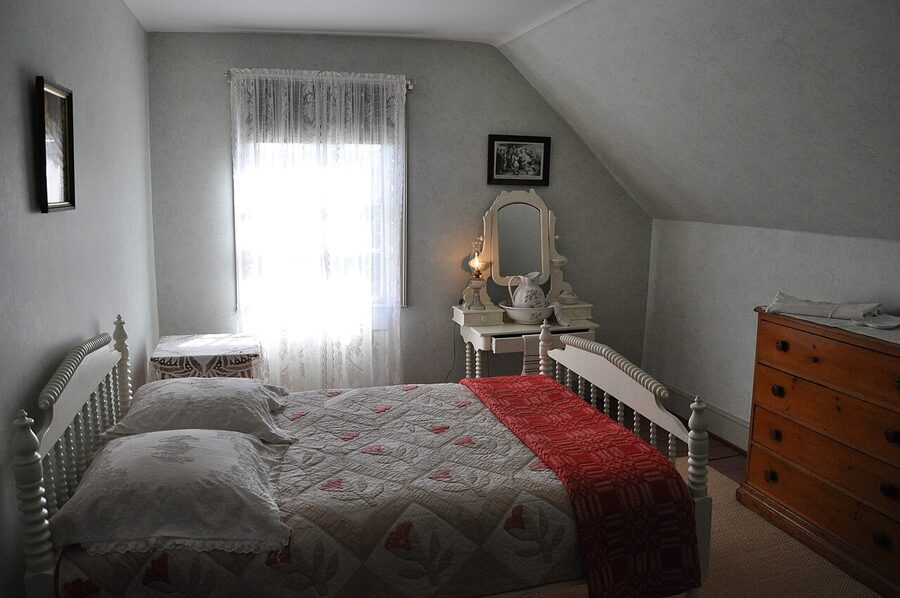
What you actually see: a clapboard farmhouse painted white with the famously green-trimmed gables, a visitor centre that sells everything from straw hats to Anne-shaped cookie cutters, and two woodland trails that loop through the property. Inside the house, every room has been decorated to match the novel rather than to match the way the Macneills lived. So you walk through Marilla’s kitchen, Anne’s east-gable bedroom, and Matthew’s room. You do not walk through what was actually a slightly grubby working farm where a couple of bachelor cousins lived for decades after Montgomery left. This is the 1937 sleight-of-hand mentioned at the top of this article.
Practical tip: there’s a free entry day for everyone with the Canada Strong Pass from June 19 to September 7, 2026. Outside that window, you pay the regular Parks Canada fee at the gate. Children 17 and under enter free year-round, which makes this an unusually friendly site for the mum-and-daughter trips that are most of the pilgrim traffic. Plan-your-visit details on the Parks Canada site have the current admission and operating hours.
Lover’s Lane and the Haunted Wood
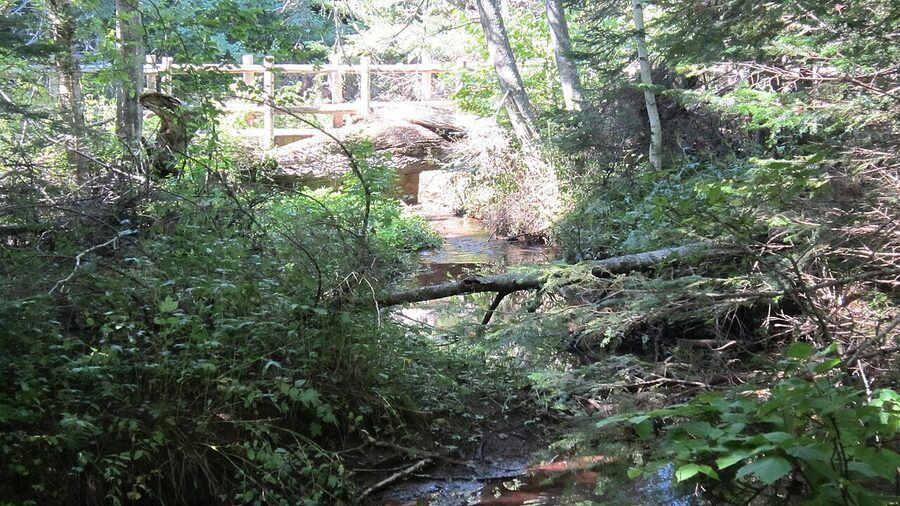
Two short trails leave from the back of the farmhouse property. The Balsam Hollow Trail (which becomes Lover’s Lane) is about 800 metres. The Haunted Wood Trail is about 900 metres. Both are flat, well-maintained, and shaded, which makes them a relief on a hot July afternoon. Lover’s Lane is the one Montgomery describes in Anne of Avonlea: “Lover’s Lane opened out below the orchard at Green Gables and stretched far up into the woods to the end of the Cuthbert farm.”
Walk the Haunted Wood Trail to come out near the Site of Lucy Maud Montgomery’s Cavendish Home, which is the next stop and works as a connector between the two properties. If you only have time for one trail, choose Lover’s Lane in the morning when the light comes through the firs, or the Haunted Wood at the end of the day when the gift shop is shutting and the path empties out.
The Site of Lucy Maud Montgomery’s Cavendish Home
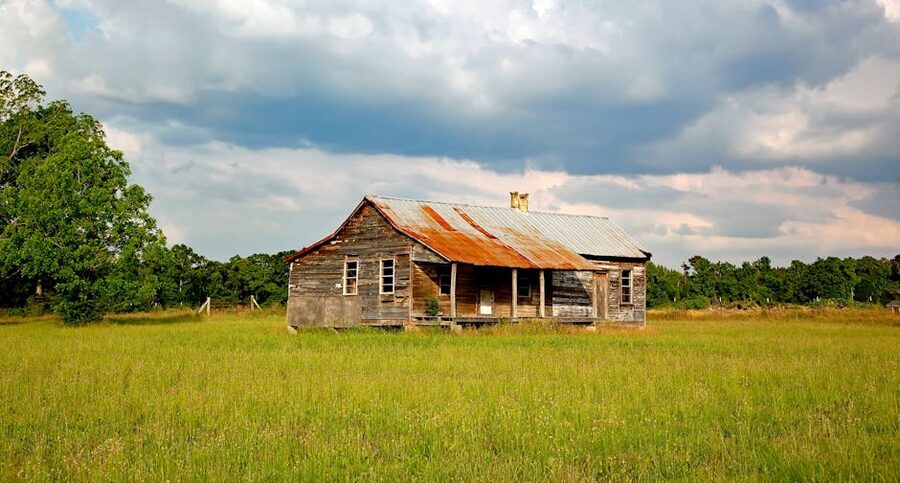
This is the actual house Montgomery lived in, and almost no one budgets enough time for it because it isn’t telegenic. The original farmhouse was demolished in 1920 by Montgomery’s uncle, who did not want to keep it as a museum. What remains is the foundation, a small orchard, the path Montgomery walked daily to the post office she helped run, and an extremely good privately-run gift shop staffed by direct descendants of the Macneill family. The site is open mid-May to mid-October and charges a separate admission to Green Gables Heritage Place because, despite being a five-minute walk away, it is privately owned by the family.
Background and visitor info on the official Cavendish Home site; Parks Canada also lists it as part of the broader L.M. Montgomery’s Cavendish National Historic Site. The point of going is the foundations themselves: this is where Montgomery wrote Anne of Green Gables, longhand, in 1905, in a kitchen that no longer exists. Standing in the grass and looking at the rectangle where the house was is one of the moments of the trip that will hit you if the books mattered to you. It hits absolutely no one else, which is why it is also, conveniently, never crowded.
Cavendish Cemetery: Montgomery’s grave
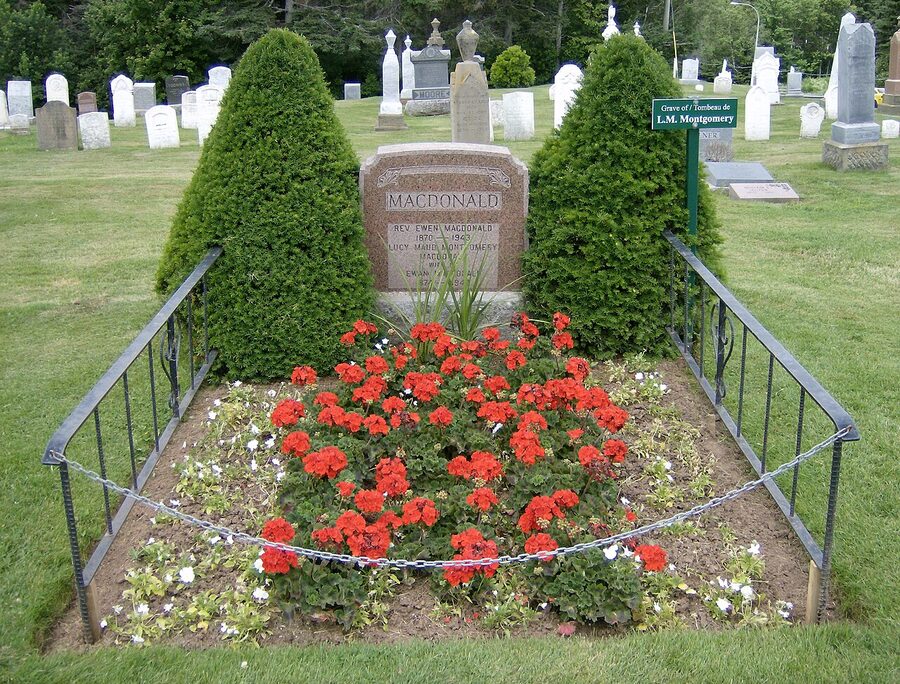
The cemetery is at the intersection of Highways 6 and 13, less than ten minutes’ walk from the Heritage Place. Montgomery was buried here in 1942 alongside her husband Reverend Ewan MacDonald. The headstone reads MacDonald, which catches a lot of pilgrims out who are looking for “Montgomery” (that was her writing name, not her married one). Look for the railed plot near the back with the consistently fresh flowers and the small offerings tucked into the railing. Open sunrise to sunset, no admission. Be respectful: families bury their relatives here too, and not everyone in the cemetery is famous.
Montgomery’s death in 1942 has been complicated. For decades it was reported as heart failure; her granddaughter confirmed in 2008 that it was a deliberate overdose at age 67, after years of depression. Mentioning this is uncomfortable but worth it because the chirpy Avonlea brand obscures the woman herself. If you are reading the books with a teen, the gravesite is a good place to talk about the gap between Anne the character and Maud the writer.
The Anne of Green Gables Museum at Silver Bush, Park Corner
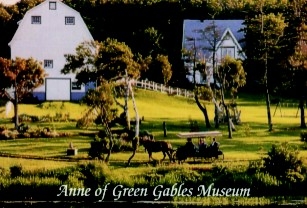
This is the single best Anne-related museum on the island, and several Anne fans I’ve spoken to rate it above Green Gables Heritage Place. It’s a thirty-minute drive west from Cavendish, off Route 20 in Park Corner. The address is 4542 Route 20, Park Corner, PE, C0B 1M0. The official Anne of Green Gables Museum site has hours and admission. For 2026, the season runs May 15 to October, with the longer 9am to 5pm hours running through July and August.
Why it’s better than the Cavendish house: this is the home of Montgomery’s aunt and uncle, John and Annie Campbell, who built it in 1872 (Montgomery called it “the wonder castle of my childhood” in a letter). Montgomery spent long stretches of her childhood here and was actually married in the parlor in 1911. The artifacts inside are real, not props: Anne’s “enchanted bookcase,” the organ that played the wedding march, the Crazy Patchwork Quilt, the Blue Chest from The Story Girl. The descendants of the Campbell family still run it, which means the staff member showing you the Blue Chest is often a great-great-niece who grew up climbing on it.
The real Lake of Shining Waters
This is the part most pilgrims get wrong. There is a body of water labelled “Lake of Shining Waters” on Google Maps near Park Corner, and it has its own paid admission. That is not the lake that inspired Montgomery. The actual inspiration is the small pond on the Anne Museum’s property at Silver Bush, and Montgomery wrote a letter (now displayed inside the museum) confirming it. Skip the labelled tourist lake; pay the museum admission and walk down to the pond yourself. It’s smaller and quieter than you expect, which is part of why it works.
Matthew’s Carriage Rides at the museum are an extra-cost add-on (about CA$15 for adults at the time of writing, confirm at the gift shop on the day) and circle the property and pond. They are aimed at children but a sentimental adult will not regret the ride.
Avonlea Village: kitsch, but worth an hour

The most divisive stop on the pilgrim trail. Avonlea Village in Cavendish is a constructed tourist attraction with replica buildings, an Anne-themed gift shop, an ice cream parlour, several restaurants (Piatto Pizzeria, La Rose Bistro, Samuel’s Coffee House, Boom Burger), and a costumed staff member or two wandering around in pinafores. It is not a real heritage site. It is, however, well-run, family-friendly, and the most efficient place on the island to use a bathroom and feed a hungry kid. The 2026 operating window is mid-June to early September.
If you are travelling with children, give yourself an hour and let them eat ice cream in costume. If you are travelling without children, stop in for a raspberry cordial slushie at the chocolate shop and leave. The chocolate is from Anne of Green Gables Chocolates, which has its own retail outlets in Charlottetown if you want to skip the village entirely.
Cows ice cream is not optional
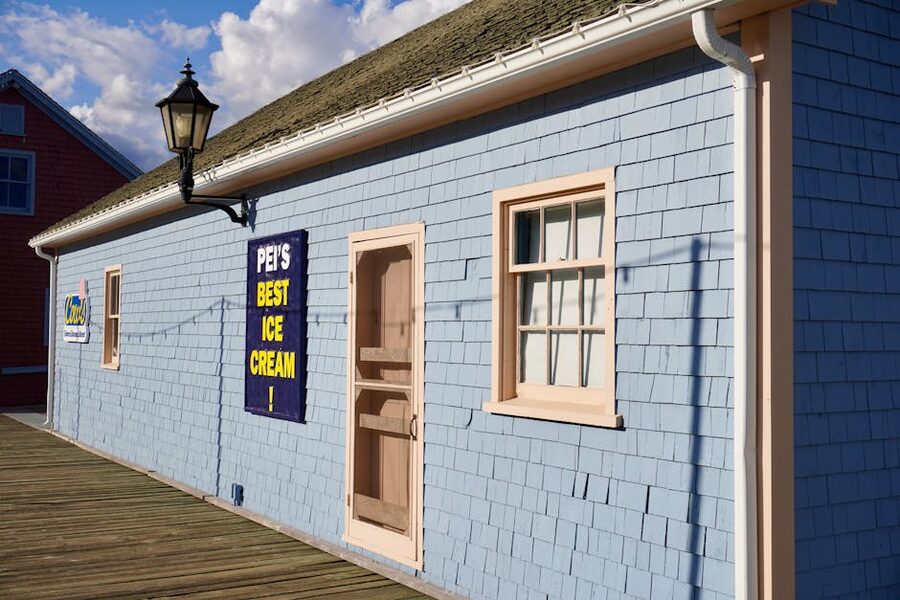
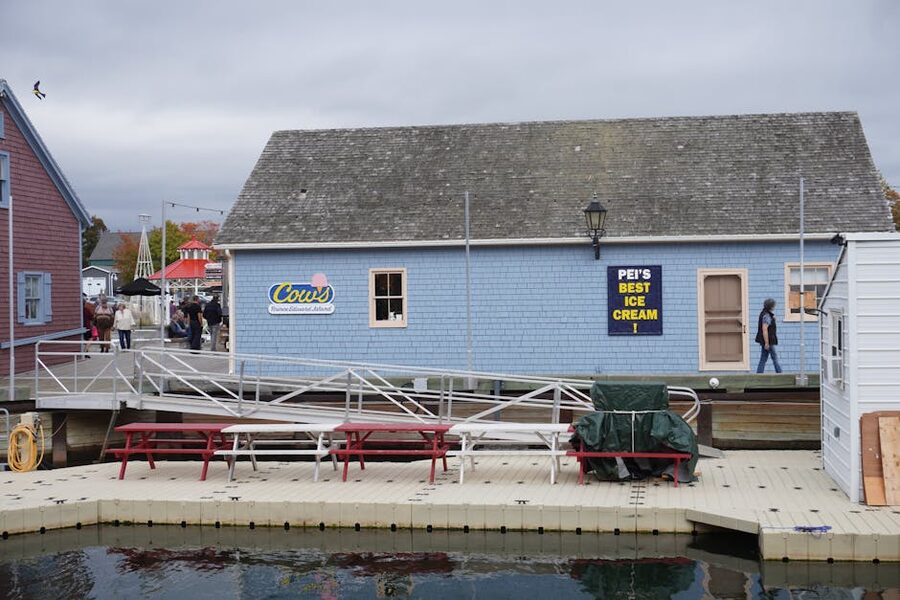
The chain you keep seeing across the island is Cows, an Island institution since 1983. There are stands at Avonlea Village, on Charlottetown’s Peake’s Wharf, in Gateway Village near the Confederation Bridge, and at the Charlottetown airport. The flavour to order is “Cow Tracks” or, if it’s June and the season is just starting, “Wowie Cowie.” A scoop in a waffle cone runs about CA$7 in 2026. They also have a working creamery you can tour at the Charlottetown plant, full info on the Cows Creamery site.
Lucy Maud Montgomery’s Birthplace, New London
The white-and-green house at the corner of Routes 6 and 20 in New London is where Montgomery was born in November 1874 and lived for her first twenty-one months, before her mother died and she was sent to her grandparents in Cavendish. The interior contains a replica of the wedding gown she wore to her 1911 wedding (the original is in storage), her travel scrapbooks, period furniture, and the small bedroom upstairs where she was born.
It is a fifteen-minute drive west of Cavendish on the way to Park Corner, which means you can hit it on the same loop as the Anne of Green Gables Museum. Open seasonally roughly from late May to mid-October, with shorter hours than the bigger sites. Entry is modest. If you have only two days on the island, this is the site to skip. If you have three days, it’s worth the thirty minutes for the small upstairs room.
Charlottetown: the practical base
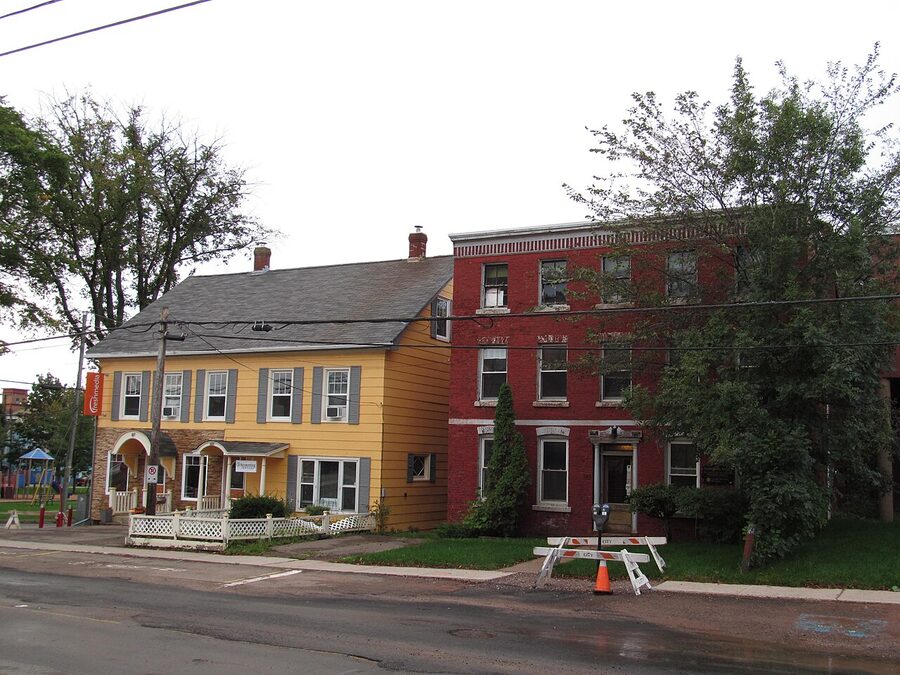
Charlottetown is forty kilometres south of Cavendish and the only proper city on the island. Most travellers base themselves here, drive the north shore for the day, and come back into town for dinner. The walkable downtown sits between the harbour and Province House, with Queen Street running through the centre. Two Anne-related obligations live in town and one is a strong recommendation:
- The musicals. Two run in summer 2026: Anne of Green Gables, The Musical at the Confederation Centre of the Arts (the longest-running annual musical in the world, since 1965), and Anne & Gilbert, The Musical at the Florence Simmons Performance Hall. You will not see both in one visit. Pick one. Anne of Green Gables covers the first book and is the family choice; Anne & Gilbert covers the university and early-marriage years and works better for the reader who has gone deep on the series.
- The Anne of Green Gables Store on Queen Street, which carries everything you didn’t already buy at Avonlea Village or Park Corner. Open year-round, unusually for an Anne-related shop.
- Province House as the optional non-Anne stop. This is where the 1864 conversations that produced Confederation began, and a thoughtful break from the Avonlea theme park. Free admission.
Where to stay
For the budget that wants to walk to dinner, downtown Charlottetown around Queen and Grafton has a cluster of mid-range hotels. Compare Charlottetown options on Booking.com. The Holiday Inn Express on Capital Drive is reliably the cheapest of the chain options, and the Charlottetown Inn & Conference Centre sits closer to the harbour.
For the family that wants to stay in literary character, two purpose-built options sit in the Cavendish/Park Corner area. The Montgomery Inn at Ingleside is in Park Corner, in the Senator Donald Montgomery house (Montgomery’s grandfather’s home, yes, that one), now a small bed-and-breakfast run by a Montgomery cousin. The Shining Waters Country Inn at Cavendish Corner is in the historic 1850s farmhouse owned by Pierce and Rachael Macneill, the couple Forbes credits as inspiration for the original novel. Booking listings: Shining Waters Country Inn and Shining Waters Ingleside Cottages for the cottage-style annex.
For Cavendish-specific motels, the Anne Shirley Motel & Cottages is the cheaper and more self-conscious option (the name is not subtle). Or browse the Green Gables Shores region listings if you want to be in walking distance of the Heritage Place.
Prince Edward Island National Park
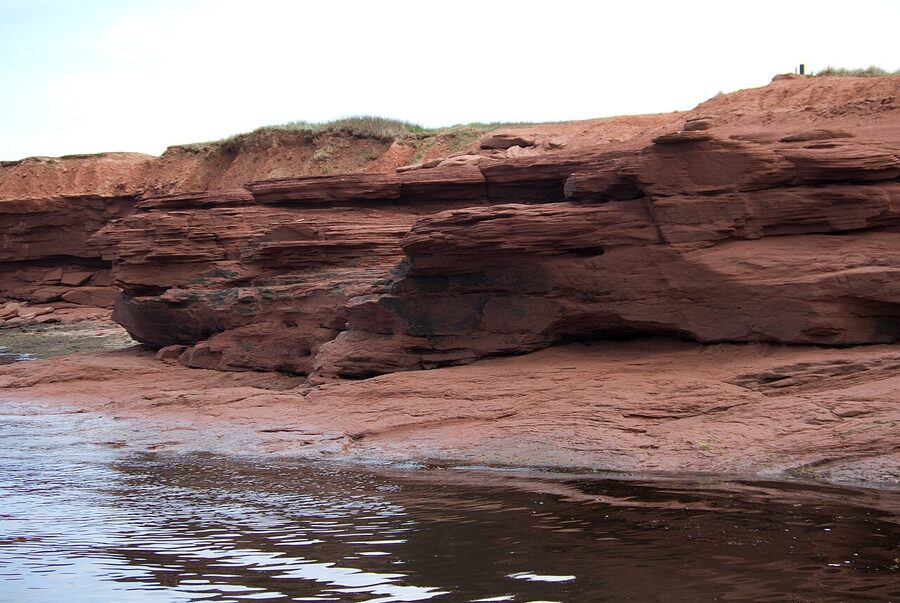
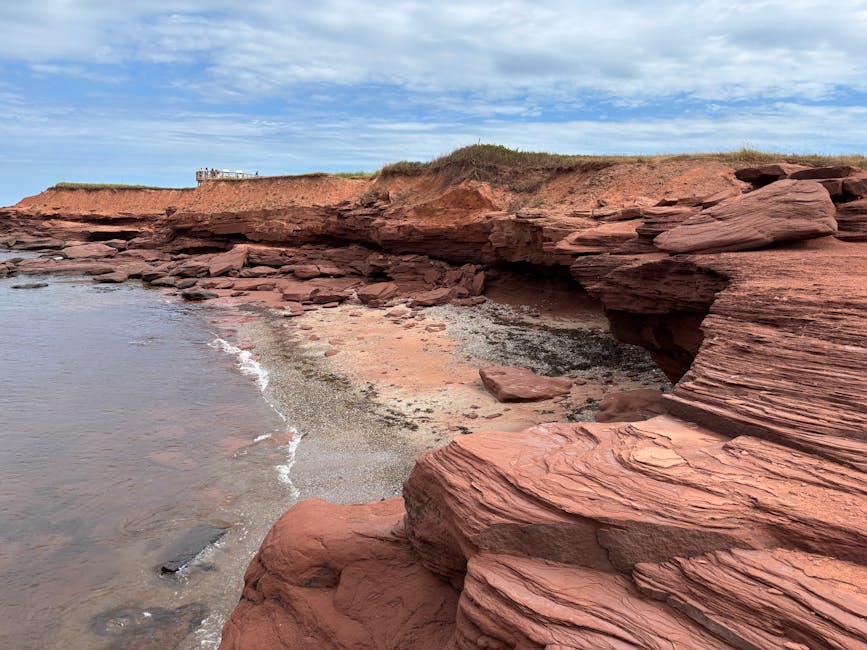
Green Gables Heritage Place sits inside Prince Edward Island National Park, a forty-kilometre stretch of dunes, beaches, salt marsh, and red sandstone cliff that runs along the north shore. The Cavendish-North Rustico section is the part most pilgrims wander into without a plan. Parks Canada has a Cavendish-North Rustico breakdown with the practical access points.
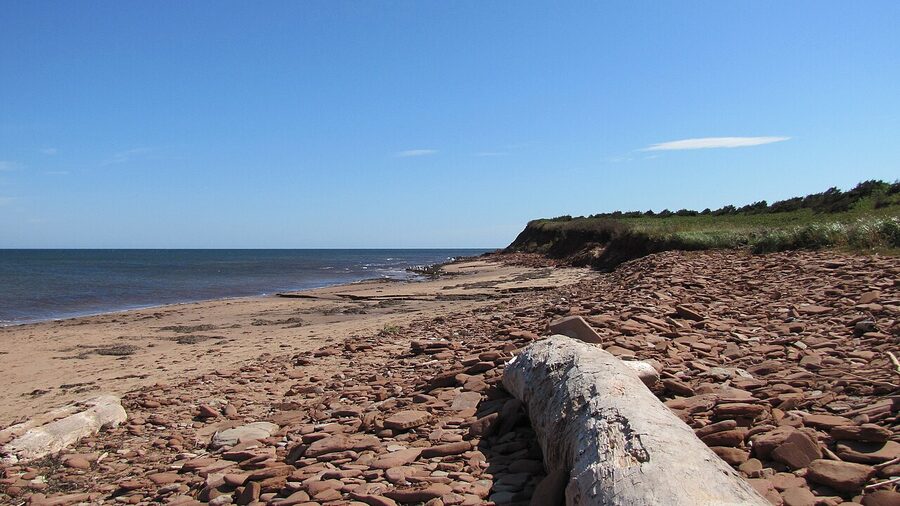
The Cavendish Cliffs walking route runs along the boardwalk above Cavendish Beach and is the easiest twenty-minute add-on after Green Gables. If you want a longer walk, the Homestead Trail loops eight kilometres through fields and along the dunes. Cavendish Beach itself is supervised in summer and has changing rooms; the water is bracingly cold until late July.
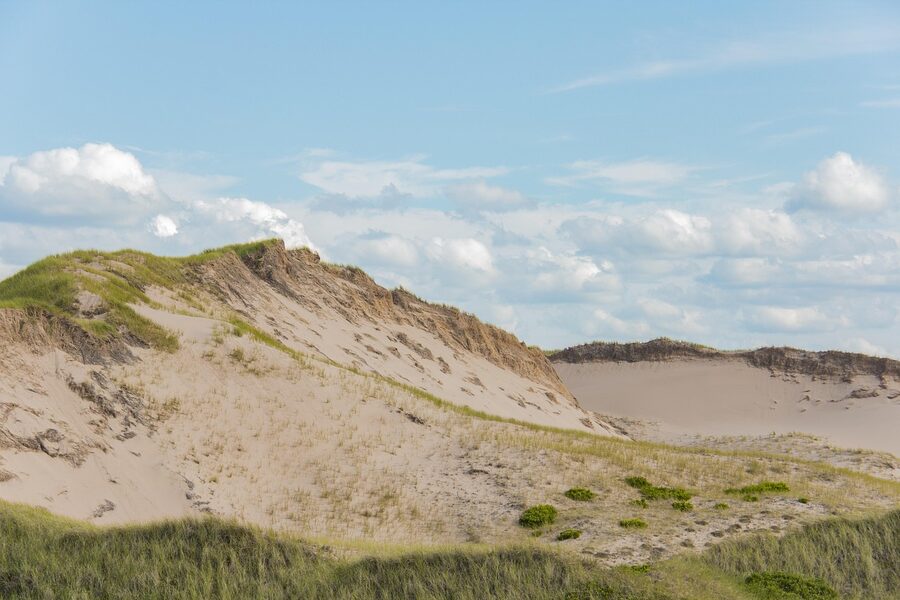
For the literary-minded, Dalvay-by-the-Sea is a Queen Anne Revival mansion further east in the park that Montgomery used as the model for the White Sands Hotel in Anne of the Island. It now operates as a small hotel with the MacMillan Dining Room serving farm-to-table dinners. Even if you don’t stay or eat, the lawn and garden are open for walking.
Eating: lobster suppers, chowder, and Cows
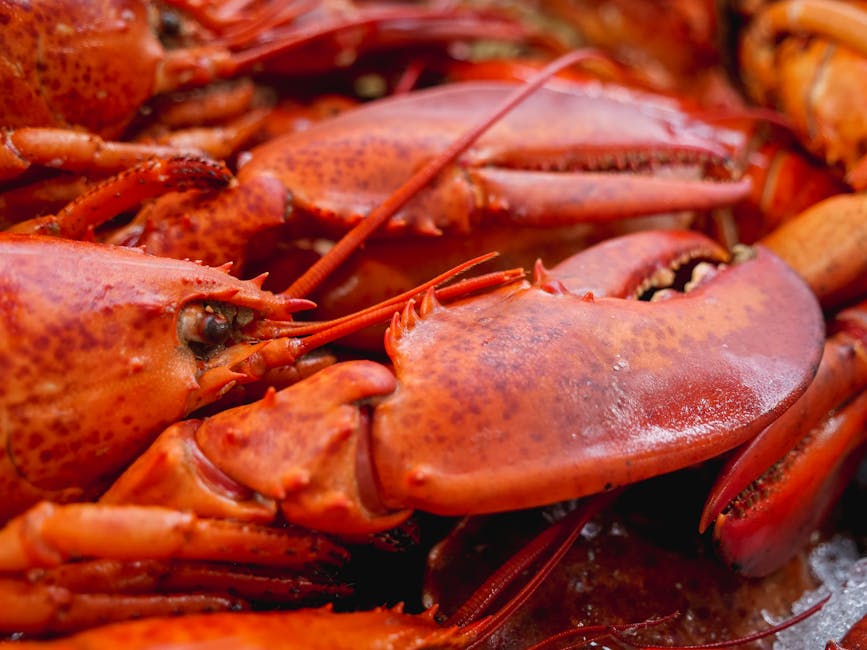
The PEI lobster supper is its own institution. The most-recommended one is New Glasgow Lobster Suppers, twenty minutes south of Cavendish, which has been running since 1958 in a converted dairy. The format: unlimited mussels and chowder while you wait, then a whole lobster (one or two pound options) with potato salad and rolls, then unlimited dessert. 2026 prices are around CA$50 to CA$75 depending on size; reservations strongly advised in July and August. They open seasonally from mid-June to mid-October.
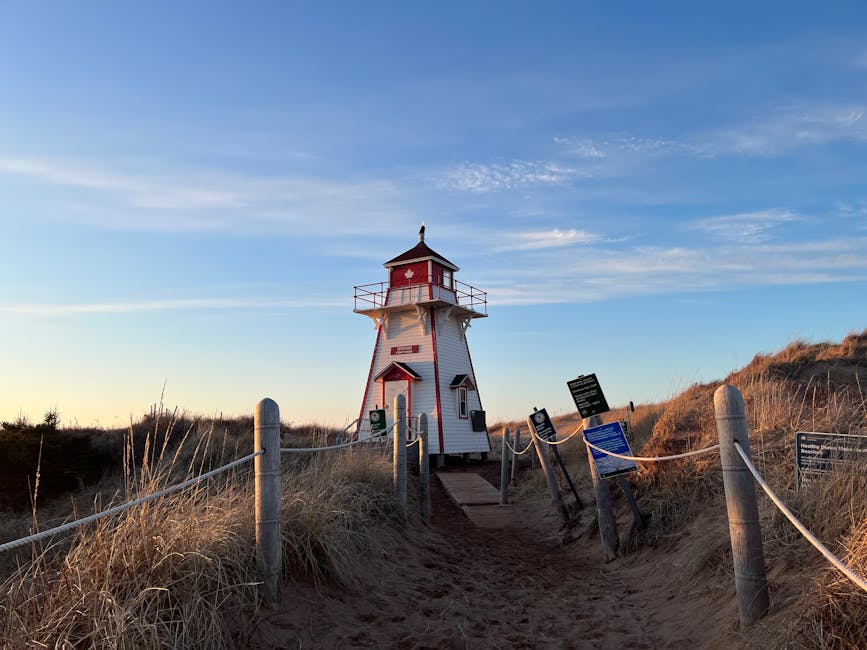
For lobster without the all-you-can-eat sit-down, Richard’s Fresh Seafood at Covehead Harbour does a famous lobster roll, which is closer to a fifteen-dollar lunch than a fifty-dollar production. The seasonal hours match the rest of the north shore (mid-June to early October). Park at the Covehead Lighthouse, walk three minutes, and the queue moves quickly.
When to go: lupines, shoulder season, and the August crush

The Anne pilgrim peak is mid-July through mid-August, which is also when Cavendish parking lots are at their most chaotic. If you can move the trip, late June is the sweet spot: lupines on the roadsides, water just warm enough, sites all open, and you can walk into Green Gables Heritage Place at 10am without a queue. Early September is also excellent and slightly cooler, but Avonlea Village shuts after Labour Day so you lose that piece.
Avoid October if seeing the inside of the houses matters; most museum sites close by mid-October. May has its own appeal (the trees are leafing out, restaurants are running shoulder-season menus), but Anne & Gilbert and Anne of Green Gables, The Musical haven’t started yet, and you’ll find a few attractions still ramping up.
Getting there
You can fly into Charlottetown Airport (YYG) directly from Toronto, Montreal, Halifax, and seasonally from a small handful of US cities. The airport is six kilometres north of downtown Charlottetown, and a taxi to the centre runs around CA$15. Renting a car at the airport is essential. There is no useful transit on the island, and the Anne sites are spread across thirty kilometres.
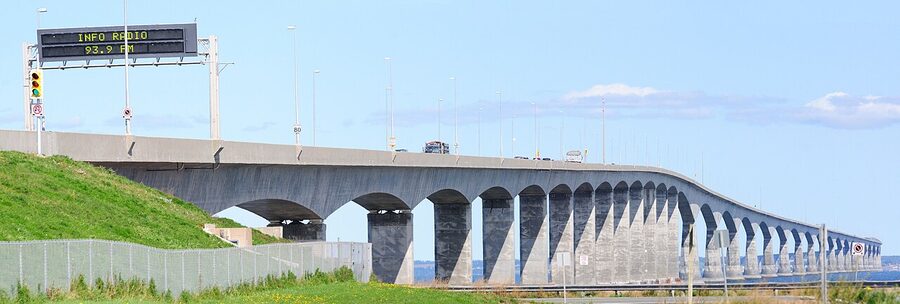
Driving in: the Confederation Bridge connects New Brunswick to PEI in twelve minutes. The toll structure is unusual. You pay nothing entering PEI, only on the way out, with a 2026 passenger-vehicle rate of CA$20 (it dropped from CA$50 in May 2025, an unusually pro-tourist move). Full toll details on the Confederation Bridge official site. The alternative is the Northumberland Ferries from Caribou, Nova Scotia to Wood Islands, PEI, which takes 75 minutes. The ferry only operates from May to mid-December and is also paid one-way (Nova Scotia to PEI is free; PEI to Nova Scotia carries the fare). Schedule on the Northumberland Ferries schedule page.
If you’re flying in via Halifax, the drive from Halifax to Charlottetown via the bridge is about three and a half hours. Via the ferry it’s the same time but with the option to break the journey on the boat. The ferry route is more scenic and lets you start (or end) the trip on the water, which is fitting for an island.
A two-day itinerary that actually works
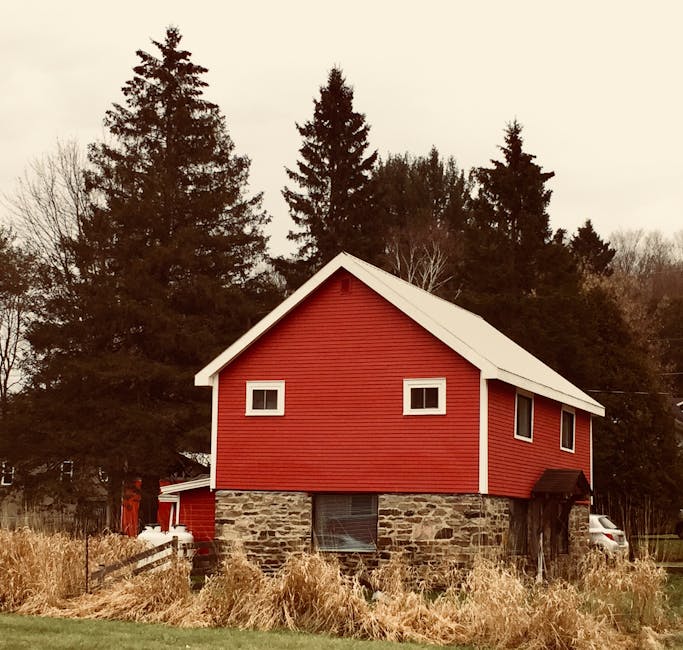
Day one, the Cavendish loop. Start at Green Gables Heritage Place at 9am when it opens; walk Lover’s Lane and the Haunted Wood to get over to the Site of Lucy Maud Montgomery’s Cavendish Home. Combine those two and you’re done by noon. Lunch at Avonlea Village (a slice of Piatto pizza, a Cows ice cream, in and out in forty-five minutes). Afternoon at Cavendish Beach and the Cavendish Cliffs walk. Cavendish Cemetery before sunset; allow fifteen minutes. Dinner at New Glasgow Lobster Suppers if reservations align.
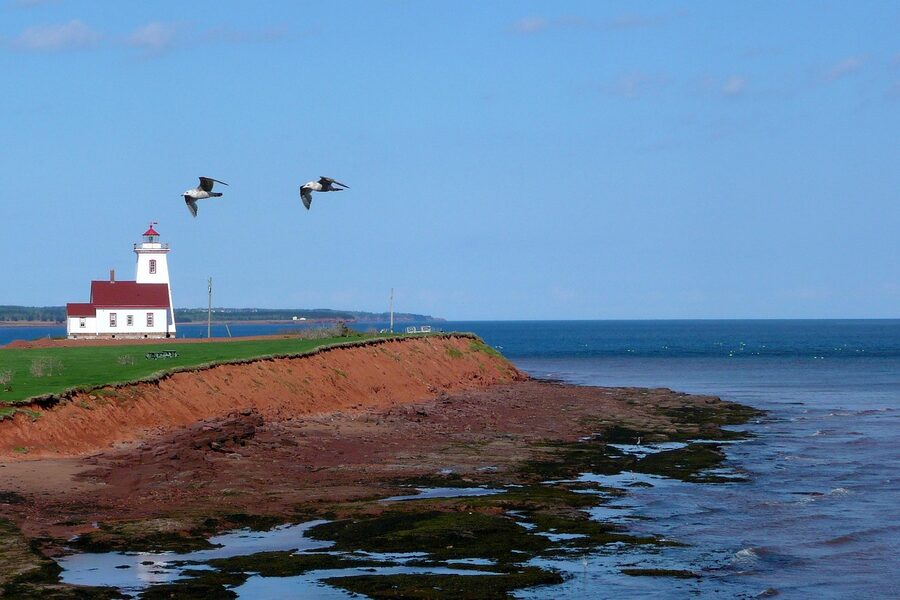
Day two, the wider literary loop. Drive west to Park Corner. Anne of Green Gables Museum at Silver Bush in the morning, including the carriage ride if you have anyone under twelve. Walk down to the real Lake of Shining Waters. Cross the road to the Montgomery Inn at Ingleside if you didn’t stay there (exterior only when guests are in residence; they post a sign). Drive back via New London and stop at Lucy Maud Montgomery’s Birthplace if it’s open. Lunch in New London. Afternoon free for the national park or shopping in Charlottetown. Evening: Anne of Green Gables, The Musical at the Confederation Centre, or Anne & Gilbert at Florence Simmons. Pick one and book ahead.
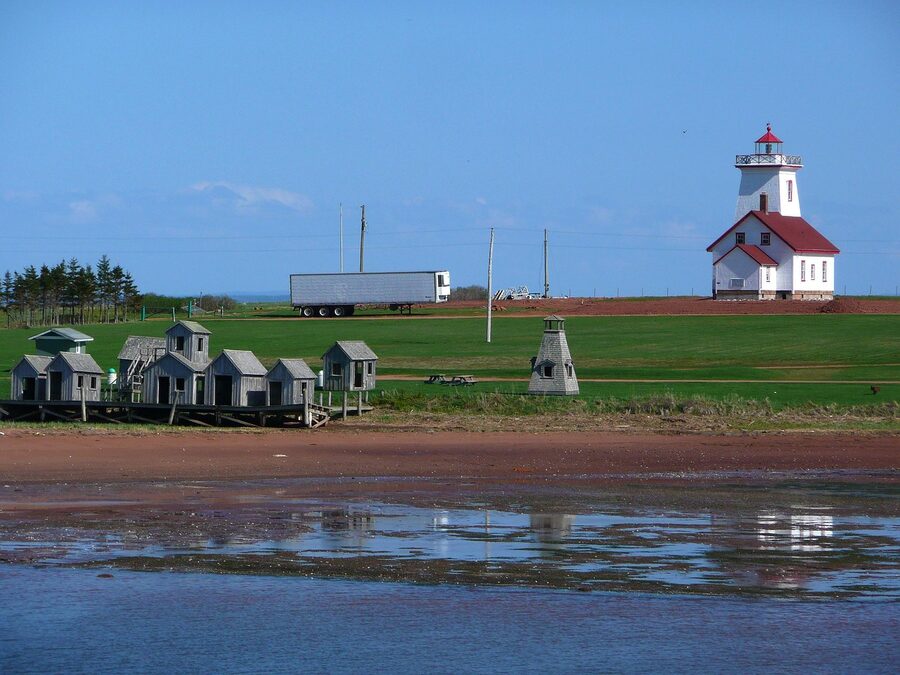
Add a third day if you have it: the south shore around Borden-Carleton (Gateway Village shopping, Cows ice cream stand, photos at the Confederation Bridge), then Lower Bedeque Country School where Montgomery taught from 1897 to 1898. This is a deeper-cut stop that almost no one else makes, which is the point of going.
How this trip fits into the wider reading challenge

If you’re doing the read-the-book-then-go-to-the-place pattern as a habit, PEI is one of the best entries on the list because the loop is small, the geography is preserved, and the literary-tourism infrastructure is mature. It’s the gentlest of the readers’ pilgrimages; you can do it with a ten-year-old and an eighty-year-old in the same car.
For the next destination, two natural follow-ups depending on the reader’s age. Bath with Persuasion is the obvious next-up if the trip is mother-daughter and the daughter is in her late teens; both are women writing women in small-town settings, both reward slow walking. For a contemporary pivot, Forks, Washington is the same kind of small-town pilgrimage with a town that leans into the fan tourism even harder than Cavendish does. Asheville and the Hunger Games sites work for the family with older teens; Matamata in New Zealand for the over-the-top film-locations crossover. The full list lives on the Read and Travel Challenge hub.
One last thing
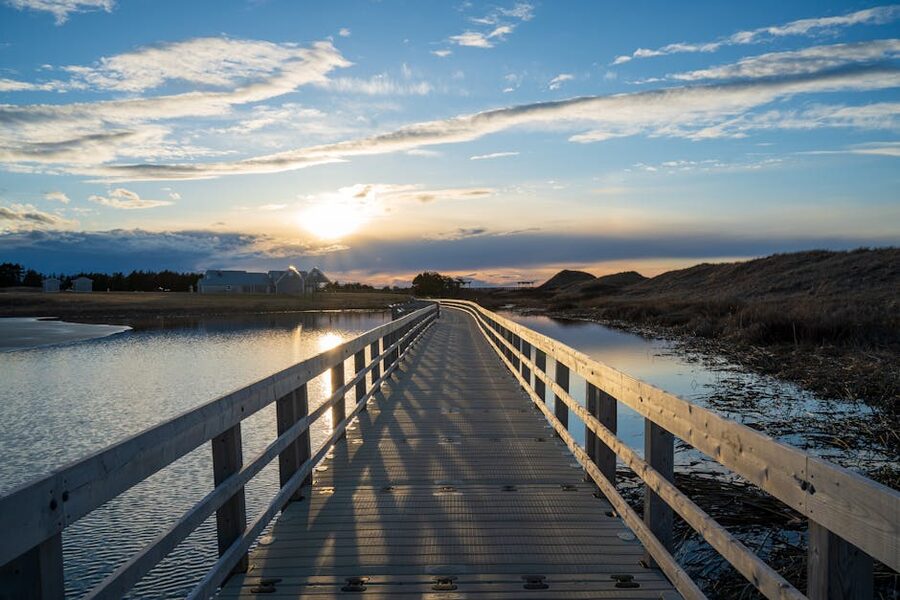
The reason Anne of Green Gables works as a pilgrimage is not that the buildings are intact, because some of them aren’t. It’s that the geography is. Stand on the foundations of Montgomery’s lost home in Cavendish, look across the field at the Macneill farmhouse, and you can see exactly the distance an eleven-year-old orphan would have walked to a friend’s house on a summer evening in 1907. That walk is the book. The Heritage Place gives you the interior, the Anne Museum gives you the artifacts, but the field between them gives you the thing you actually came for.
Go in late June if you can. Stay three nights, not two. Bring the book.