
If you came to Inverness because of Outlander, brace yourself for the first twist: the show wasn’t filmed here. Not the cobbled square where Frank watches the ghost outside the B&B. Not the lane where Claire buys the vase. Not the cottage. Not the high street. Falkland in Fife played 1940s Inverness on screen, and most of the rest happens in central Scotland near Glasgow. Even the Battle of Culloden scenes were shot on private land at Cumbernauld, because the production wouldn’t film on the actual moor where 1,500 men are buried.
So here’s my unfashionable take after a few trips up: Inverness is the right base anyway. Diana Gabaldon set the book here for reasons the show couldn’t be bothered to honour, and the things you can actually visit, the standing stones, the moor, Beauly Priory, Lord Lovat’s mausoleum, are all within an hour’s drive of the city. The town that doubled for Inverness on screen is a four hour drive south. Skip it unless you’ve already done everything else.
This is a guide for book readers, not Sam Heughan superfans. There’s some overlap. There’s a lot that’s different.
In This Article
- The book opens here. The show doesn’t.
- Culloden Battlefield is the one stop you cannot skip
- Clava Cairns: as close as you’ll get to Craigh na Dun
- Around Inverness: real Fraser country
- Wardlaw Mausoleum, Kirkhill
- Beauly Priory
- Castle Leod, near Strathpeffer
- Fort George
- Inside the city itself
- Leakey’s Bookshop, Church Street
- Old High Church and the Jacobite stones
- Flora MacDonald and Inverness Castle
- Abertarff House
- The day trips, and which ones to skip
- Glencoe is worth the drive. Probably.
- Doune Castle and Falkland: only if you’ve got more than three days
- Loch Ness and Urquhart Castle
- The Highland Folk Museum is the show location actually worth driving to
- Where to stay
- Drive yourself or take a tour
- A short Jacobite primer for book readers
- If you only have one day
- If you’re reading the book on the trip
The book opens here. The show doesn’t.
It’s worth saying out loud because most fans arrive expecting something the location can’t deliver. Outlander opens with Claire and Frank on a second honeymoon in Inverness in 1945. They stay at a guesthouse, they visit the standing stones at Craigh na Dun, Frank pokes around the Reverend Wakefield’s library researching his ancestor Black Jack Randall, and Claire drinks tea with Mrs Graham. All of that is set, in the book, in this city.
On the TV show, almost none of it was. The producers liked Falkland’s preserved 18th-century shopfronts and its lack of Inverness’s modern traffic. The Covenanter Hotel on Falkland’s main square became Mrs Baird’s B&B. The Bruce Fountain, where Jamie’s ghost looks up at Claire’s window, is a Falkland fountain. None of that exists in Inverness in any recognisable form.
What does exist here, and what makes Inverness the correct base for an Outlander pilgrimage anyway, is the history. Diana Gabaldon picked the city because it sits in the absolute heart of the Jacobite world. Culloden Battlefield is six miles east. Clava Cairns, the Bronze Age stone circle most people agree inspired Craigh na Dun, is right next to it. Lord Lovat, the Old Fox who is Jamie’s grandfather in the books, is buried at Wardlaw Mausoleum in the next village. Beauly Priory, where Maisri the Seer meets Claire, is half an hour west. The Frasers of Lovat aren’t a clan you visit at a TV studio. They’re a clan you visit here.
Culloden Battlefield is the one stop you cannot skip
Culloden Moor is where the book ends and where the world the Frasers belonged to ended. On 16 April 1746 the Jacobite army faced a much larger Hanoverian force on flat boggy ground that gave them no opportunity for the Highland Charge tactic that had won them earlier battles. It was over in 45 minutes. About 1,500 Jacobites died, against around 50 government dead. Within days of the battle, prisoners were being shot and the long systematic dismantling of Highland clan culture had begun.
The National Trust for Scotland visitor centre is genuinely good. There’s a 360-degree immersion film, a chronological exhibit that lays out the lead-up and the aftermath in plain English, and a section on the Highland Clearances that explains why the Frasers and so many other clans wound up in Carolina, Australia, and Ontario in the decades after. Adult entry is around £14, and battlefield access alone is free.
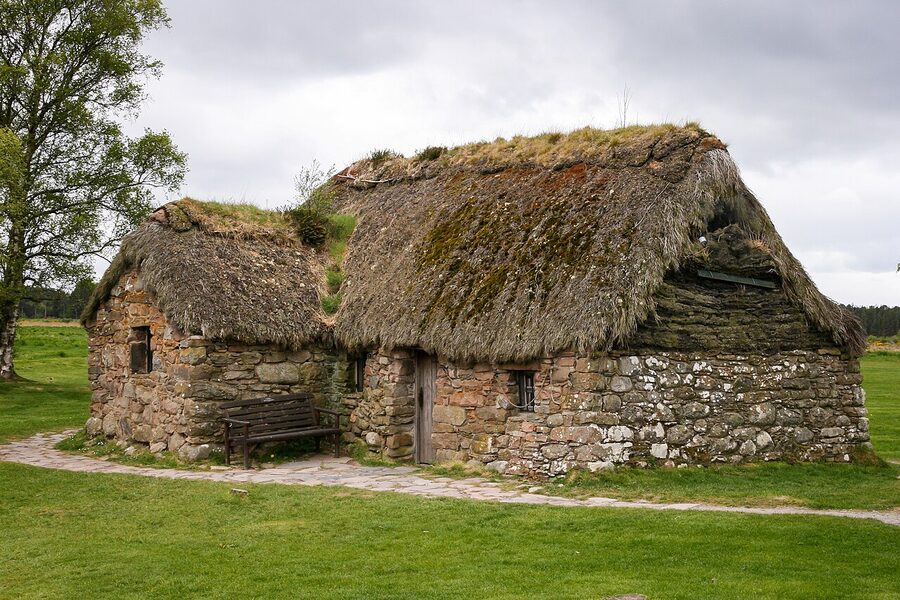
Walk the field. Don’t just do the centre. The flagged front lines show how short the distance was between the two armies, and the boggy ground that crippled the Highland Charge is still soft underfoot in spring. Audio guides are worth the £3.50 because the field doesn’t explain itself, and the clan markers can be hard to find without one.
A practical note: get there early. Tour buses arrive after 10:30 and the moor stops feeling like a battlefield once there are 80 people on it. I went at 9:15 on a wet Tuesday and had the Fraser stone to myself for about half an hour. Go in shoulder season and weekday morning if you can. Closing time varies seasonally; check the NTS site for the day’s hours before you drive out.
Clava Cairns: as close as you’ll get to Craigh na Dun
The standing stones in the show are made of polystyrene and live in a warehouse near Glasgow. Sorry. The hill where Claire goes through the stones in the opening credits is at Kinloch Rannoch, about three hours south, and there’s nothing there now besides the view.
What you visit instead, and what most readers and writers agree inspired Gabaldon’s Craigh na Dun, is Clava Cairns. It’s a Bronze Age complex of three burial chambers and surrounding standing stones, dated to roughly 4,000 years old, and it sits a one-mile drive from Culloden. You can walk between the two if you fancy it; it’s about 25 minutes through farmland.
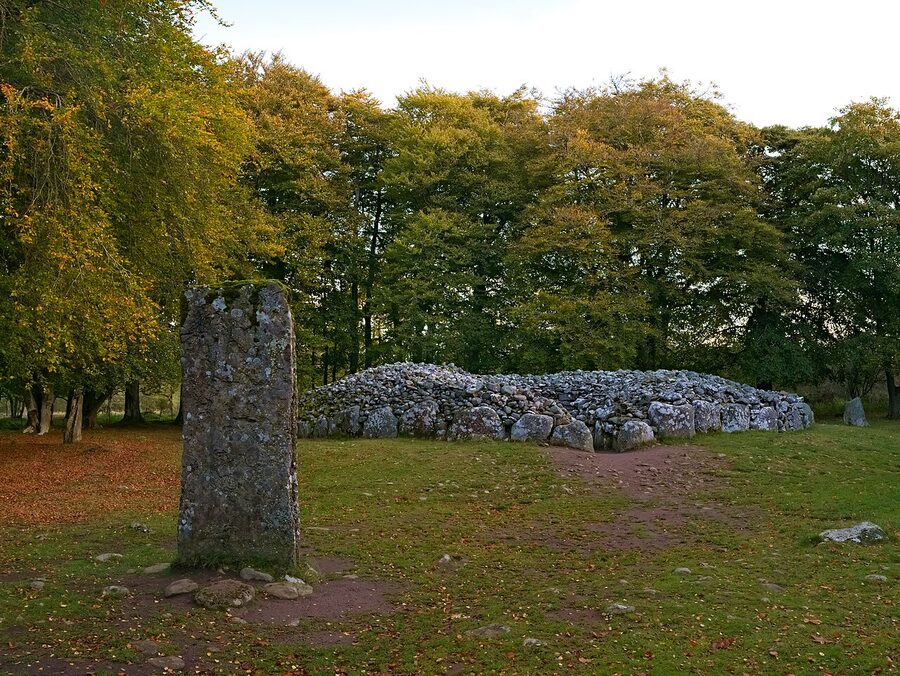
Clava is free, open all hours, and almost always quiet. There’s a small car park, no toilets, no shop, no staff. That last point is the magic of the place. You can stand inside the largest cairn, with the passageway aligned to the midwinter sunset, and feel the silence the book is gesturing at when Claire first goes through the stones. I’ve seen people put their hands on the stones, and it’s mostly fine; just don’t climb on them, don’t carve anything, and don’t leave coins or ribbons. They’re not a wishing well.
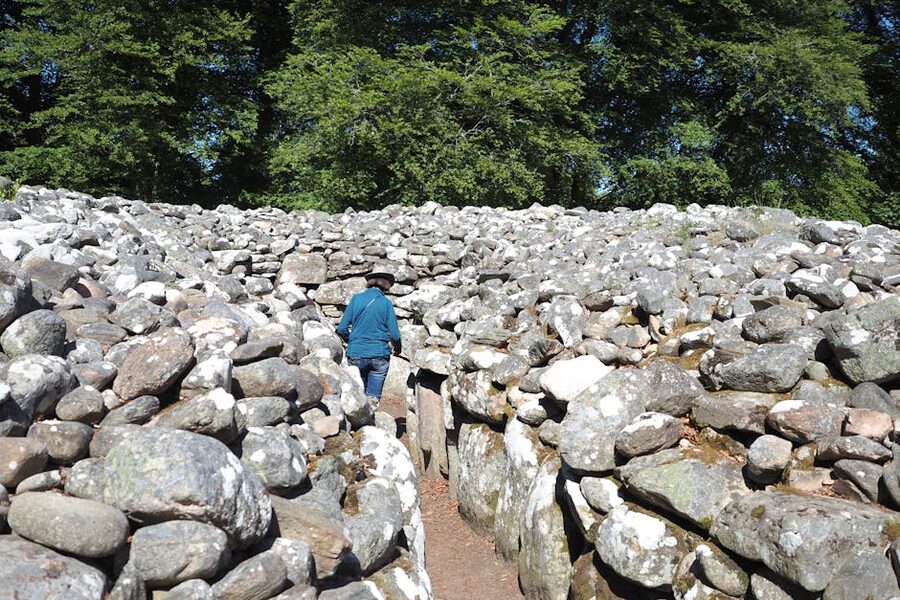
Best time to visit is sunrise or in the last hour before sunset. The light gets long and the stones throw real shadows. If you’re in mid-summer, that’s an early start, but it’s worth setting an alarm for. If you’re staying in town without a car, a Loch Ness day tour will sometimes loop through Clava on the way to or from Culloden; ask before you book.
Around Inverness: real Fraser country
This is where Inverness pulls ahead of every other base. The book is dense with Frasers. You can visit four sites in a half-day loop that the show never bothered with, and they all matter.
Wardlaw Mausoleum, Kirkhill
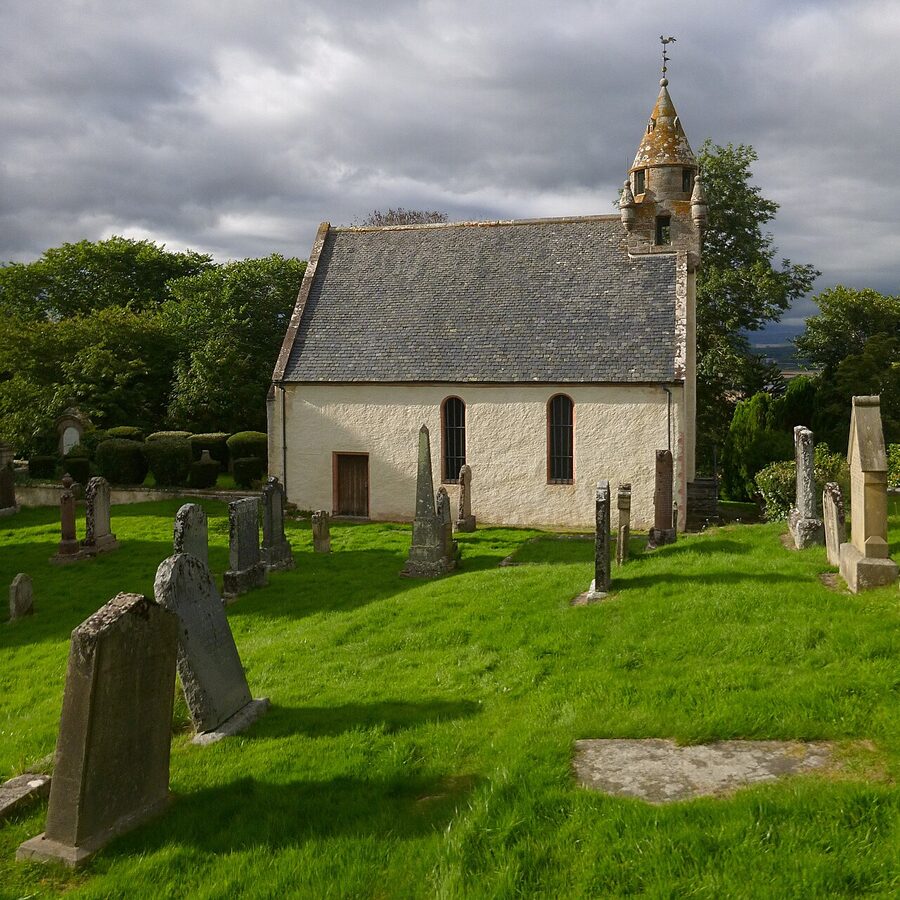
Eight miles west of the city in a small village graveyard sits the Wardlaw Mausoleum, the burial place of the Frasers of Lovat for centuries. Lord Lovat himself, the eleventh chief, the Old Fox of the Jacobite Rebellion, the last man beheaded in Britain (London, 1747), and Jamie’s fictional grandfather in the books, was supposedly interred here after his clan smuggled his body home from the Tower.
The “supposedly” got more interesting in 2017 when researchers exhumed the headless body that was thought to be his. It turned out to belong to a young woman, identity unknown. So now there’s a body in there with no head, but no Old Fox either. Diana Gabaldon herself has visited; the volunteers at the trust have stories and they’re worth asking for. Open by arrangement and on summer Sundays; the trust site lists the current dates.
Beauly Priory
Half an hour west of Inverness, the village of Beauly takes its name from the French beau lieu, beautiful place, supposedly because Mary Queen of Scots said so when she stayed here. The 13th-century priory is open, free, and roofless. Several Frasers of Lovat are buried in the priory grounds. In Dragonfly in Amber, this is where Claire meets Maisri the Seer.
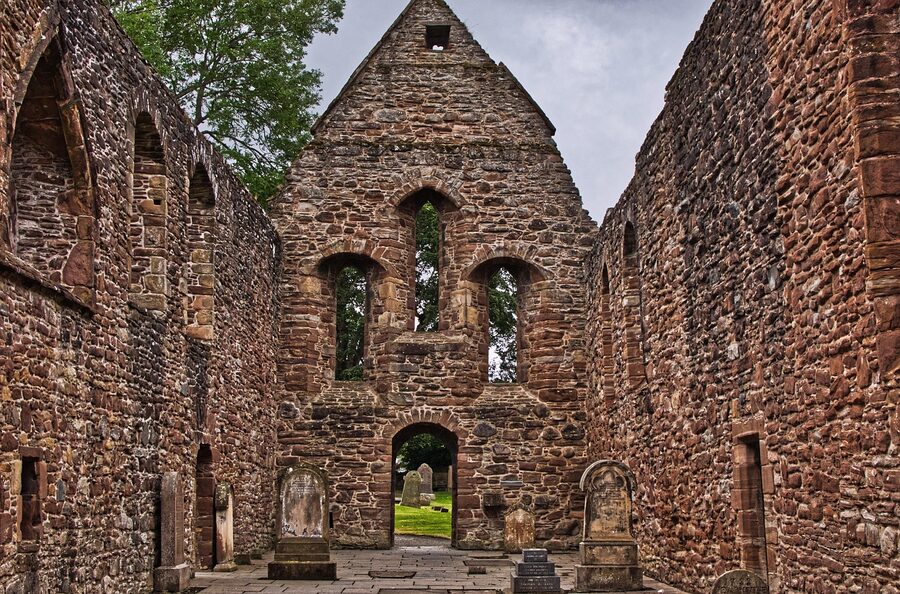
If you’ve got an hour to spare, walk the back of the graveyard, find the elm tree that’s still standing after most of the others got Dutch elm disease, and read the older stones. Some of the inscriptions are in Latin, some have skulls, and one has a little carved hourglass that I can’t stop thinking about. The Old School Beauly, two minutes’ walk away, has decent tea and a good selection of Scottish books; Diana Gabaldon visited in 2017 and the staff still talk about it.
Castle Leod, near Strathpeffer
This one matters and almost nobody knows. Castle Leoch in the books is the Mackenzie clan seat. On screen, it’s played by Doune Castle near Stirling, which is fine, but Doune is a 14th-century ruin with no Mackenzies in it.
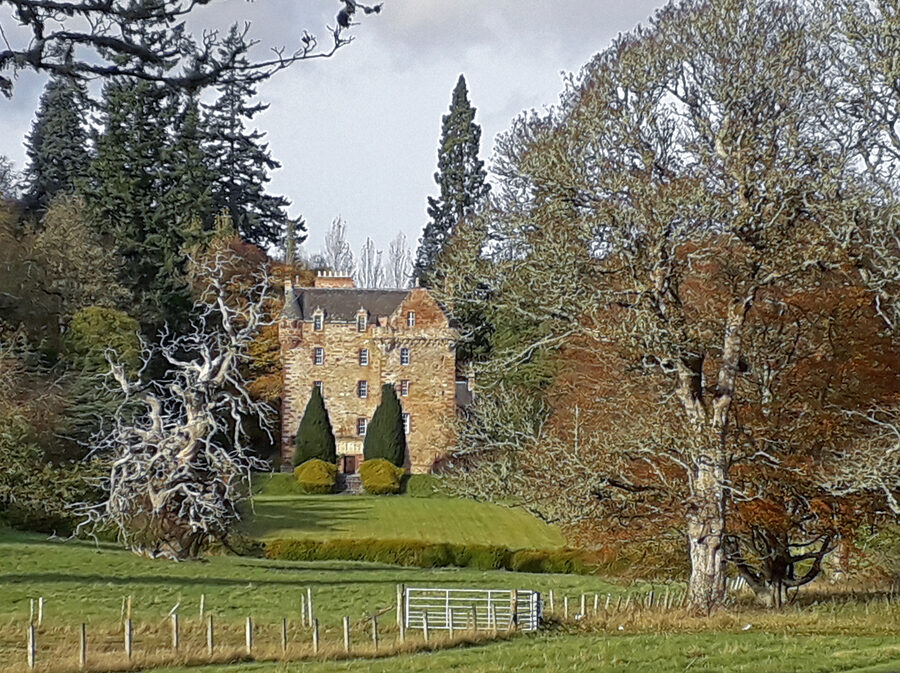
Castle Leod, 20 miles north of Inverness near the spa town of Strathpeffer, is the actual ancestral seat of the Mackenzies and is still lived in by the current chief, the Earl of Cromartie. It was the inspiration for Castle Leoch in the books before the show ever existed. It opens for visitors only a handful of times a year; check castleleod.org.uk before you build a day around it. If your dates line up, this is the proper Mackenzie pilgrimage. If they don’t, give yourself permission to skip it and read about it on a wet evening at the hotel.
Fort George
Fort George, on a finger of land 11 miles northeast of Inverness, was built in the years after Culloden as the British government’s answer to a hypothetical third Jacobite uprising. It’s a vast, almost impregnable star fort that was finished in 1769 and has been an active military barracks ever since. The Jacobites never came back, so it never saw a battle. It’s still in use by the Black Watch.
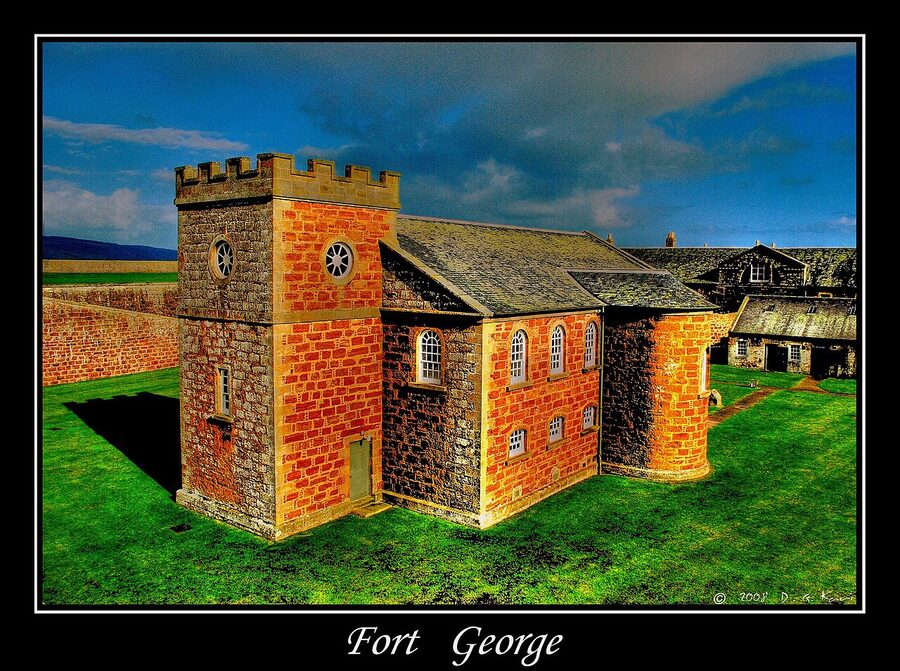
It’s not a film location. It is the most physical example you’ll ever see of what the British state did to the Highlands after Culloden, and that puts the second half of the book series into context in a way no visitor centre quite does. Adult entry is around £11. The Moray Firth has a resident pod of bottlenose dolphins; on a clear day you can watch them from the ramparts. Bring binoculars and a windproof; the firth is exposed and it gets cold even in July.
Inside the city itself
Most of the book’s Inverness scenes take place inside houses and shops that no longer exist or were never real to begin with. The Reverend Wakefield’s manse, Mrs Baird’s guesthouse, the surgery, all fictional. There are still two or three places worth walking to, and they cluster on or near Church Street so you can do them in an hour.
Leakey’s Bookshop, Church Street
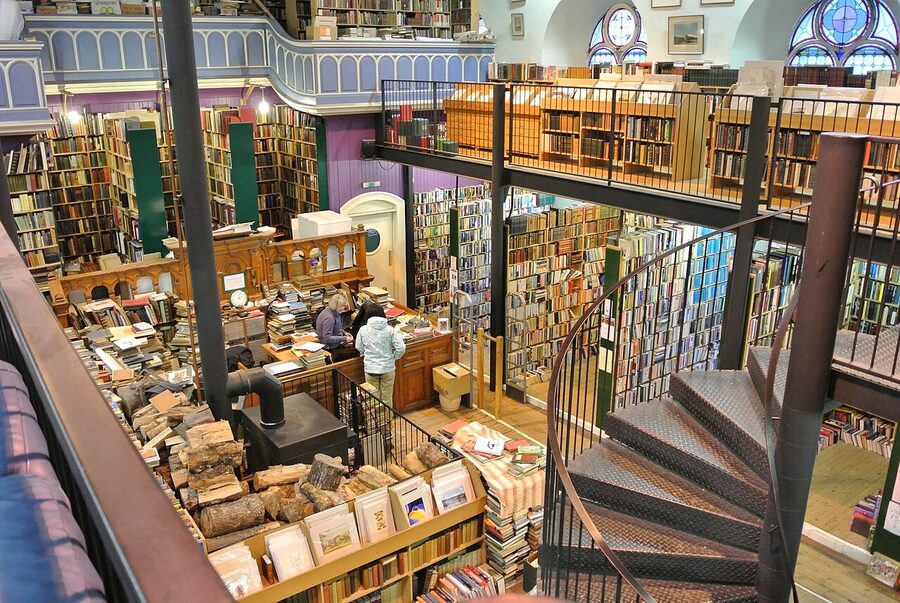
Leakey’s is in a former Gaelic church, has a wood stove going most months of the year, and is Scotland’s largest second-hand bookshop. It also doubled as a Hanoverian field hospital after Culloden, so the wounded soldiers Claire would have been treating in 1746 were treated here by the actual surgeons of 1746. The Outlander section is small and well-picked, the Scottish history shelves are very good, and the smell of old paper alone justifies the detour. Cash only for some purchases; closed Sundays. Their site is barely there; just turn up.
Old High Church and the Jacobite stones
A two-minute walk from Leakey’s, perched above the river, the Old High Church is the oldest in Inverness. After Culloden it was used as a temporary prison for Jacobite rebels, and the churchyard outside was where executions took place. There are two stones in the yard: one the prisoner sat on and one the executioner used as a rifle rest. There’s an information plaque next to them. It’s a strange and sobering ten minutes.
Flora MacDonald and Inverness Castle
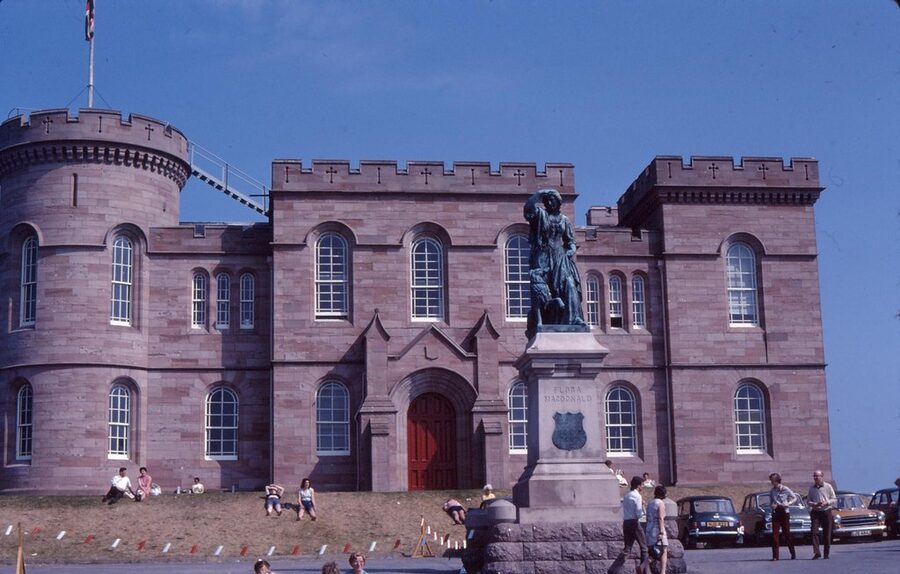
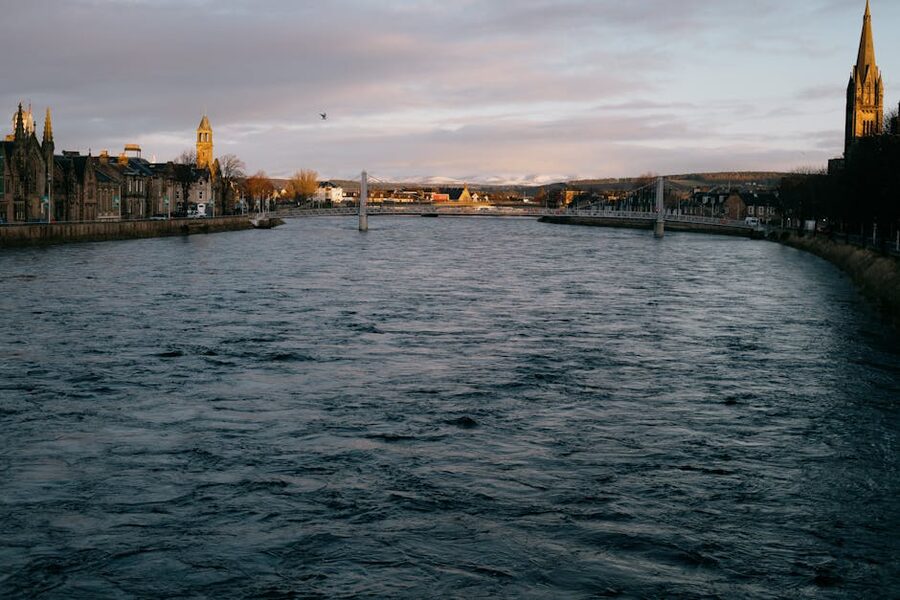
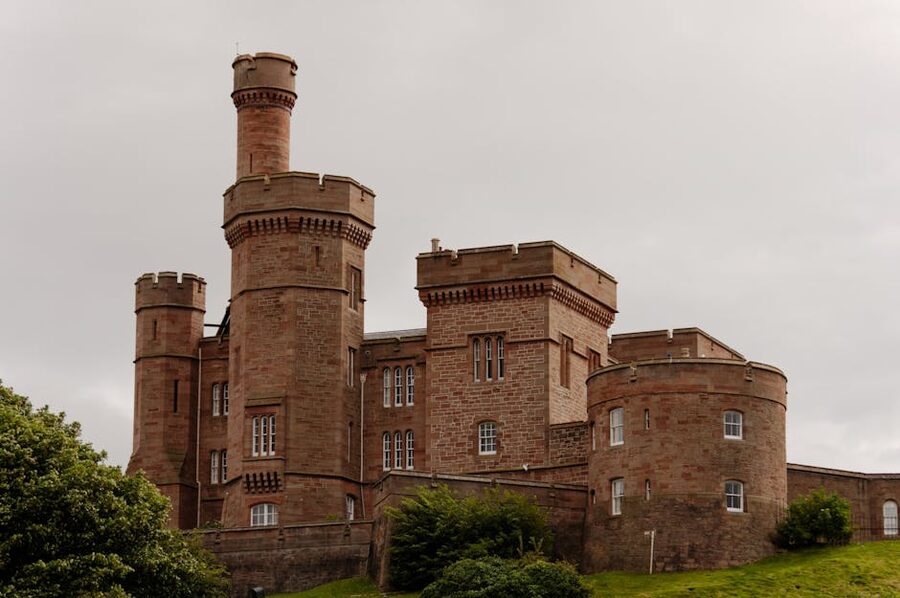
The current Inverness Castle is a Victorian red-sandstone sheriff court built on the rocky bluff that has held a fortification of some sort since at least the 12th century. It’s just been redeveloped as a visitor attraction; opening hours and ticket prices are still settling and worth checking on the day. What’s free and worth doing in any weather is climbing up to the bronze statue of Flora MacDonald in front of the castle. She’s the woman who smuggled Bonnie Prince Charlie off the mainland disguised as her maid Betty Burke after Culloden, and the view from her plinth back over the river is the photo of Inverness you’ll keep.
Abertarff House
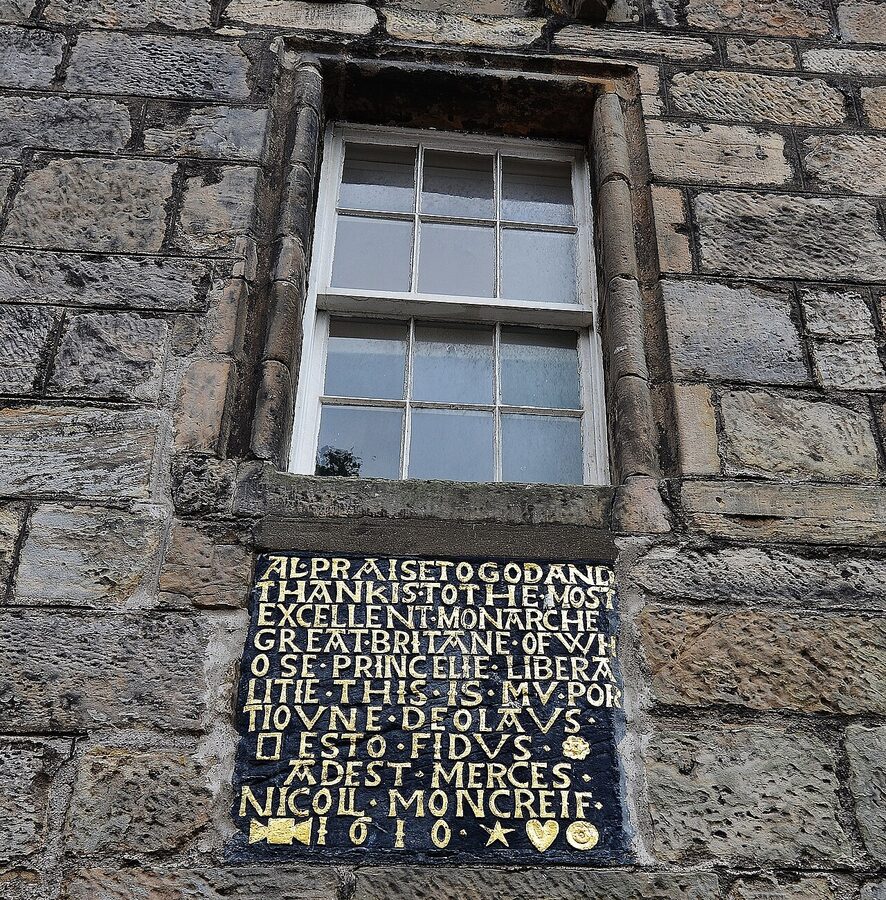
The oldest surviving building in the city, dating to 1593, is a townhouse built for the Frasers of Lovat. So when Jamie’s grandfather is sitting in his Inverness townhouse in Dragonfly in Amber, this is roughly the building you should picture. It’s a five-minute walk from Inverness Palace Hotel on Church Street. The interior is rarely open to the public; from the outside, look for the projecting turnpike stair on the corner.
The day trips, and which ones to skip
Inverness has three obvious day trips for fans, and they are wildly uneven in value.
Glencoe is worth the drive. Probably.
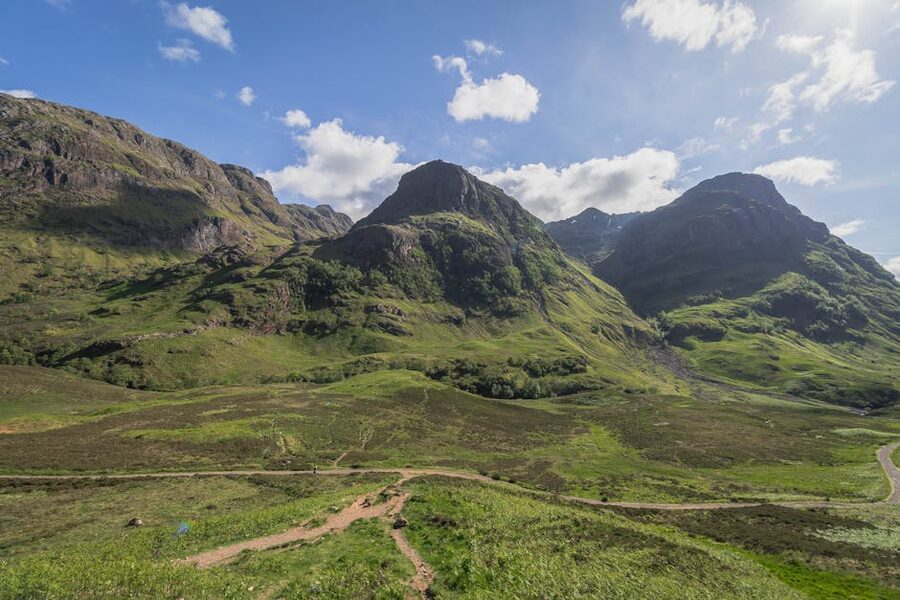
Glencoe appears in the opening credits and that’s it; no actual scenes were filmed there. But it’s two and a half hours south of Inverness through some of the best landscape in Britain, and the route also takes you past Loch Ness, Fort Augustus, and the Caledonian Canal locks. If you have a car and a full day, do it. Stop at the Three Sisters viewpoint, walk fifteen minutes up the path opposite the layby, then come back. If you only have half a day, skip it. The bus tours that try to do it as a half-day trip will give you ten minutes at the viewpoint and call it Glencoe; you might as well not have gone.
Doune Castle and Falkland: only if you’ve got more than three days
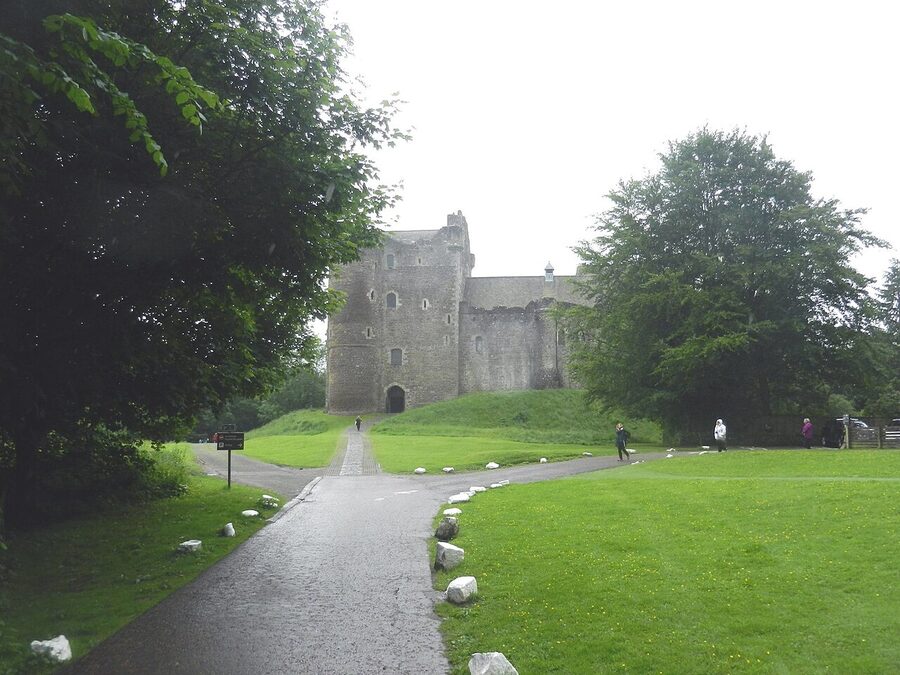
Doune Castle (the on-screen Castle Leoch) and Falkland (the on-screen 1940s Inverness) are both in central Scotland. From Inverness, it’s a three-and-a-half-hour drive each way. You can’t do both in a day from here. If you’re flying out of Edinburgh or Glasgow at the end of the trip and have an extra night to spend in Stirling or Fife, route them in then; that’s how I’d do it. From Inverness alone, the maths doesn’t work.
The audio guide at Doune is half-narrated by Sam Heughan, which is either delightful or oversold depending on your tolerance. Falkland is undeniably pretty: the Covenanter Hotel, the Bruce Fountain, Fayre Earth gift shop standing in for Mrs Baird’s. Both are worth a half-day if you happen to be passing. Neither is worth seven hours of driving from the Highland capital.
Loch Ness and Urquhart Castle
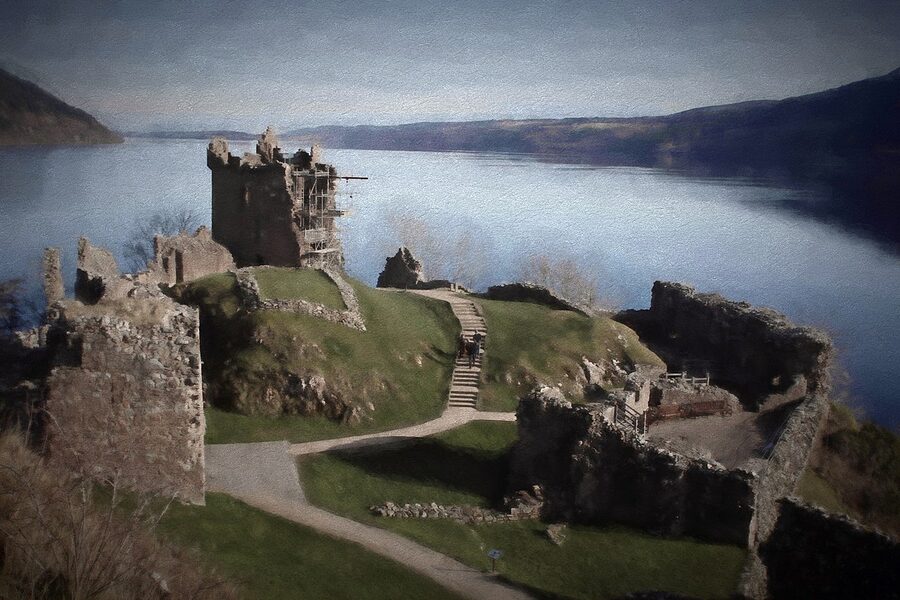
Urquhart Castle, on the western shore of Loch Ness about half an hour south of the city, is not a filming location. It is, however, in the books: in Outlander itself, this is where Claire and Frank are when she sees what she thinks is the Loch Ness Monster, and this is where Black Jack Randall is unmistakably described in the manuscript Frank is reading. So it’s actually more of a book site than most of the show locations, which is the point of this whole guide.
It’s also genuinely impressive ruins on a beautiful loch, and you can combine it with a Loch Ness boat trip from Drumnadrochit easily. Adult entry to the castle is around £14. Don’t waste money on a separate Nessie boat tour from Inverness; the boats leave from the loch itself and the trip from town there and back eats half your day. If you don’t have a car, take the public bus 19A from Inverness bus station; it’s about an hour and lands you outside the castle gate.
One more thing about Loch Ness: it is not actually warm or fun to swim in, even in August. Locals don’t. There is no pebble beach photo op. Manage your expectations.
The Highland Folk Museum is the show location actually worth driving to
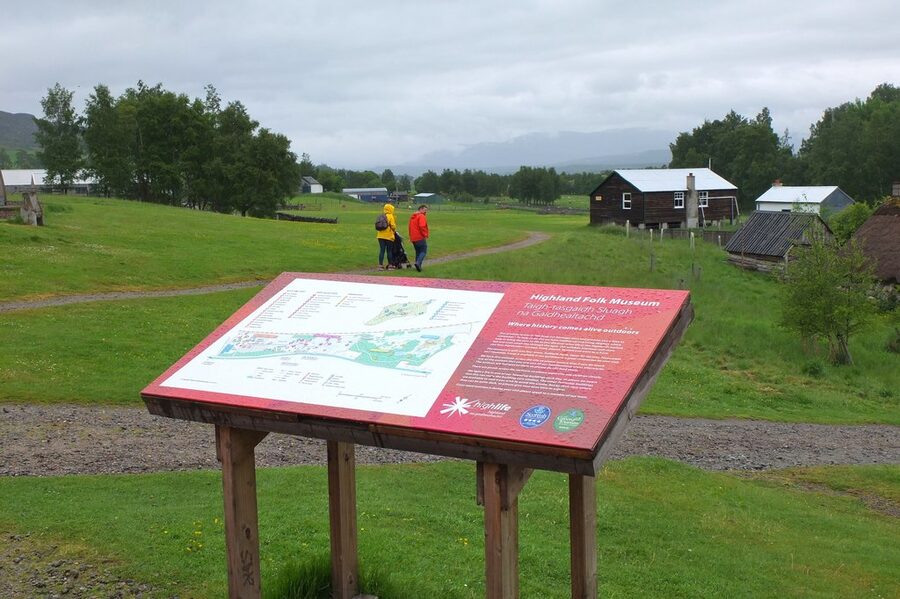
If there’s one show filming location that makes sense to drive to from Inverness, it’s the Highland Folk Museum at Newtonmore, about an hour south. It’s an open-air museum with reconstructions of a Highland township from around 1700, complete with turf-roofed blackhouses, a working smithy, and demonstrations of clothmaking and butter churning. The Baile Gean township is the location used for the Mackenzie village in season one of the show, where Dougal rides through collecting rent.
What the show didn’t film is the whole rest of the museum, which walks you through three centuries of Highland life and is the single most useful context for the book series I’ve found anywhere in Scotland. Entry is free, donations encouraged. Allow at least three hours; locals come for the day. Closed November through March.
Where to stay
Inverness is small and walkable. If you can stay within a 15-minute walk of the river, do that; it’s where the restaurants, the bookshops, the castle, and the bus station all are.
- For the Outlander experience without going overboard: the Glen Mhor Hotel on Ness Bank is a converted Victorian house overlooking the river, two minutes from the cathedral and ten from the castle. Quiet at the back, river view at the front.
- For the splurge: Rocpool Reserve, a small boutique on Culduthel Road, has the best restaurant in town attached.
- For the budget: Inverness Youth Hostel up near the cathedral is fine if you don’t mind dorms; the private rooms are good value.
- If you’ve got a car: consider basing in Beauly, half an hour west. It’s a smaller, prettier village, you wake up next to the priory, and the drive into Inverness in the morning is empty even in summer.
You can find accommodation across the city through Booking.com; check the same place on Agoda too because the small B&Bs are sometimes cheaper there. The Loch Ness side has lots of self-catering cottages on Cottages & Castles if you want to do this trip with a kitchen.
Drive yourself or take a tour
I’d drive. The classic Outlander loop from Inverness, Culloden, then Clava Cairns, then a stop at Wardlaw Mausoleum if it’s open, then Beauly Priory and lunch in the village, is about 45 miles total and takes a comfortable day. Petrol stations are at Culloden and Beauly, the roads are mostly easy two-lane, and you’ll be driving on the left if you’re coming from anywhere except the rest of Britain. Hire from Rentalcars or pick up at Inverness airport.
If you don’t drive, the small-group day tours from Inverness are good and reasonably priced. Highland Explorer Tours, Wow Scotland, and Rabbie’s all run dedicated Outlander itineraries that hit Culloden, Clava Cairns, and Loch Ness in one day. Browse the options on GetYourGuide or Viator; expect to pay around £55 to £75 per person for a full day. The minibus tours are noticeably better than the big-coach ones because they can stop at Clava and Wardlaw.
A short Jacobite primer for book readers
Most Outlander guides skip this and the visits land less hard for it. Three minutes of context that will make the moor at Culloden mean more.
The Stuart royal house ruled Scotland from 1371 and lost the throne in 1688 when the Catholic James VII (or II of England) was deposed by his Protestant son-in-law William of Orange. The Jacobites are simply the supporters of the deposed Stuart line, mostly Highland clans, mostly Catholic or Episcopalian, with backing from France and Spain. Between 1689 and 1746 they staged a series of risings.
The 1745 rising is the one Outlander hangs on. Bonnie Prince Charlie, James VII’s grandson, lands in Scotland, raises the clans, captures Edinburgh, marches as far south as Derby, then turns back on bad advice. They win at Falkirk Muir in January 1746, lose catastrophically at Culloden three months later. The defeat ended the clan system in any meaningful sense. Tartan was banned. Speaking Gaelic was punished. Carrying a weapon was punished. The landlords realised sheep were more profitable than tenants and the Highland Clearances cleared most of the population off the land over the next century.
Jamie Fraser is a Jacobite officer. The world he comes from ends on Culloden Moor. That’s the book in two paragraphs. Now go visit the moor.
If you only have one day
Get to Culloden when it opens. Walk the field for an hour. Do the visitor centre after. Drive five minutes to Clava Cairns, sit there for half an hour. Drive 30 minutes back to Beauly, walk through the priory, lunch at The Old School. If your legs and patience hold, finish at Leakey’s Bookshop in town for an hour and a coffee at Velocity Café across the river. That’s the trip.
If you’re reading the book on the trip
Read the first hundred pages on the way north, in the order Gabaldon wrote them. The opening chapters are explicitly set on the streets you’ll be walking. Then save chapter 19, the Battle of Culloden flashbacks, and the relevant bits of Dragonfly in Amber for the night after you visit the moor. There’s a particular kind of quiet you get when you’ve stood on the ground and read about it the same evening. That’s the whole point of the book-and-travel idea, and it works best when you give the place a chance to land before the next chapter.
This is the third in a series of book-and-city guides we’re running. If your next read is on the list, the Harry Potter London guide covers the King’s Cross and Diagon Alley filming spots without the wide-eyed-fan treatment, and the Persuasion Bath guide walks you through Anne Elliot’s Bath without the Bridgerton conflation. The whole project is built off our Read and Travel Challenge reading and travel challenge, which is exactly what it sounds like: read the book, then go to the place. Inverness is one of the best places we’ve sent anyone yet.