The Pump Room sounds like 1810. A trio plays Mozart on a low stage, a fountain trickles in the corner, cups clink against saucers, and somewhere behind you a waiter is asking if you’d like to try the spa water. You take the small glass when it comes. It smells faintly of warm pennies and tastes worse than that. This is exactly where Anne Elliot stood, watching the Bath she didn’t want to be in.
That moment is the whole reason to read Persuasion in Bath rather than at home. Jane Austen anchored her last completed novel to specific streets and squares with the precision of someone who lived there for five unhappy years. You can walk the same pavements Anne walked when she finally caught sight of Captain Wentworth on Milsom Street. You can stand on the Gravel Walk where, 200 pages of restraint later, they finally talk it out. The geography is the plot.
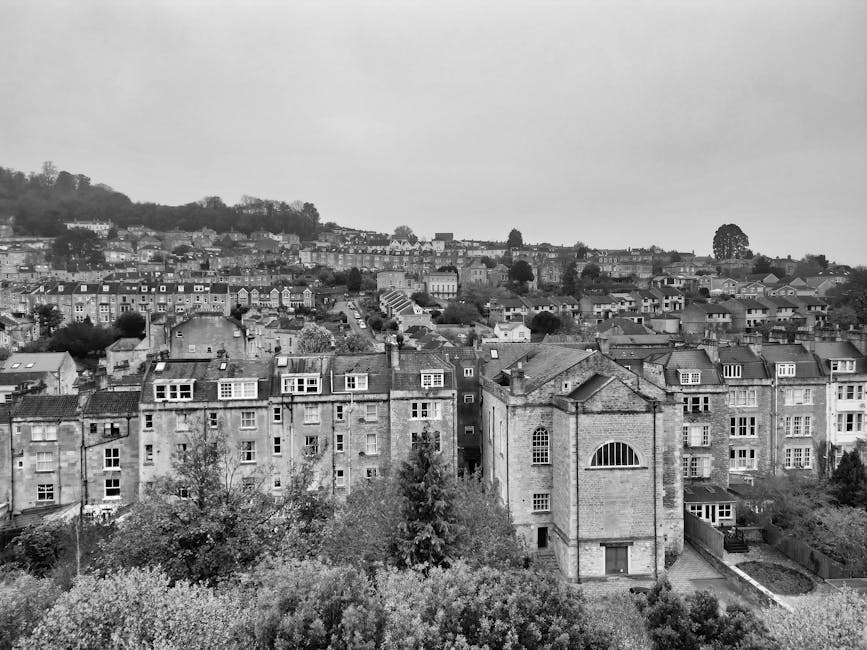
This guide is built for two readers: the Austen fan who wants to find Anne Elliot’s Bath, and the regular traveller who’s heard Bath is worth a day from London and wants to know what to actually do there. Both of you should read both halves. The book is the lens. The city stands on its own.
In This Article
- Before you go: the practical bit
- The Pump Room: where Anne walks in and the city goes quiet
- The Gravel Walk: where the proposal happens
- The Royal Crescent and No. 1
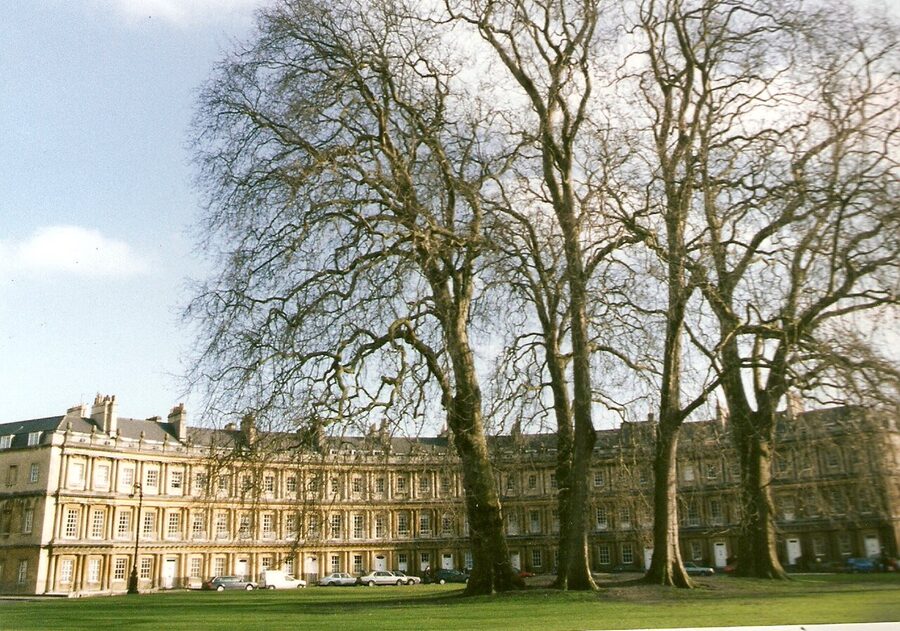
- Camden Crescent: where Sir Walter actually lives
- Milsom Street: where Anne sees Wentworth again
- The Assembly Rooms and the Octagon Room concert
- Where Jane Austen actually lived in Bath
- The Jane Austen Centre: worth it or skip?
- A self-guided two-hour Persuasion walk
- Where to stay
- Eating, tea, and the cocktail at the Canary
- Day trip from London or stay the night?
- Other Bath things, in honest order
- If you only have an hour
Before you go: the practical bit
Bath is 90 minutes from London Paddington by direct GWR train. Off-peak singles are usually £30 to £45 if you book a few days ahead, walk-up fares closer to £80. Day trip is feasible. One night is better. Two nights is plenty.
The historic centre is small and walkable. Everything in this guide sits inside a 25-minute walk from Bath Spa station. Wear shoes you can climb hills in. Camden Crescent in particular is a proper thigh-burner.
If you only read one thing before you arrive, read chapters 14 to 23 of Persuasion. That’s the Bath section. The earlier chapters set up Anne’s family, the navy backstory, and Lyme Regis. You can come back to those.
The Pump Room: where Anne walks in and the city goes quiet
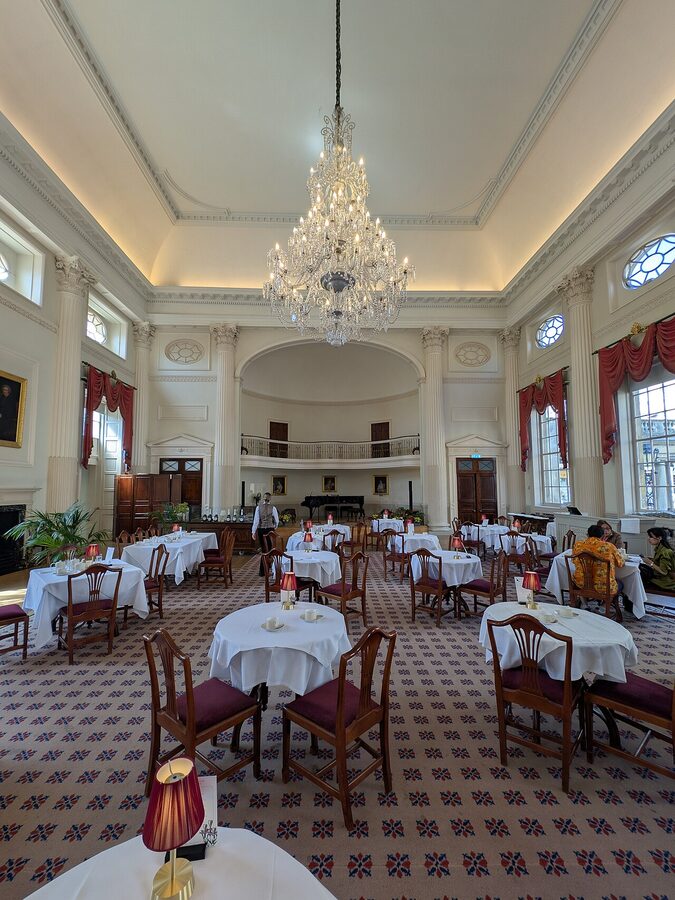
The Pump Room is the social engine of Anne Elliot’s Bath. In the novel, “every creature in Bath, except himself, was to be seen in the Pump-room at different periods of the fashionable hours.” The “himself” is Captain Wentworth, who is conspicuously not turning up where he should. The whole choreography of who sees whom in Persuasion hinges on this room.
The building you walk into now was completed in 1799, two years before Austen moved to Bath. So she actually came here. The Pump Room Trio still plays daily. The fountain at the back still serves the warm spa water from the spring below, which contains 43 minerals and tastes the way a cathedral floor smells.
You can walk in for free during opening hours (roughly 10am to 5pm) just to see the room. To eat there, book ahead. Reserve a table on the official Pump Room site. Afternoon tea runs around £40 to £55 a head, more if you add Champagne. Breakfast and lunch are cheaper if you only want to be in the room. The trio plays from 10am.
Sip the water once. Don’t be polite about it. Anne Elliot wouldn’t have liked it either.
Adjacent to the Pump Room are the Roman Baths Museum. The Roman complex was buried under buildings in Austen’s day, only properly excavated in the 1880s. So Anne would never have seen the green water of the Great Bath the way you can. Worth the £25 entry if you have two hours; the audio guide is good and the route through the bathing complex is the right pace.
The Gravel Walk: where the proposal happens
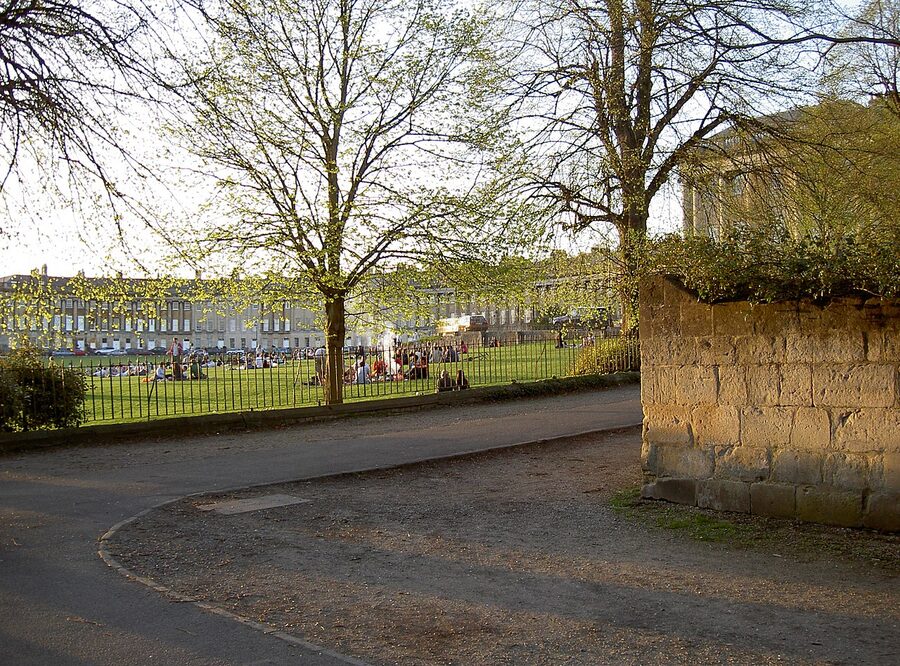
Of all the Bath locations in Persuasion, this is the one. The Gravel Walk is a quiet path that runs behind the gardens of the Circus and Brock Street, connecting Queen Square at the bottom to the green lawns in front of the Royal Crescent at the top. It was already a popular promenade in Austen’s day; she chose it for the climactic chapter 23 scene because, in her words, it was “comparatively quiet and retired.”
“Soon words enough had passed between them to decide their direction towards the comparatively quiet and retired gravel walk, where the power of conversation would make the present hour a blessing indeed.”
Even with two centuries between Anne and you, the path still does its job. You’re shielded from the carriage lanes by the long terraced gardens of the Circus on one side. Pedestrians are sparse. You can hear yourself think. The path slopes gently uphill, and Austen knew that too: “as they slowly paced the gradual ascent.”
The 2022 Netflix adaptation, whatever else you think of it, did film the kiss scene here. Behind privacy screens, but in the right place.
It’s a five-minute walk. Slow it down. Read the chapter on a bench at the top.
The Royal Crescent and No. 1
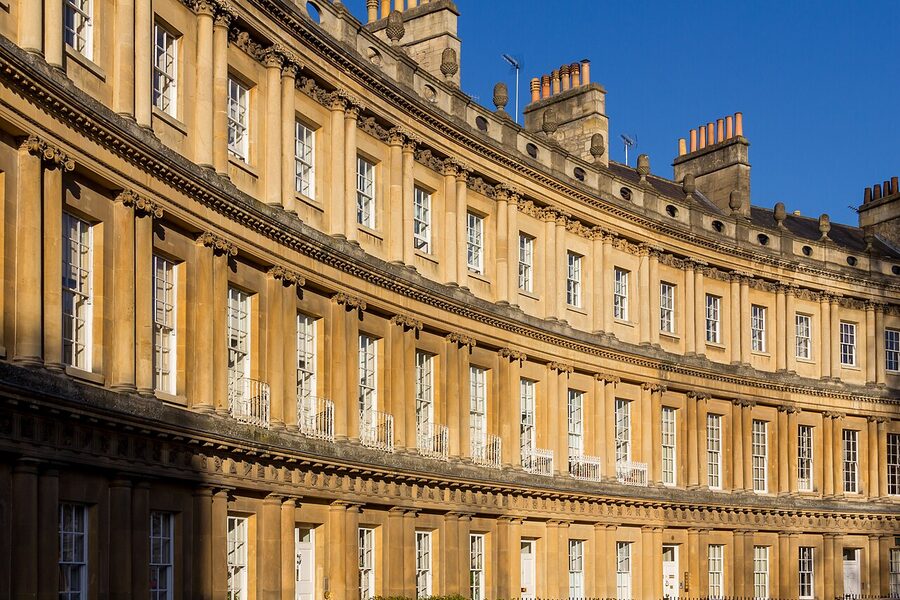
The Royal Crescent is the most famous bit of Georgian architecture in Britain, and it earns it. Thirty terraced houses curving in a half-moon, completed in 1775, faced in honey-coloured Bath stone, fronted by 114 Ionic columns. Walk the length of it. The proportions are uncanny.
Austen never names the Royal Crescent in Persuasion, but she would have walked here often. In her time the house at the central pillar (now the Royal Crescent Hotel) was a private residence; today it’s the city’s grand hotel and where you book if you want to wake up looking at the lawn.
No. 1 Royal Crescent is the museum at the eastern end. Eight rooms restored to how a wealthy Georgian family would have lived between 1776 and 1796. Entry is around £14, around an hour to walk through. The 2025 Immersive Jane Austen Tour they’re running for the 250th anniversary is genuinely good if it’s still on when you visit. Otherwise, the standard tour is enough.
The Netflix Persuasion set the Elliots’ Bath house here on the Royal Crescent (which is wrong; in the book they live at Camden Crescent). The film also shot exterior scenes in front of No. 1 itself.
Camden Crescent: where Sir Walter actually lives
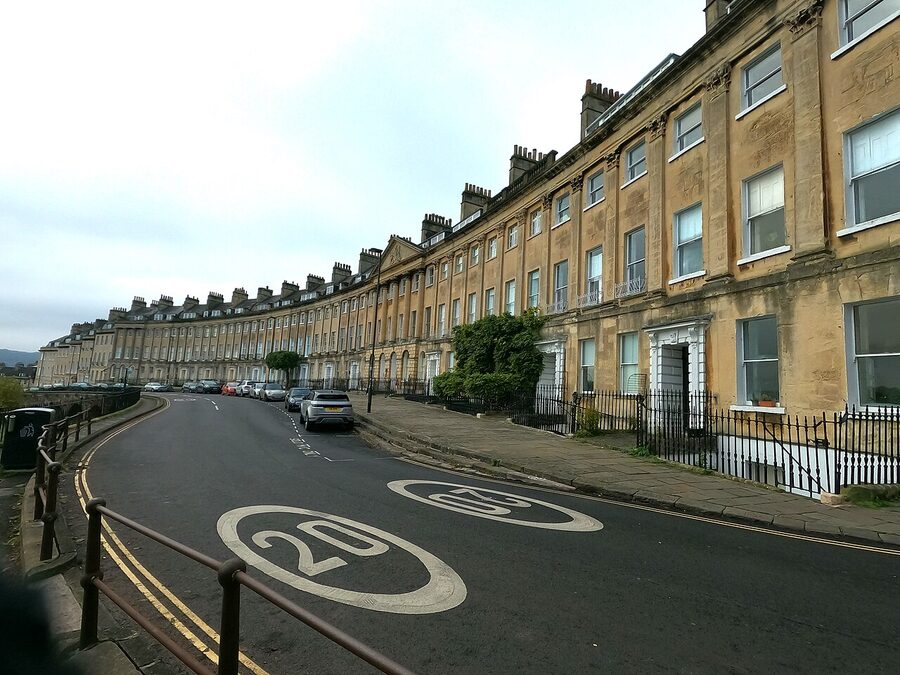
Camden Crescent is up. Way up. Austen put the Elliots here for a reason: in Bath, social standing literally tracks elevation. Sir Walter, in flight from his rural estate after running out of money, takes “a very good house in Camden Place, a lofty, dignified situation, such as becomes a man of consequence.” The whole point is that you can see down on everyone else.
You climb Lansdown Road to get there; Camden Crescent branches off to the right at the bend. The terrace is asymmetric and unfinished; the planned full crescent never got built because the land turned out to be unstable. There’s a small green in front of the houses where you can stop, catch your breath, and look back at the city you’ve just climbed out of.
This is where Anne lives in chapters 14 to 23. Every time she walks down to the Pump Room or the White Hart, she’s coming down this hill. Every time she goes home, she’s climbing it. Read that knowing the gradient and the novel feels different.
There is no plaque, no museum, nothing to mark the connection. You’re just standing on a residential street. That’s part of why it works.
Milsom Street: where Anne sees Wentworth again
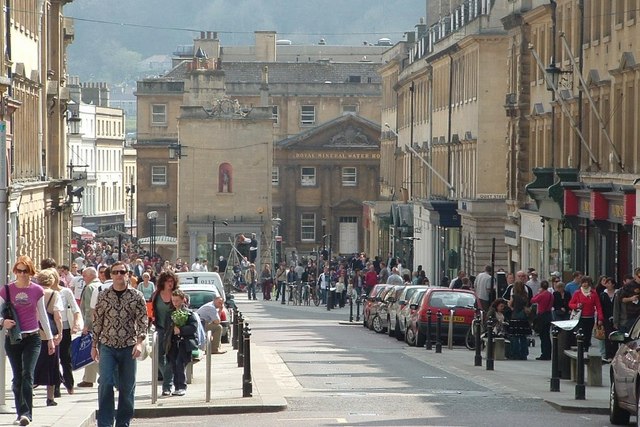
Milsom Street is where Anne first sees Captain Wentworth in Bath, and she nearly faints. It’s a moment the novel has been building toward for 16 chapters. She’s standing in a shop, it starts to rain, she looks out the window, and there he is across the street.
“While she remained at a window, in eager observation, he passed under it. She was almost overpowered by the sight.”
Today Milsom Street is Bath’s main shopping spine. The marzipan shop where the BBC adaptation set the scene is gone, the Georgian buildings still aren’t. Look up past the M&S signage and the original 1760s façade is intact. Adjacent is Old Bond Street, which connects through Union Passage, a narrow alley used by Catherine Morland in Northanger Abbey as well.
If you’re hungry: Sally Lunn’s Buns is two minutes south of here in what’s allegedly the oldest house in Bath (1482). It’s a tourist institution. The famous Sally Lunn bun is a soft sweet roll the size of your hand; order it with cinnamon butter for £5 and skip the full menu, which is overpriced for what arrives. The cellar museum is free and takes ten minutes.
The Assembly Rooms and the Octagon Room concert
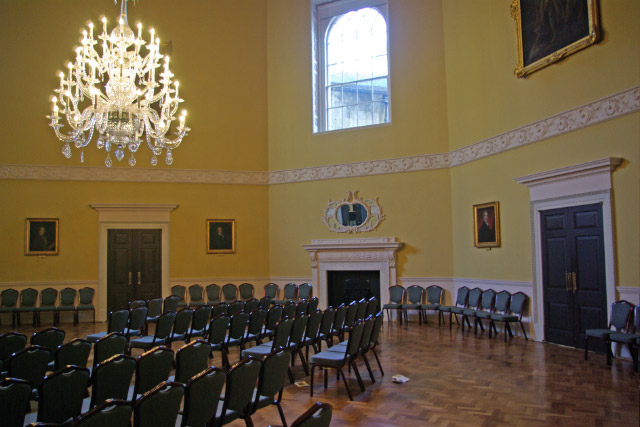
The (Upper) Assembly Rooms were one of two Georgian dance halls in Bath, the social peak of an evening out. Austen’s characters attend a concert here in chapter 20 of Persuasion and it’s the closest Anne and Wentworth come to actually conversing in the entire novel. They speak in the Octagon Room, the small entrance hall where guests waited; they’re interrupted by Mr Elliot; the rest of the night is misery.
The building was bombed in 1942 and rebuilt to the original 1771 plans by John Wood the Younger. As of 2026 it’s closed for a major refurbishment by the National Trust. Check the National Trust page before your trip. Even closed, the exterior on Bennett Street is worth the two-minute detour from the Circus.
The Fashion Museum that used to be downstairs is also closed during the works.
Where Jane Austen actually lived in Bath
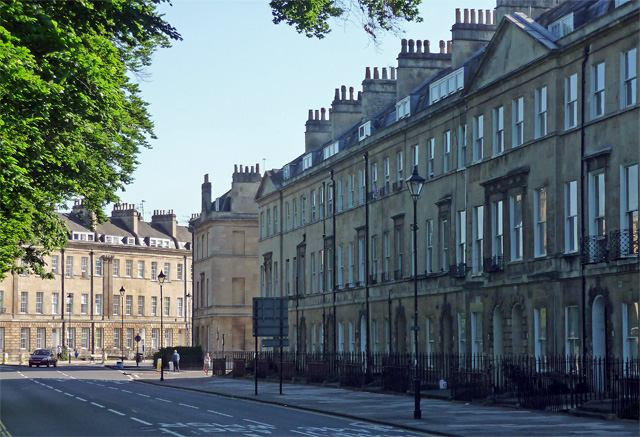
Austen was in Bath from 1801 to 1806. The family moved four times in five years, mostly because they were running out of money after her father’s death. None of the houses are museums. They’re all still residential. You can find them and stand outside.
4 Sydney Place (1801 to 1804). The grandest of the four, rented when George Austen was still alive and could afford it. Across the road from Sydney Gardens, where Jane went to fireworks. The building is privately occupied today; the blue plaque on the front marks the connection.
27 Green Park Buildings (1804). The next address after 4 Sydney Place. Austen’s father died here in January 1805. The street was bombed in WWII and the house no longer exists; you can find a marker on the surviving terrace.
25 Gay Street (1805 to 1806). After the death, the women moved to a smaller house on Gay Street. This is now a dental surgery. There’s no plaque. The house is two doors from the Jane Austen Centre at No. 40, which is the same Wood the Elder design.
Trim Street (1806). The last and worst address. By this point the family was in serious financial trouble, renting cheap lodgings on a street that was, in Austen’s day, full of brothels and pickpockets. Mrs Austen wrote a letter promising they would do everything in their power to avoid Trim Street; six years later they were on it. Today the street is quiet. The name is the same. Walk past it and read Mrs Austen’s letter again.
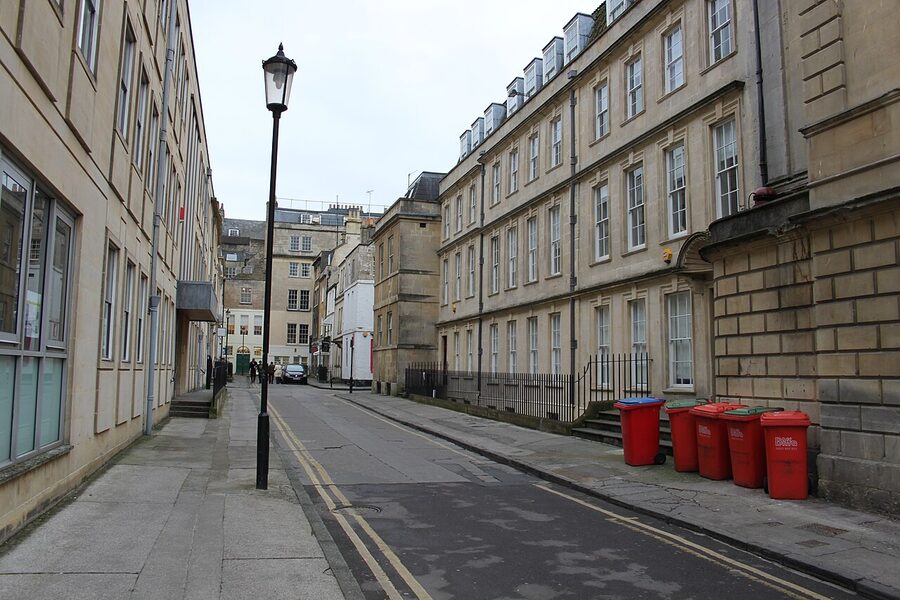
Austen left Bath in 1806 and never went back willingly. Persuasion was written ten years later, from a distance, and the city in the novel is filtered through her dislike of it. That ambivalence is part of what makes Anne’s eventual happiness here feel so hard-won.
The Jane Austen Centre: worth it or skip?
Honest answer: skip if you’ve read more than two of her novels and the Wikipedia page on her life. Visit if you’re new to Austen, or if you’re with someone who is, or if you want a costumed quill-pen photo for the kids.
The Jane Austen Centre sits at 40 Gay Street, two doors from one of her actual houses. Entry is £15 for adults, around £45 for the family pass. The exhibition is small (around 45 minutes), the staff in Regency dress are warm and informed, the introductory talk is actually decent. The waxwork attempt at what Austen might have looked like is unsettling in a fun way.
What you don’t get: any of her possessions, any of her manuscripts, any room she lived in. The actual Austen archive is in Chawton, Hampshire, where she did most of her writing. If you have time for a longer Austen pilgrimage, Chawton is the destination. The Centre in Bath is the introductory exhibit, not the main collection.
The tea room on the top floor is fine. The afternoon tea at the Pump Room is better. So is the one at the Royal Crescent Hotel.
A self-guided two-hour Persuasion walk
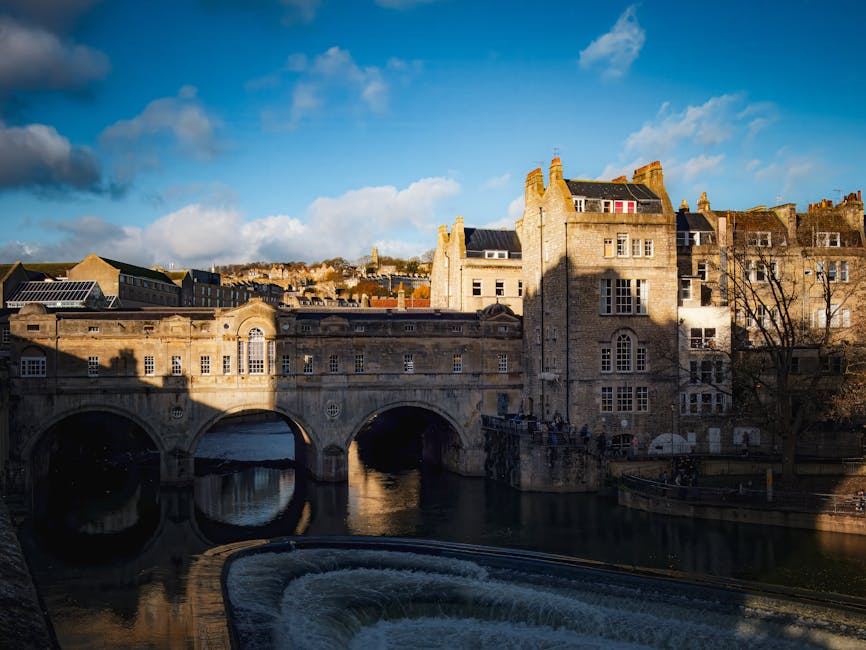
You can stitch the locations into a single walk that traces Anne Elliot’s movements through the city. About 3 km, allow 90 minutes without stops, two and a half hours if you read passages along the way.
- Start at Pulteney Bridge. Lined with shops, finished 1774. Walk over it, away from the centre, into Argyle Street.
- Laura Place, the small square at the end. Lady Dalrymple’s address. Walk a circuit and come back.
- Down Great Pulteney Street to Sydney Place to see the Austen plaque. Detour to Sydney Gardens if you have time.
- Back over the bridge to the Pump Room. Sip the water. Buy lunch if it’s mealtime.
- Through the colonnade west to the site of the White Hart (now a Costa). Plaque on the wall.
- Up Union Passage to Milsom Street. The marzipan-shop view.
- North on Milsom, then a sharp uphill detour to Camden Crescent. This is the strenuous bit, around 15 minutes up Lansdown Road. Catch your breath at the top.
- Back down to Gay Street. Pass No. 25 (the dental surgery) and the Jane Austen Centre at No. 40.
- Up to the Circus, John Wood’s circular masterpiece. Stand in the middle and look up.
- South on Brock Street, then drop down onto the Gravel Walk. This is the proposal scene. Walk it slowly, north to south or south to north, your call.
- Finish at the Royal Crescent. Sit on the lawn. You’re done.
The free Bath & North East Somerset Council Jane Austen map covers similar ground if you want a printable version. Dukes of Bath runs a guided Austen walking tour for around £20 a head if you’d rather follow a person than a map.
Where to stay
Bath is small and the centre is the only place worth staying. Anything else and you’ll waste time on buses.
The Royal Crescent Hotel (£££) is the splurge: actually on the Royal Crescent, in the central pillar that was a private home in Austen’s day. Garden, spa, the lot. Look at the rates and either commit or move on.
No. 15 Great Pulteney (££) is a Georgian townhouse hotel right on the Persuasion-walk route, three minutes from Pulteney Bridge. The basement spa is small but unexpectedly good.
Hotel Indigo Bath (££) sits on South Parade, five minutes from the Pump Room. Each room has a different Bath-themed design; ask for one with a balcony if they have one going.
YHA Bath (£) is the budget option, in a Victorian mansion fifteen minutes uphill from the centre. Beds from £25 in dorms, private rooms around £80.
For Austen fans with the budget for it, Jane Austen’s Apartments at 4 Sydney Place rents three flats in the actual house she lived in from 1801 to 1804. Around £180 a night.
Eating, tea, and the cocktail at the Canary
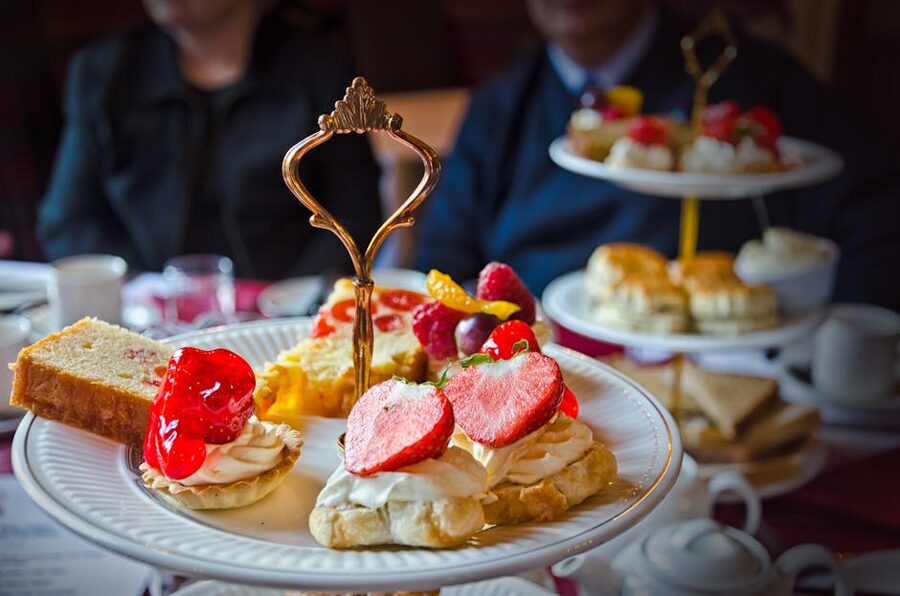
You’re going to be offered afternoon tea every twelve minutes in Bath. The three best:
- The Pump Room. The literary one. Trio playing, Georgian room, around £45 with cucumber sandwiches and a glass of fizz.
- The Royal Crescent Hotel. The fancy one. £55 in the Drawing Room or Dower House Garden if the weather is right.
- The Jane Austen Centre Tea Room. The themed one. Sandwich and scone deals from around £20. Smaller portions, better value.
For meals that aren’t tea: Sotto Sotto on North Parade is the proper Italian, in a vaulted Georgian cellar, mains around £20, book ahead. The Scallop Shell does the best fish and chips in town. Sally Lunn’s is for the bun and the building, not the meal.
For a drink with an Austen wink: the Canary Gin Bar on Trim Street (yes, the same Trim Street the Austens hated) does a “Gin Austen” cocktail with elderflower and Earl Grey. It’s good. The bar is tiny and they don’t take bookings, so go early.
Day trip from London or stay the night?
Stay the night. Two nights if you can stretch to it. The day-trip version of Bath is the Pump Room, the Roman Baths, a quick Royal Crescent photo, and the train back. You miss Camden Crescent, you don’t have time for the Gravel Walk in the right light, and you skip dinner. The whole Persuasion lens collapses.
If a day trip is the only option, here’s the squeeze: 9:30am train from Paddington, arrive 11am. Pump Room first (book lunch), then Roman Baths, then walk Gay Street to the Circus to the Royal Crescent, drop down to the Gravel Walk, back via Pulteney Bridge. Last train back is around 9pm. Skip Camden Crescent, skip the Centre, skip the Assembly Rooms.
If you have two nights, add a half-day trip to Lacock (the National Trust village used as Meryton in the 1995 Pride and Prejudice) or to Stourhead (where the Pemberley exterior was filmed for the 2005 version). Both are in striking distance.
Other Bath things, in honest order
If you have time after the Persuasion walk:
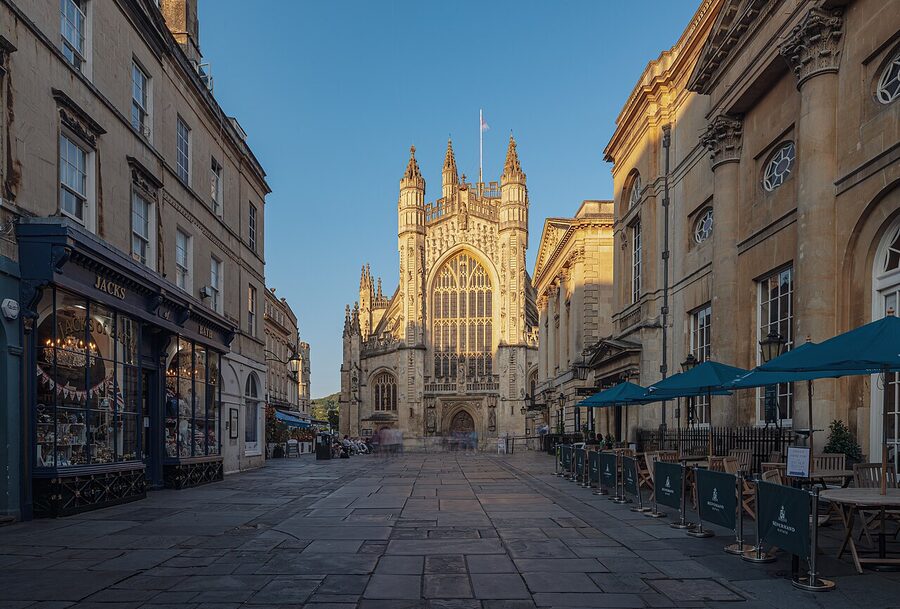
- Bath Abbey. The fan-vaulted ceiling is one of the best in England. Free entry, suggested donation £6. Tower tour is £10 and gets you a roof view.
- Thermae Bath Spa. The actual modern spa, with a rooftop pool overlooking the city. £42 for two hours. Worth it at sunset.
- The Holburne Museum. Top of Great Pulteney Street. The building was Sydney House in Austen’s day; she went to fireworks in the gardens. The art collection is small and good.
- Sydney Gardens. Just behind the Holburne. Free, recently restored, picnic-able.
- Prior Park Landscape Garden. National Trust, 20-minute walk south. Capability Brown landscape, Palladian bridge, big views back over Bath. Closed Tuesdays.
If you only have an hour
Pump Room. Sip the water. Walk west via the colonnade and Old Bond Street, up Milsom Street, Gay Street, the Circus, Brock Street, Royal Crescent. End on the Royal Crescent lawn looking at the city. That’s the spine of Persuasion in 60 minutes. The book is in the geography. Walking it is the point.
If you liked this and want more travel guides built around the books that sent you there, the Read and Travel Challenge Reading & Travel Challenge hub on this site links to all of them. The other British Isles guides in the same series are A Harry Potter Travel Guide to London and An Outlander Pilgrim’s Guide to Inverness.